Humanitarian and Community Development Projects (HCDP Ghana), in partnership with Engineers Without Borders-USA (EWB-USA), has built and handed over an Ecosan toilet facility to the people of Sokode Ando in the Ho Municipality of the Volta Region, with a call for the community to take ownership of the facility and promote sustainable sanitation practices.
The facility is intended to improve access to safe sanitation, reduce open defecation, protect water sources and create a healthier and more dignified environment for residents, particularly schoolchildren and vulnerable members of the community.
Speaking at the handing-over ceremony, Director of HCDP Ghana, Richard Anku, said poor sanitation remained a major development challenge, with inadequate access to hygienic toilet facilities contributing to the spread of diseases, contamination of water sources, environmental pollution and open defecation.
Anku said the partnership between HCDP Ghana and EWB-USA was therefore focused on addressing basic community needs while promoting sustainable solutions to sanitation challenges.
According to him, the Ecosan facility was designed to safely manage human waste, reduce environmental pollution, and promote resource recovery through compost production.
He emphasised that the facility, which includes 6 toilet rooms and 3 store rooms for processing waste into fertilisers, will improve access to safe sanitation, prevent disease, and protect water sources from contamination. He added that the facility would provide greater privacy, safety and dignity, especially for women, children, older persons and other vulnerable members of the community.
Anku stressed that completing the project marked only the beginning, urging residents and community leaders to take full ownership of the facility by keeping it clean, using it responsibly, and ensuring its maintenance.
He also called on the community to educate children and residents on proper sanitation and hygiene practices, noting that infrastructure alone could not achieve the desired health outcomes without responsible hygiene behaviour.
Team Lead of EWB-Tulane University, Myla Reed, said the Ecosan project had been implemented over about three years, during which the team engaged the community to understand its needs and develop appropriate solutions.
She said the water component of the project was completed in April 2026 and had since been providing water to the community, while the opening of the toilet and processing facilities marked another important milestone.
Reed said the overall project aimed to improve sanitation, public health, and water access to make life safer and better for residents.
During a tour with dignitaries, she explained that the waste from the toilet would be processed by mixing it with food waste to make fertilisers to support farming activities and livelihoods in the community.
Member of Parliament for Ho Central, Edem Kofi Kpotosu, said the facility would particularly benefit schoolchildren by providing convenient access to toilet facilities and helping keep the school compound free from open defecation.
He further highlighted the importance of the Ecosan system in promoting the recycling and reuse of human waste.
“Nothing must be wasted,” he said, explaining that waste could be processed and transformed into useful material for growing crops, thereby completing a natural cycle in which resources are returned to the environment for further use.
Kpotosu commended EWB-USA and HCDP Ghana for the initiative, describing the project as an example of sustainability and responsible resource management.
Anku expressed appreciation to EWB-USA, traditional authorities, community leaders, residents, technical teams, volunteers, artisans and other stakeholders whose contributions helped make the project possible.
He said HCDP Ghana and EWB-USA believed sustainable development was best achieved through collaboration among communities, development organisations, government institutions, traditional authorities and other stakeholders.
He assured residents that HCDP Ghana remained committed to working with communities to address challenges in water, sanitation, health, education and community development.
The Ecosan facility is expected to serve as a model for sustainable sanitation in Sokode Ando while contributing to improved public health, environmental protection and a cleaner community for present and future generations.
Regional News of Monday, 17 August 2026
Source: Desmond Tinana, Contributor
Ecosan toilet facility handed over to Sokode Ando to improve sanitation and public health
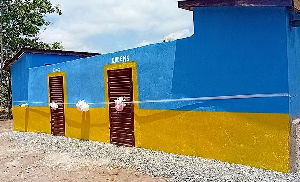 The facility is intended to improve access to safe sanitation