As Ghana intensifies efforts to prepare its youthful population for the demands of a changing economy, attention is increasingly shifting from formal education alone to programmes that develop leadership, discipline and civic responsibility.
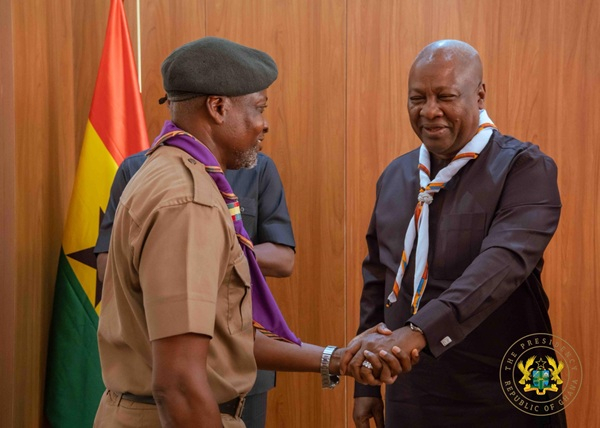
That shift received a symbolic endorsement after President John Dramani Mahama accepted the role of Life Patron of the Ghana Scout Association (GSA), signalling renewed support for one of the country's longest-standing youth development movements.
The honour was conferred during a courtesy call by the Association's National Board and National Executive Committee at the Jubilee House.
The delegation was led by Chief Commissioner Hilary Yaw Awusie and National Board Chairman William Pitt, with Minister for Youth Development and Empowerment George Opare Addo and National Youth Authority Chief Executive Officer Osman Ayariga joining the engagement.
Although the ceremony centred on the President's induction, it also highlighted the growing recognition that youth organisations can complement government efforts to build a more skilled, responsible and resilient generation.
A Platform for Leadership Development
The Ghana Scout Association has for decades promoted the development of young people through outdoor activities, community service and leadership training.
Beyond camping and recreational activities, the movement seeks to instil values such as discipline, teamwork, integrity, patriotism, volunteerism and self-reliance — qualities increasingly viewed as essential in today's labour market.
Across the world, scouting organisations have evolved into leadership incubators, equipping young people with practical skills that support both employment and active citizenship.
For Ghana, where young people make up a significant proportion of the population, such programmes could help bridge the gap between academic qualifications and workplace readiness.
Supporting Ghana's Human Capital Agenda
President Mahama, after accepting the honour, reaffirmed his commitment to supporting the Association's work.
He pledged assistance to strengthen scouting activities nationwide as the movement continues to nurture responsible, active and patriotic young citizens.
His commitment comes at a time when policymakers are placing greater emphasis on human capital development as a foundation for long-term economic transformation.
While employment creation remains a national priority, employers increasingly value competencies such as leadership, communication, resilience, problem-solving and collaboration — skills that youth organisations often cultivate outside the classroom.
The Scout movement provides structured opportunities for young people to acquire these attributes while participating in community service and nation-building activities.
Building Citizens, Not Just Workers
Chief Commissioner Hilary Yaw Awusie described the President's acceptance of the Life Patron role as an important milestone for the Association.
He said the movement remains committed to empowering young people through leadership, character development and service to their communities.
The participation of both the Ministry for Youth Development and Empowerment and the National Youth Authority reflected broader institutional interest in strengthening youth-focused organisations as partners in national development.
As Ghana pursues economic growth driven by innovation, entrepreneurship and productivity, investment in young people's character and leadership capabilities is increasingly being viewed as equally important as investment in infrastructure or technology.
The renewed partnership between government and the Ghana Scout Association therefore represents more than a ceremonial relationship. It reflects growing recognition that preparing young people for the future requires more than academic instruction — it also demands opportunities to develop confidence, responsibility, teamwork and a commitment to national service.
Regional News of Friday, 7 August 2026
Source: Ghana Scout Association
Scouting takes centre stage in Ghana's leadership development drive
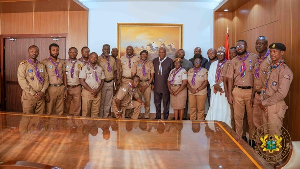 President John Dramani Mahama with members of the Ghana Scout Association (GSA)