Child Support Ghana, an advocacy group led by Kwame Jones Jay-Jay, has launched a nationwide campaign calling for the introduction of a Child Benefit Allowance Programme for every Ghanaian child by 2030 as part of efforts to reduce child poverty and improve the welfare of children across the country.
The campaign was officially launched at Asafo Pechi M/A Basic School in the Abuakwa South Municipality of the Eastern Region during a donation exercise on July 21, 2026, where the group presented exercise books, pens, pencils, erasers, toiletries, marker pens, soft drinks, bottled water, and biscuits to vulnerable learners at the school.
Speaking at the event, Kwame Jones said the proposed Child Benefit Allowance Programme seeks to provide every Ghanaian child with meaningful financial support to ensure access to basic needs, including nutrition, healthcare, and education.
According to him, the initiative is aimed at addressing the alarming challenge of child poverty and creating equal opportunities for children regardless of their socio-economic background.
He cited recent UNICEF findings, which state that nearly 80% of Ghana's children under the age of five experience multidimensional poverty, lacking one or more essential needs such as adequate nutrition, healthcare, education, safe drinking water, sanitation, or decent housing.
UNICEF further estimates that about 3.65 million Ghanaian children currently live in poverty, while approximately 2.4 million children under five suffer severe food poverty, consuming fewer than five of the eight recommended food groups necessary for healthy growth.
"As a result, around one in every five children is stunted, affecting physical and brain development. Many children suffer from anaemia and preventable illnesses. Nearly 28% of Ghanaian children live in monetary poverty, with no national child income support available to cushion vulnerable families. The burden is especially heavy in rural communities and Northern Ghana, where inadequate healthcare, poor sanitation, limited educational opportunities, and food insecurity continue to trap many children in cycles of poverty," he stated.
Kwame Jones noted that child poverty remains a major obstacle to national development, stressing that many children are unable to reach their full potential due to circumstances beyond their control.
He argued that investing in children through a structured national support programme would not only improve their well-being but also contribute significantly to Ghana's long-term economic growth and social development.
The Child Support Ghana leader emphasized that the proposed programme is not intended as a handout but rather a strategic national investment in the country's future workforce, leadership, and development.
He called on the Government of Ghana, Parliament, traditional authorities, development partners, civil society organisations, faith-based institutions, and the private sector to support the establishment of a transparent and sustainable Child Benefit Allowance Programme by 2030.
Kwame Jones further appealed to traditional leaders, teachers, parents, students, and the media to join the advocacy campaign and help build public support for policies that prioritize children's welfare.
He expressed optimism that, with collective commitment and political will, Ghana can significantly reduce child poverty and provide every child with a fair start in life.
The group believes that introducing a national Child Benefit Allowance Programme will improve child nutrition, increase school attendance, enhance access to healthcare, protect vulnerable families, and help break the cycle of poverty affecting many children across the country.
Child Support Ghana says it will continue engaging stakeholders nationwide as part of its petition drive to secure support for the initiative ahead of its proposed implementation by 2030.
Meanwhile, leaders of the Atwemamena community and the management of Asafo Pechi M/A Basic School endorsed the advocacy campaign and signed the petition, stating that a child benefit support programme would be a game changer in addressing inequalities and the hardships children in rural communities face.
The Assistant Headteacher, Christiana Nador, said, "Child poverty is real. In this community and the surrounding communities, many children come to school barefoot, without uniforms, and on empty stomachs. They do not have exercise books, so it is really difficult for children living in abject poverty. We fully endorse this initiative because, if implemented, it will go a long way in supporting children in rural areas."
Regional News of Wednesday, 22 July 2026
Source: www.ghanaweb.com
Child Support Ghana launches campaign for child benefit allowance by 2030
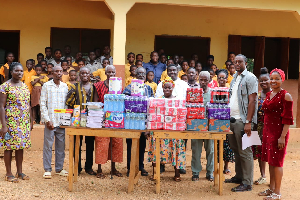 Child Support Ghana launched a campaign for Child Benefit Allowance by 2030 to tackle child poverty.