The Chairman of the Eastern Regional Peace Council (ERPC), Dr. Mark Boadu has called for community-driven interventions to combat the growing menace of substance abuse among young people, stressing that solutions must be tailored to the unique circumstances of individual communities rather than adopting a one-size-fits-all approach.
According to him, while several institutions have implemented interventions to address drug abuse over the years, the increasing prevalence of substance abuse among the youth demands a coordinated, practical and community-focused response involving all stakeholders.
Dr. Boadu made the remarks during a one-day multi-stakeholder dialogue on youth substance abuse, violence prevention and community safety organised under Project AKOBEN at the Grace Presbyterian Church in Akropong-Akuapem on Thursday, July 16, 2026.
The programme, held on the theme "Vigilance, Awareness and Action: Building a Drug-Resistant Generation," brought together representatives from the Akuapem North Municipal Assembly, the Ghana Health Service, the Narcotics Control Commission (NACOC), the Ghana Police Service, SSNIT, traditional and religious leaders, educational institutions, civil society organisations and students.
"The purpose of today's gathering is to provide a platform where stakeholders can openly discuss the issues, identify the factors driving substance abuse, evaluate existing interventions and develop practical solutions that suit our communities," Dr. Boadu said.
He emphasised that what works in one community may not necessarily be effective in another, making it necessary to develop localised interventions that reflect the realities of each district.
He urged participants to actively contribute to discussions and action-planning sessions aimed at producing a framework to reduce substance abuse and its associated social consequences.
Dr. Boadu noted that the Peace Council's work now extends beyond election-related peacebuilding to addressing emerging social challenges that threaten community stability.
"If someone is abusing drugs, that person is not at peace with himself or herself. By addressing substance abuse, we are also promoting peace within families and communities," he stated.
Traditional Leader Shares Personal Story
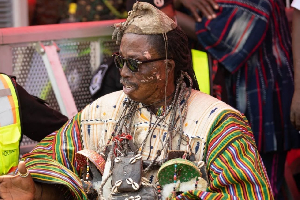
Chairman of the occasion and Mamfehene, Nana Ansa Sasraku II, delivered an emotional address in which he disclosed that drug addiction had profoundly affected his own family.
He recounted the story of his elder brother, affectionately known as "Japo Ray," who was once admired for his intelligence, charisma and leadership potential but later developed mental health complications after being introduced to marijuana through peer influence while in secondary school.
According to Nana Ansa Sasraku, his brother had been expected to become the family's chief before drug addiction altered the course of his life.
"But for the effects of drug abuse on my brother, I would not be standing here today as chief," he told participants.
He said the family's painful experience inspired the establishment of the Mount Sinai Foundation to educate young people on the dangers of drug abuse, support affected families and reduce the stigma surrounding mental illness.
Calling for collective action, the Mamfehene said law enforcement alone could not solve the problem.
"Our young people are not looking merely for speeches. They are looking for adults who will listen, guide, mentor, protect and believe in them," he said.
He urged every institution represented at the dialogue to commit to at least one concrete intervention to protect young people from substance abuse.
Assembly Pledges Stronger Action
Delivering the keynote address, Akuapem North Municipal Chief Executive, John Evans Kumordzi described substance abuse as an emerging public health, security and development challenge confronting the municipality.
He noted that Akuapem North's strategic location and road network had inadvertently made it a transit point for illicit drugs, increasing the risk of narcotics finding their way into local communities.
"The consequences are evident. Drug abuse is affecting education, family life, mental health and community safety. This is no longer merely a health issue but also a security and development challenge," he said.
Kumordzi pledged that the Municipal Assembly would continue collaborating with security agencies, the Ghana Health Service and other stakeholders to strengthen preventive education, community sensitisation and rehabilitation services for persons battling addiction.
He also appealed to parents to pay closer attention to their children's behaviour, while encouraging schools to strengthen guidance and counselling services to identify students at risk.
Municipality Calls for Shared Responsibility
Earlier, Deputy Municipal Coordinating Director Samuel Adjinbaruk, speaking on behalf of the Municipal Coordinating Director, said the dialogue reflected the Assembly's commitment to safeguarding young people and promoting peaceful communities.
He described the theme as timely, noting that increasing abuse of tramadol, cannabis, opioids, alcohol and other substances was contributing to school dropouts, crime, violence, poor mental health and weakened family structures.
Quoting the African proverb, "The child who is not embraced by the village will burn it down to feel its warmth," Mr. Adjinbaruk stressed that protecting young people was a collective responsibility.
He reaffirmed the Assembly's commitment to collaborating with the Ghana Education Service, Ghana Health Service, NACOC, the Peace Council, traditional authorities and civil society organisations to intensify public education and preventive interventions.
Stakeholders Develop Action Plans
The dialogue featured presentations by the Ghana Health Service's Psychology Unit on the relationship between substance abuse and crime, school violence, domestic violence, youth delinquency and community insecurity.
The Narcotics Control Commission (NACOC) highlighted emerging drug trends, trafficking patterns and high-risk behaviours among young people in the Eastern Region, while the Ghana Police Service discussed community safety and violent behaviour associated with drug abuse.
The Social Security and National Insurance Trust (SSNIT) also delivered a presentation on social security, while the Eastern Regional Peace Council facilitated stakeholder discussions, district breakout sessions and action-planning exercises.
The programme concluded with the establishment of referral and response networks, presentation of district action plans and the adoption of a joint communiqué outlining stakeholder commitments to preventing youth substance abuse, violence and related social challenges across the Eastern Region.
Regional News of Thursday, 16 July 2026
Source: www.ghanaweb.com
Eastern Peace Council pushes community-led fight against youth drug abuse
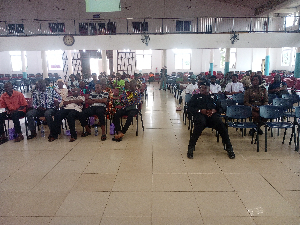 Stakeholders from across sectors joined the dialogue on building a drug-resistant generation.