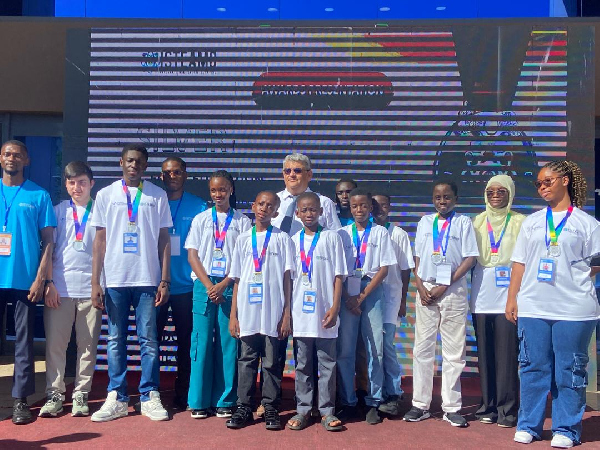
St Louis Senior High School in Kumasi in the Ashanti Region has won the 2026 International Science, Technology, Engineering, Arts and Mathematics Olympiad (ISTEAMO), outperforming several leading local and international schools at this year’s competition hosted by Galaxy International School.
The winning team, led by Ewurabena Appiah, impressed judges with an innovative project titled the “Akandifour Energy Meter”, a device designed to monitor household electricity consumption, protect electrical appliances, reduce energy wastage, and ultimately help consumers lower their electricity bills.
The victory adds to the school’s growing reputation in science and innovation competitions across the country.
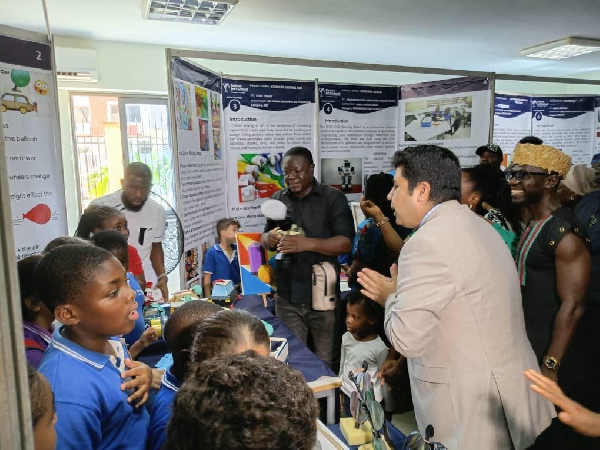
The ISTEAMO formed part of the 21st Annual Science and Makers’ Fair organised by Galaxy International School, which has become a major platform for student innovation and creativity.
This year’s edition was particularly significant as it coincided with the school’s 25th anniversary celebrations and featured an official collaboration with the International Science, Technology, Engineering, Arts and Mathematics Olympiad, giving the event a stronger international dimension.
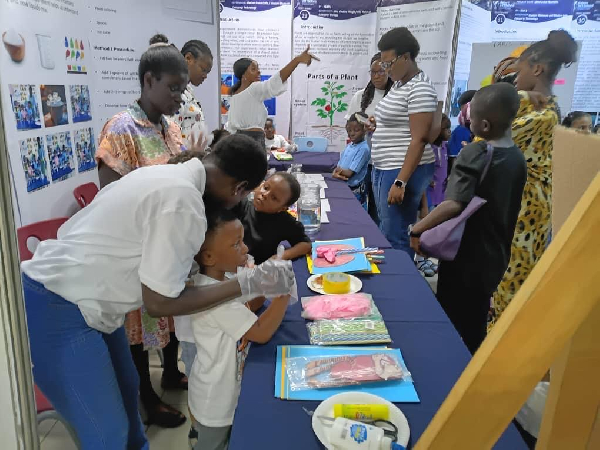
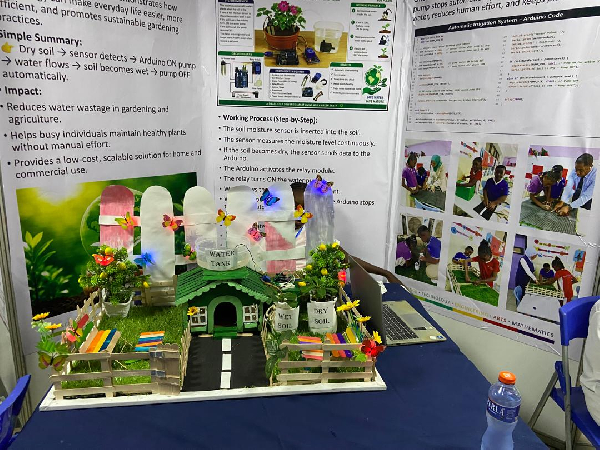
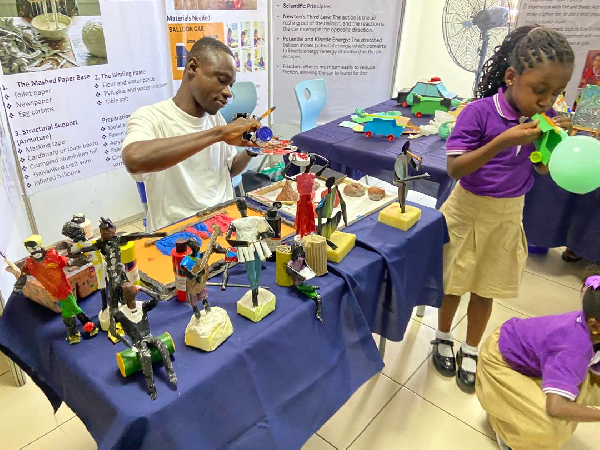
Organisers said the fair was designed to encourage students to develop practical solutions to real-world problems through science, technology, and creativity, moving beyond theory-based learning to hands-on innovation.
The 2026 fair brought together students from more than 10 educational institutions across Ghana and abroad, with both in-person and virtual participation.
A total of over 80 projects were showcased at the fair, while 37 entries were officially registered for the ISTEAMO competition.
Participating Ghanaian schools included:
Presbyterian Boys’ Senior High School (PRESEC)
Wesley Girls’ Senior High School
Accra Academy
Crystal Heights International School
Fatih College
St. Louis Senior High School
International participants included:
Nigerian Tulip International Colleges (Nigeria)
Halabjay Shaheed Communal Girls High School (Iraq)
Stirling Halabja Boys’ College (Iraq)
Richmond Park College (Bosnia & Herzegovina)
The Managing Director of Galaxy International School, Mehmet Akmermer, described the fair as a major milestone in the institution’s history, noting that the collaboration with ISTEAMO had expanded opportunities for global academic exchange and innovation.
He stressed that modern education must go beyond textbooks to include practical, problem-solving skills.
“Our aim is to equip students with the skills to think critically and develop solutions to challenges in society. This is why practical learning remains at the core of our teaching approach,” he said.
He added that the fair provided a platform for students to share ideas, collaborate across borders, and transform concepts into real-world solutions.
Special guest of honour, Ghanaian rap icon Okyeame Kwame, commended Galaxy International School for promoting practical science education.
He called for a shift from theory-heavy learning systems to more hands-on approaches that allow students to experiment and innovate.
“This is the right time for Ghana to invest in science through its young people. We need to raise a generation that is scientifically minded and ready to solve the country’s problems,” he said.
He further urged teachers, parents, and stakeholders to continue supporting students engaged in scientific and creative pursuits.
Nigeria's Nnamdi Onwaez thrilled after reaching 110m hurdles final
Esther Obenewaa targets Commonwealth Games gold medal glory
Regional News of Saturday, 23 May 2026
Source: www.ghanaweb.com
St Louis SHS beats PRESEC, Tulip College to win 2026 ISTEAMO at Galaxy International science fair
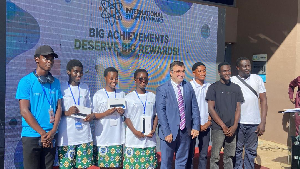 Members of team St Louis