A resident dentist at the Komfo Anokye Teaching Hospital (KATH), Isaac Akotoye, has called on the Ghanaian public to prioritise professional dental consultations and to show compassion towards inmates through improved healthcare support.
Speaking during a health outreach programme at the Kumasi Central Prison, Akotoye cautioned against seeking dental treatment from unqualified individuals. He emphasised that oral health is a critical component of overall well-being and should only be handled by certified professionals.
“If you have an issue with your teeth, ensure you consult the right professionals. You should identify certified dentists, dental surgeons, or specialists at accredited hospitals and clinics. Allow them to conduct the necessary investigations and assessments. Do not wait for a minor issue to escalate into a major problem,” he said.
He also drew attention to the plight of prison inmates, describing them as a neglected group that deserves access to quality healthcare and dignity.
“Many people view those in prison as misfits who are not worth our time or care. But it is high time we shine a light on them. They need our support. You never know when a relative or someone close to you may find themselves in such a position and require help,” he added.
Akotoye made these remarks during a visit to the Kumasi Central Prison as part of KATH’s 70th anniversary celebrations in 2026, which also coincided with World Oral Health Day.
The outreach, led by the Chief Executive Officer of KATH, Paa Kwasi Baidoo, and the Head of the hospital’s Dental Department, Daniel Sabah, aimed to provide essential dental care to inmates.
Expressing satisfaction with the outcome, Akotoye thanked partners, including Pepsodent, and senior medical colleagues for supporting efforts to improve oral hygiene among vulnerable populations. However, he noted that resources remain inadequate.
“A lot of people have helped us, but we need more support to make the oral hygiene status of Ghanaians a success. We are calling for more generosity to ensure that everyone, including those in our correctional facilities, has access to befitting dental care,” he said.
The initiative aims to bring specialised dental services directly to correctional facilities, ensuring that inmates—who often face barriers to accessing healthcare—receive quality treatment.
A physician assistant who participated in the outreach, Irene Ofosu, said the programme was designed to provide comprehensive oral healthcare.
“We have brought specialised equipment to the facility to ensure that our cleanings and treatments are of the same professional standard as those provided at the hospital,” she said.
She explained that the process begins with thorough oral screenings to identify underlying conditions, followed by extractions and professional cleaning where necessary. Complex cases are referred to KATH for further treatment through an established referral system.
Speaking on behalf of the Ghana Prisons Service, Corporal Emmanuel Boateng Agyemfra commended KATH for the initiative, describing it as timely.
He noted that the facility lacks a dental department, and transporting inmates to external clinics is often difficult, leading to a rise in untreated oral health issues.
“Quite often, we do not have the time or opportunity to go outside the facility for dental check-ups. This visit is vital because many people here have underlying dental issues they are unaware of. This programme provides the necessary diagnosis, treatment, and preventive care that we simply cannot offer on a daily basis,” he said.
He also highlighted broader healthcare challenges at the facility, including the absence of dental services and an under-resourced pharmacy that struggles to serve over 1,600 inmates.
“Currently, when an inmate receives a prescription, they often lack the financial means to purchase the medication from outside sources. This drug bank will ensure that they can access the drugs they need immediately, regardless of their financial status,” he added.
As part of efforts to address these challenges, prison authorities have announced plans to establish a drug bank to support inmates and officers. He appealed to the government, pharmaceutical companies, and philanthropists to support the initiative, stressing the need for a well-resourced medical unit.
Regional News of Thursday, 9 April 2026
Source: Nana Peprah, Contributor
'Let's prioritise inmates' oral health' - KATH dentist urges
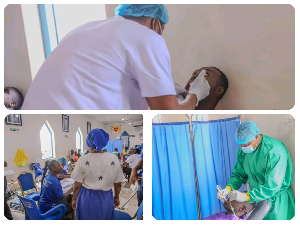 Collaged photos of KATH dentists at the prison yard