The Ghana National Chamber of Commerce and Industry (GNCCI), the Presbyterian University of Ghana, and the European Union have convened policymakers, vocational institutions, and small businesses in Tamale to advance Ghana’s Technical and Vocational Education and Training (TVET) reform, with a focus on green skills development and enterprise growth.
The engagement, held in the Northern Region, forms part of efforts to align Ghana’s skills training systems with emerging opportunities in the green economy, particularly for women and youth.
Participants included directors from the Regional Coordinating Council, the Regional Directorate of Education, the TVET Regional Office, and the Tamale Metropolitan Assembly, as well as principals of vocational institutions.
Discussions centred on strengthening policy frameworks to ensure that TVET delivery responds to the demands of sustainable development and green enterprise.
Delivering the keynote address, Rev Dr Christina Amarchey of the Presbyterian University of Ghana spoke on the theme, “TVET for Green Circular Economy: Opportunities for Women and Youth in the Northern Regions.”
She highlighted structural gaps within the vocational training system that continue to limit its effectiveness.
Stakeholders identified several persistent challenges, including outdated equipment in training institutions, limited financing for skills delivery, weak collaboration between TVET institutions and industry, and inadequate enforcement of quality standards. These gaps, participants noted, hinder the development of market-relevant green skills.
A dedicated session on financing sustainable TVET systems, facilitated by Prof. Dadson Awunyor-Vitor of the Kwame Nkrumah University of Science and Technology, explored blended finance models and public-private partnerships as viable pathways to mobilise long-term investment in vocational education.
Christopher Addy-Nayo, Team Leader of the GreenGrowth Ghana Project, emphasised the need for practical, industry-relevant training.
“Green skills development must go beyond theory. Institutions must equip young people with practical competencies that allow them to build sustainable enterprises while protecting the environment,” he said.
He added that growing participation across project regions demonstrates strong demand, but requires coordinated investment and policy action to sustain progress.
Participants underscored that Ghana’s transition to a green economy will depend on stronger collaboration among government institutions, training providers, private sector actors, and development partners.
The dialogue forms part of the broader GreenGrowth Ghana Project, an EU-funded initiative implemented by GNCCI in partnership with the Presbyterian University of Ghana.
Since its launch in October 2024, the project has focused on empowering women and youth through skills development and enterprise support in green and circular economy sectors, including sustainable agriculture, agroforestry, waste management, and circular production.
Regional engagements, training programmes, and grant support initiatives are expected to continue across Northern Ghana as the project progresses into its next phase.
Regional News of Thursday, 2 April 2026
Source: www.ghanaweb.com
GreenGrowth Ghana Project boosts TVET reform in Tamale
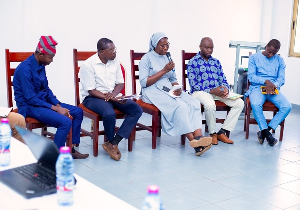 Directors from the Regional Coordinating Council in Tamale