The Minority Chief Whip and Member of Parliament for Nsawam-Adoagyiri, Frank Annoh-Dompreh, has warned that the scale of environmental damage caused by illegal mining and other destructive activities requires stronger criminal laws.
Speaking in Parliament, he said Ghana must consider criminalising ecocide, the large-scale destruction of ecosystems, to protect the country’s natural resources and water bodies.
According to him, the environmental crisis facing the country, particularly from galamsey, makes it necessary to treat severe ecological damage as a serious criminal offence.
“As a country affected by deforestation, illegal mining and water pollution, Ghana’s ecosystems are under severe stress,” he told the House.
He noted that reports show a significant number of water bodies have been contaminated due to illegal mining activities.
“Recent reports indicate that up to 60 percent of our water bodies have been polluted by illegal mining,” he said, describing the situation as a major threat to public health, agriculture and the country’s long-term prosperity.
Annoh-Dompreh explained that ecocide refers to “unlawful or wanton acts committed with knowledge that there is a substantial likelihood of severe and either widespread or long-term damage to the environment.”
He argued that the current legal regime often relies on regulatory fines and administrative penalties, which may not be enough to deter serious environmental harm.
“It goes far beyond regulatory fines or administrative sanctions. It is about criminal accountability for decisions and actions that destroy the very foundation of life and livelihood,” he said.
Annoh-Dompreh added that the environmental consequences of such destruction affect future generations and must be addressed through stronger legal protection.
“Environmental stability is foundational to food security, human health and sustained economic development,” he said.
“The consequences of ecological damage are intergenerational.”
He urged Ghana to pass legislation that clearly defines ecocide and imposes deterrent penalties, including custodial sentences and environmental restoration orders for those found responsible.
Annoh-Dompreh said adopting such a law would help Ghana protect its ecosystems while sending a clear signal that large-scale environmental destruction will not be tolerated.
Regional News of Monday, 9 March 2026
Source: metrotvonline.com
Ghana must criminalise environmental destruction – Annoh-Dompreh
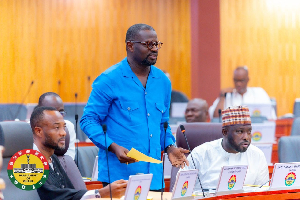 Frank Annoh-Dompreh is Minority Chief Whip and Member of Parliament for Nsawam-Adoagyiri