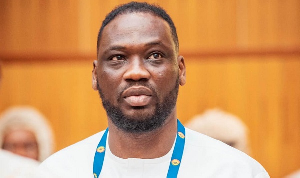
Residents of the Weija-Gbawe constituency in the Greater Accra Region are benefiting from a large-scale community health intervention led by their Member of Parliament, Jerry Ahmed Shaib, who has organised a five-day free eye care outreach to help address preventable eye diseases.
The initiative, known as the Health Train Eyecare Project 2026, is providing free eye screening and surgeries for cataract and pterygium two conditions that remain among the leading causes of visual impairment in many communities.
The programme, organised by Shaib, who also serves as the Second Deputy Minority Whip in the Parliament of Ghana, targets residents of Weija-Gbawe and nearby communities who often face difficulties accessing specialised eye care services.
Held from March 2 to March 6, 2026, the outreach moved across several locations within the constituency to ensure wider coverage.
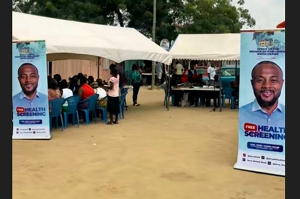
Screening and treatment centres were set up at Mallam Station, High Tension SCC, Gbawe Gonse Down, New Gbawe Old Taxi Rank and Wiaboman, enabling hundreds of residents to receive medical attention closer to their homes.
Beyond eye treatment, the programme also included general health screening as well as registration and renewal of membership under the National Health Insurance Scheme to help residents address other health concerns and improve their access to healthcare coverage.
Speaking at one of the outreach centres, Shaib said the initiative forms part of his broader commitment to improving the well-being of constituents through accessible healthcare services.
According to him, many residents across the constituency suffer from eye conditions that could easily be treated if detected early.
“Good vision is essential for productivity and quality of life.
Unfortunately, many people delay treatment because they cannot afford surgery or specialist consultation.
This programme is meant to bring that care directly to the people,” he said.
The lawmaker also expressed gratitude to partners, including Ghana Adventist Health Services, Columbia Union Conference and Valley View Hospital for supporting the initiative.
Medical professionals involved in the outreach conducted detailed eye examinations and identified patients who required surgery, while others received medication, eye care guidance and referrals for further treatment.
For many beneficiaries, the intervention has been life-changing.
Some residents who had struggled with poor vision for years expressed appreciation to the MP for providing them with the opportunity to receive treatment at no cost.
Community leaders also praised the initiative, describing it as a timely intervention that will help restore sight to many residents and improve the overall health outlook of the constituency.
The Health Train Eyecare Project forms part of a growing number of community-based interventions spearheaded by Shaib to address key social and health needs within the Weija-Gbawe constituency.
Regional News of Monday, 9 March 2026
Source: classfmonline.com
Jerry Ahmed Shaib leads free eye care outreach for Weija-Gbawe residents
 Community leaders also praised the initiative, describing it as a timely intervention