Ghana's Complementary Education Agency (CEA) and Nigeria's National Commission for Almajiri and Out-of-School Children Education (NCAOOSCE) have committed to signing a memorandum of understanding. This will establish an ongoing knowledge exchange on getting children back into education in both countries.
The announcement follows an official Nigerian government visit to Ghana from 2 to 6 February. The delegation included representatives from the Federal Ministry of Education, officials from Kaduna and Kano states, and education programme partners.
During the visit, Nigerian officials observed Ghana's Complementary Basic Education programme in action. The nine-month catch-up programme helps children aged 8-16 gain literacy and numeracy skills.
Around 90% of graduates from Ghana's programme successfully return to formal schooling. The programme costs approximately 100 US dollars per child, making it highly cost-effective.
Nigeria faces one of the world's largest out-of-school populations, with UNICEF estimating 18.3 million children not in education. Addressing this challenge is central to Nigeria's Education Sector Reform Initiative, announced by Nigeria’s Federal Minister for Education, Dr Tunji Aluasa.
The Nigerian delegation visited schools in Ghana’s Northern Region and met with regional officials, communities and education practitioners. They observed classroom teaching and the coordination between national and local government.
Key aspects of the CBE programme include a strong focus on community leadership and facilitation, an accelerated learning curriculum with a targeted focus on literacy and numeracy, small class sizes, the use of child-centred pedagogy, and local language instruction.
Delegations from both countries shared the importance of integrating accelerated learning programmes within government systems and supporting the transition of out of school children into mainstream schools, including identifying and tracking the progress of children over time.
At a roundtable event hosted by the British Council, Hon. Daniel Kwesi Ashiamah, Executive Director of Ghana’s CEA said, “The Ghanaian child is at the centre of the Ministry of Education's policies, which call for this special programme to give them a second chance at education. The future of every nation hinges on the younger generation. Basic education is non-negotiable and not a favour done to children but rather to the nation. Previously donor funded, the Government of Ghana is currently financing the program which supports 10,000 learners in 12 districts across 4 regions in Ghana.”
Dr Sani Idriss, Executive Director of the NCAOOSCE noted that, “Our greatest takeaway from this visit is the remarkable level of collaboration and synergy across all tiers of government—from the national level to the regional and municipal authorities, reflecting a shared vision and coordinated and consistent approach. This unity, including on community engagement and involvement, has been deeply impressive and is a major reason Ghana has achieved tremendous success in tackling the challenge of out-of-school children. Flexible learning models accommodate the needs of parents and learners. These lessons will strengthen our efforts in Nigeria, giving us renewed encouragement to do more in addressing the Almajiri and out-of-school children challenge for more positive outcomes."
The UK facilitated this partnership through the British High Commissions in Accra and Abuja. The British Council and UK-funded education programmes, including PLANE and the What Works Hub for Global Education, supported the exchange.
Both countries will continue working together to adapt successful approaches to their contexts. This collaboration supports the UK government's commitment to breaking down barriers to opportunity for children worldwide.
Regional News of Wednesday, 11 February 2026
Source: British High Commission, Accra
Ghana and Nigeria unite to tackle out of school children challenges
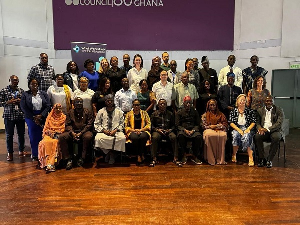 During the visit, Nigerian officials observed Ghana's Complementary Basic Education programme