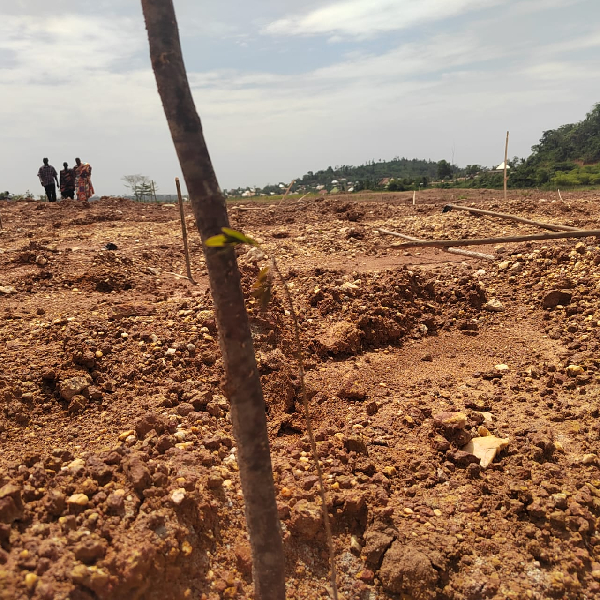
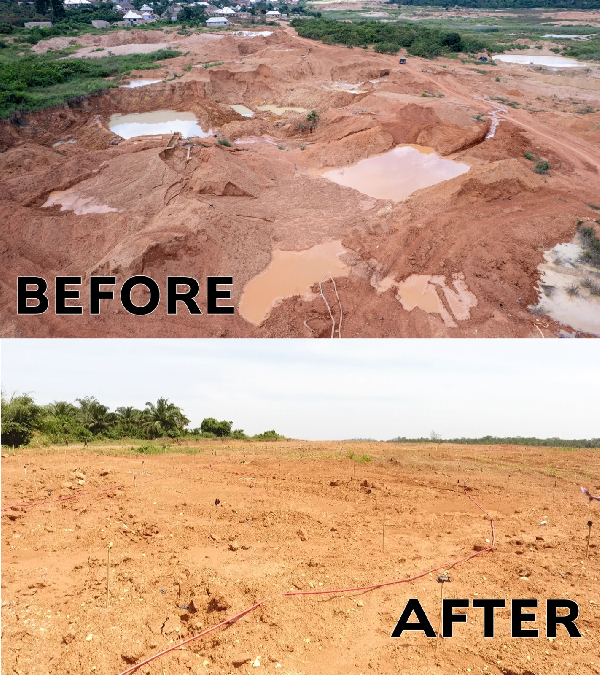
About 800 acres of land degraded by years of illegal mining at Nyankumase in the Manso Adubia District of the Ashanti Region have been successfully reclaimed, marking a significant milestone in the Mahama administration’s renewed campaign against galamsey and environmental degradation.
The land, once riddled with deep open pits, polluted streams and destroyed cocoa farms, has now been replanted with cassia and teak trees under the government’s Galamsey Rehabilitation Initiative.
The intervention has transformed the former mining wasteland into a site of ecological recovery and economic potential.
The reclaimed area now stands as a symbol of restoration, with the selected tree species chosen for their resilience and long-term economic value.
Officials say the plantations are expected to restore vegetation cover while creating sustainable forestry opportunities for future generations.
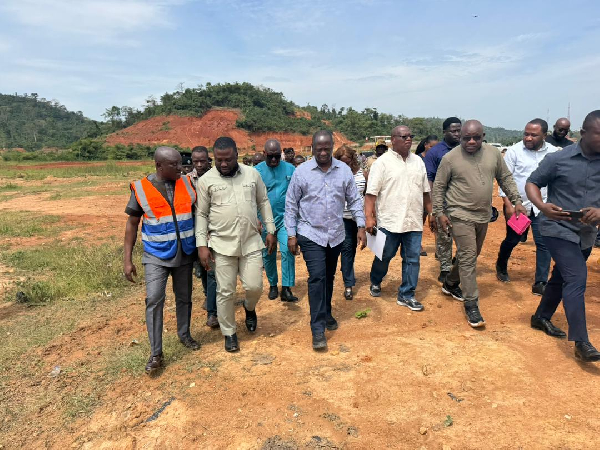
Inspecting the project, the Minister of Lands and Natural Resources, Emmanuel Armah-Kofi Buah, reaffirmed the government’s commitment to protecting rivers, farmlands, and forest reserves from the destructive impact of illegal mining.
He noted that the reclamation efforts are being complemented by national programmes such as Tree for Life and Blue Water, which aim to strengthen ecological sustainability and safeguard Ghana’s water bodies.
Beyond environmental recovery, authorities say the Nyankumase project will also generate employment and stimulate local economic activity.
Reclaimed sites are expected to be converted into farmlands, forest plantations, and development-friendly zones, turning devastated landscapes into productive assets.
The Galamsey Rehabilitation Initiative has earmarked several other degraded sites across the country for similar interventions as part of a broader strategy to address the long-term effects of illegal mining.
Despite ongoing challenges, the government insists it will not relent in its fight against galamsey, which continues to pollute rivers, destroy farmlands, and undermine livelihoods in many communities.
“The choice of species is deliberate,” Armah-Kofi Buah said. “We are restoring vegetation while ensuring future economic value through sustainable forestry. This project is about recovery, livelihoods, and sustainability.”
He added that the government plans to plant an additional 120 million trees this year as part of its nationwide reforestation drive.
“We are moving to reclaim our lands, one district at a time. We must preserve these lands for future generations and work together to restore Ghana to its former glory,” the minister said.
With Nyankumase serving as a flagship project, the reclamation programme reflects President John Dramani Mahama’s broader commitment to reversing the damage caused by illegal mining and returning degraded lands to productive use.
For residents, the transformation is deeply personal. “We thought the land was gone forever,” said Kwaku Mensah, a farmer whose family lost its cocoa farm to mining. “Now, with the trees coming back, we can dream again of farming and raising our families here.”
The Chief of Manso Adubia, Nana Doku Appiah Dankwa II, who was present during the inspection, expressed gratitude to the government for restoring the land and bringing renewed hope to the community.
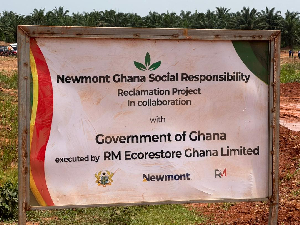
The reclamation works are being carried out by RM Ecorestore Ghana Limited, a firm supporting the Government of Ghana in reclaiming and revegetating degraded and mined-out lands. The project is a partnership between the Government of Ghana and Newmont Ghana, a large-scale mining company operating in the Eastern and Ahafo regions.
#TrendingGH: Watch some Ghanaians react to Kotoka International Airport renaming:
Regional News of Thursday, 5 February 2026
Source: Isaac Justice Bediako, Contributor
Mahama government reclaims 800 acres of galamsey-degraded land at Manso Nyankumase
 The Galamsey Rehabilitation Initiative has earmarked several other degraded sites across the country