Correspondence from the Northern Region
The Chief and residents of Zantani, an overseas community across the White Volta River in the Tolon District of the Northern Region, are crying out for help over the deplorable state of their only health facility, a CHPS compound that serves over 7,000 people in Zantani and 17 other surrounding communities.
A visit by GhanaWeb on Monday painted a heartbreaking picture of hardship and fading hopes. The Zantani CHPS compound, which should be a place of healing and hope, is now a shadow of itself — a structure struggling to keep its doors open amid deteriorating conditions and lack of basic equipment.
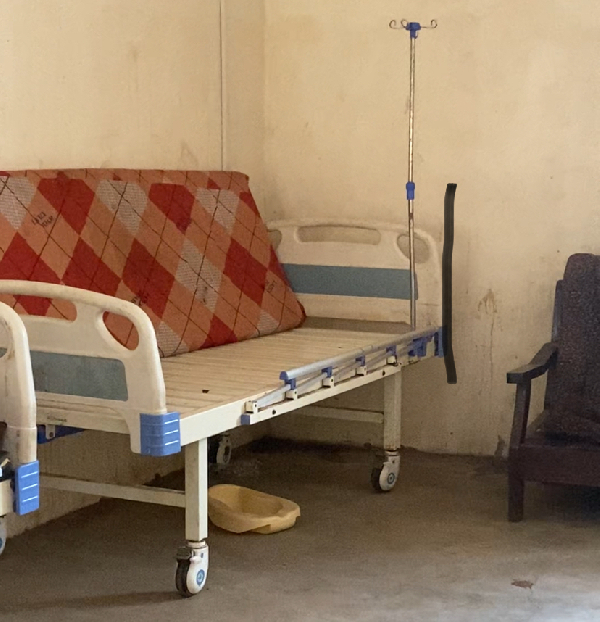
The facility’s detention room, meant to hold patients temporarily, is so small that men, women, and children are forced to share the same space.
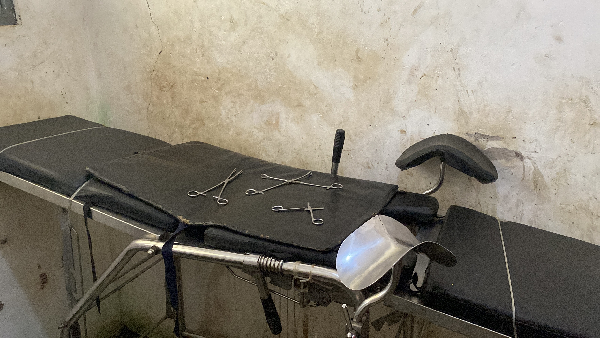
The delivery bed, the one on which new life is supposed to be welcomed into the world — is rusted, worn out, and barely usable. Nurses say the situation is “very bad.”
The facility also operates without clean water and lacks a vaccine fridge, making it difficult for them to store vaccines for outreach programs.
Despite these challenges, the dedicated staff continue to serve their people with resilience and compassion. But the burden, they say, is becoming unbearable.
Community Health Nurse at the facility, Kuupan Fred, told GhanaWeb’s Northern Regional Correspondent, Mumuni Yunus, that the Zantani CHPS compound has not seen any improvement since he was first posted there in 2015.
“I was posted here 2015. Nothing new has been to this facility since I was posted here 10 years ago. If you check the condition of the delivery room, it’s very bad. Our delivery bed is not in a good condition whereby you can deliver a woman comfortably. We don’t have a vaccine fridge because we need to store vaccines to be able to go for our outreaches," he said.
Kuupan described the current state of the delivery room as “very bad,” adding that it makes it difficult for them to deliver pregnant women “comfortably.”
He lamented that the facility’s detention room forces both men and women to share the same space due to lack of infrastructure.
“If you see the detention room, we combine both the male and the female due to lack of space. We need separate detention rooms for both males and females. Putting them together is difficult, it makes both the men and women uncomfortable. We also need a labour ward for deliveries to ensure privacy for the pregnant women because it is very important," he said.
Water scarcity, too, is a major concern.
“We lack water; the whole community has three boreholes. The pressure on the boreholes is too much, so we need a borehole by the facility because we use a lot of water. Sometimes when you go it will be crowded; you have force and go and use the river water, which is not wholesome for consumption or for work,” he explained.
Perhaps most troubling, the health workers themselves live under difficult conditions.
Kuupan said five of them are crowded in the room, which is also used to store their medicines.
They have been forced to use the medical storeroom as living quarters due to the absence of accommodation for nurses — a situation that affects their comfort, safety, and efficiency.
Chief and Residents Plead for Help
The Chief of Zantani, Zantani Lana Abdul-Aziz, has made a heartfelt appeal to government, NGOs, and benevolent individuals to come to their aid.
He said the community’s health facility, in its current state, denies residents quality health services, emphasising that access to quality healthcare is a basic need, not a privilege.
As part of efforts to support the facility, the chief revealed that the community has taken the bold step of initiating a self-help project to construct a three-room nurses’ quarters for the staff.
However, the project has not started due to financial constraints. He noted this remains a big task for the underserved community, which he emphasised needed external support.
For residents like Umar Mohammed Hardi, the health facility is not just a building; it is their only lifeline.
“During emergencies, especially at night, we can’t cross the river over to Lingbung [the closest community with a health centre], nor can we get to Daboya [in the Savannah Region] because of the distance. So, our facility needs to be well equipped to be able to save lives in this area.”
The cries of Zantani echo those of many rural communities in Ghana: resilient people left to struggle with crumbling infrastructure and fading hope. But the people of Zantani still believe that with the right support, their story can change.
For now, they continue to wait, praying that the next cry heard in their community will be that of a newborn delivered safely, not another call for help unanswered.
Regional News of Tuesday, 4 November 2025
Source: www.ghanaweb.com
Zantani residents cry out over 'poor' state of only health facility
 The Zantani CHPS compound is now a shadow of itself