The Paramount Queen of Alavanyo Traditional Area, Mamaga Ametor Hoebuadzu II, has called on traditional authorities across Africa to move beyond settling disputes after violence occurs and become proactive agents of peace by identifying early warning signs and addressing grievances before they escalate into conflicts.
She said traditional leaders, as custodians of culture, customs and community values, occupy a strategic position in preventing violence through mediation, reconciliation and the promotion of peaceful coexistence.
Mamaga Ametor made the call during a follow-up webinar with traditional leaders in West Africa organised by the African Union (AU) on Monday, November 9, 2026, in support of the implementation of the AU's Silencing the Guns Initiative.
Speaking on the theme, “Traditional Leadership and Silencing the Guns: Addressing Community-Level Drivers of Conflict”, she stressed that sustainable peace required more than the absence of war, noting that justice, mutual respect, social cohesion and economic opportunities were essential to peaceful communities.
She urged traditional authorities to strengthen engagement with young people to prevent violent extremism and work closely with security agencies to address the proliferation of illicit small arms and light weapons.
According to her, women and young people must also be given meaningful opportunities to participate in community decision-making and peacebuilding processes, as women are not merely victims of conflicts but also mediators and agents of transformation.
“Another critical responsibility is preventing violent extremism. Traditional leaders must engage young people, guide them towards positive values and discourage activities that threaten our collective security,” she said.
She proposed five practical priorities, including institutionalising traditional leaders' participation in local peace committees, strengthening community-based early warning systems, investing in mediation training, prioritising youth empowerment and promoting accountability in efforts to prevent armed violence.
Mamaga Ametor further called for stronger collaboration among traditional authorities, neighbouring communities, security institutions, civil society organisations, women and youth groups to build resilient communities.
She cautioned traditional leaders against allowing differences, competition over authority and personal interests to undermine the peace and unity of their communities.
The webinar builds on the inaugural Continental Dialogue with Traditional, Inter-Faith and Judicial Leaders held in Accra on June 16 and 17, 2026, to strengthen the contribution of traditional institutions to the AU's Silencing the Guns agenda.
In opening remarks delivered on behalf of the AU Commissioner for Political Affairs, Peace and Security, Ambassador Bankole Adeoye, and the AU High Representative for Silencing the Guns, Dr Mohamed Ibn Chambas, the Acting Coordinator of the Silencing the Guns Unit, Sheku Tejan Sesay, said the webinar was intended to translate the commitments made in Accra into concrete and sustained action.
He said traditional leaders had an indispensable role in conflict prevention, early warning, mediation, reconciliation and promoting peaceful coexistence.
The AU's Silencing the Guns Initiative forms part of Agenda 2063, which envisions a peaceful and secure Africa through mechanisms for conflict prevention, peaceful resolution of disputes and reconciliation.
Regional News of Monday, 16 November 2026
Source: Desmond Tinana, Contributor
Traditional authorities must move beyond settling disputes – Mamaga Ametor
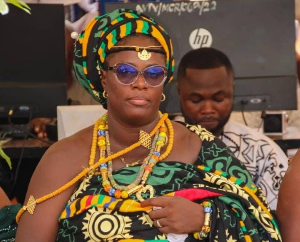 Mamaga Ametor, Queen Mother of Alavanyo Traditional Area