Stakeholders working to end gender-based violence in Ghana are calling for urgent action to strengthen the enforcement of the Domestic Violence Act, 2007 (Act 732).
They warn that gaps in implementation, underfunded services and cultural barriers are undermining the law’s ability to protect survivors of abuse.
The call comes after the release of findings from the Gender Rights and Empowerment Project (G-REP), led by Renel Ghana Foundation in partnership with SONGTABA and with funding from the UN Trust Fund to End Violence Against Women.
The report highlights ongoing challenges, including high rates of intimate partner violence (IPV) and harmful practices such as witchcraft accusations, which disproportionately affect women and girls in northern Ghana.
According to the 2022 Ghana Demographic and Health Survey, IPV prevalence is highest in the Savannah Region, where over 53 percent of women have experienced violence from a partner, followed closely by the Central Region at 44 percent.
A separate 2022 study by SONGTABA found that more than 1,000 older women accused of witchcraft have been banished to so-called “witch camps,” with nearly all of them living in extreme poverty and over half experiencing depression.
“These figures are a stark reminder of the urgent need for stronger coordination between institutions and improved services for survivors,” said Nelson Richardson-Mandela, Executive Director of Renel Ghana Foundation.
In response to these issues, the G-REP project has introduced one-stop centers in selected districts, offering survivors psychosocial counseling, healthcare and legal assistance under one roof.
“Our experience in pilot districts demonstrates that survivors can receive comprehensive care when services are coordinated. Scaling this model nationally could be a game changer for survivor support.”
Despite the Act’s passage nearly two decades ago, the report reveals systemic obstacles that continue to undermine its impact.
Agencies mandated to enforce the law face severe budget constraints, inadequate logistics and a shortage of personnel trained to handle domestic violence cases.
Many police officers, social workers and judicial staff remain unaware of legal instruments such as protection and occupation orders, resulting in their underutilization.
The Domestic Violence Victims Support Fund, which was designed to provide financial and material aid to survivors, remains largely underfunded, while shelters and rehabilitation programs are scarce.
Survivors often encounter delayed police responses, slow court processes and at times, inappropriate treatment by officials, which erodes trust in the justice system.
“The disconnect between the law and prevailing societal norms is a major barrier to implementation,” said a SONGTABA representative.
“Many survivors fear backlash or ostracism from their families and communities if they speak out.”
Stakeholders are urging a more comprehensive approach to address these challenges.
They are calling for trauma-informed training for law enforcement and judicial officers, stronger leadership and resourcing for the Domestic Violence Management Board, nationwide awareness campaigns to educate communities and professionals about the law and measures to ensure faster prosecution of domestic violence cases.
They are also advocating for the institutionalization of one-stop centers across all regions to ensure consistent, survivor-centered care.
Richardson-Mandela said these reforms are critical to ensuring that the Domestic Violence Act delivers on its promise.
“Without urgent action, survivors will remain at risk despite having legal protections on paper. This is not just a legal issue; it is a matter of justice, dignity and safety for women and girls in Ghana,” he stated.
GhanaWeb's latest documentary, Sex for Fish, that explores the plights of teenage girls in coastal communities, all in an attempt to survive, is out. Watch it below:
Regional News of Thursday, 4 September 2025
Source: Kwesi Boham, Contributor
Stakeholders urge stronger implementation of Ghana’s Domestic Violence Act
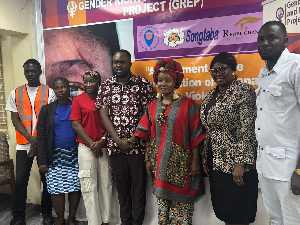 Stakeholders are urging stronger implementation of Ghana’s Domestic Violence Act