Regional News of Tuesday, 31 March 2026
Source: Princess Yanney, Contributor
Progressive forces unite on reparations and colonial accountability

As the United Nations makes history by declaring the Transatlantic Slave Trade humanity’s gravest crime, African and diaspora voices converge in a global call for systemic redress — and chart a path from activism to political liberation.
On March 30, 2026, something shifted in the global conversation about justice, history, and accountability.
The Pan-African Progressive Front convened an online conference that was both a reckoning with the past and a blueprint for the future — a gathering 97 participants, scholars, journalists, advocates, and movement leaders from 34 African and diaspora nations assembled not to lament old wounds, but to forge strategies that would transform centuries of moral debt into concrete political action.
The conference was no ordinary assembly of like-minded voices. It was a strategic prelude to the forthcoming Geneva Forum on Reparative Justice and Colonial Accountability — a summit poised to become one of the most consequential intersections of international law, political advocacy, and historical memory the continent has ever helped convene.
In assembling this preparatory meeting, the PPF placed African and diaspora perspectives at the very centre of global discourse on justice and restitution, refusing, categorically, the margin that history has so often forced upon them.
The backdrop against which this conference unfolded lent it a gravity that few gatherings can claim.
Earlier in 2026, the United Nations passed a resolution declaring the Transatlantic Slave Trade the gravest crime against humanity — a moment described by participants as a seismic shift not merely in the language of diplomacy, but in the moral architecture of international law itself.
The resolution’s significance cannot be overstated. For generations, the Transatlantic Slave Trade occupied a peculiar liminal space in international law — universally condemned in moral terms, yet never formally codified as the categorical crime that its scale and systematic brutality demand it be recognized as.
The UN’s action closes that gap, establishing a legal, political, and moral foundation upon which advocates can now build claims for accountability and restitution with unprecedented institutional legitimacy.
The Architecture of Accountability
Throughout the session, speakers explored three interlocking pillars: historical redress, economic empowerment, and the evolution of international legal frameworks. These themes are not independent — they are, as the conference demonstrated, profoundly entangled.
The question of historical redress cannot be separated from economic reality; the mechanisms of international law are both the arena in which reparations claims must be fought and, too often, the instrument through which colonial legacies have been preserved.
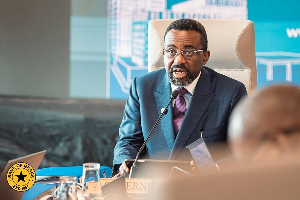
On the question of economic reparations, the conference did not retreat into abstraction. One speaker confronted, with unflinching directness, the argument that compensation would bankrupt the economies of former colonial powers:
“And if they were to pay compensation, first and foremost, their economies would go bankrupt. Well, if their economies are built on stolen money, then they must go bankrupt. Because we demand that stolen money. In our broad mobilization, it is important for us to understand clearly that we need to do a lot of work. We need to do some scientific work.”
— Kwesi Pratt Jnr, PPF Online Conference, March 30, 2026.
The argument is deliberately provocative, but it is also precisely calibrated. The insistence on “scientific work” — on rigorous, documented, peer-reviewed calculation of what was taken — is a recognition that moral claims, however legitimate, must be accompanied by the evidentiary infrastructure that legal and diplomatic processes demand. The movement, this remark suggested, must be as technically rigorous as it is morally clear.
Reparations as Political Struggle: A strategic reframing
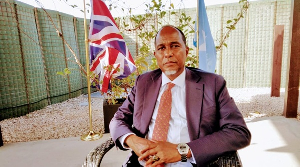
Perhaps the conference’s most distinctive intellectual contribution came from Soumana Adamou, a Pan-Africanist journalist, whose address on reparations as a political struggle challenged the movement to undertake a fundamental rethinking of its own methods and dependencies.
“No reparations claim can succeed without creating the condition.”
— Soumana Adamou, Pan-Africanist Journalist.
Adamou’s framing was as rigorous as it was uncomfortable. Demanding accountability from former colonial powers while remaining economically dependent on them — for security, currency, or resource extraction — is, he argued, a structural contradiction that undermines the very demands being made. The moral authority of the reparations claim is real; the political leverage required to enforce it is something that must be built, deliberately and strategically, from within.
“We must now abandon denouncing past crimes while simultaneously demanding public apologies or compensation from former colonial powers. This stance perpetuates the continent’s weakness and continued dependence. How can one demand justice from one’s oppressor when one still depends on them for security, currency, or the exploitation of resources? The real challenge, therefore, is to transform activism into an instrument of political liberation.”
— Soumana Adamou, presenting on ‘Reparations as a Political Struggle.’
This is a bracing argument, and its implications are far-reaching. It demands that the reparations movement evolve from its current posture — morally powerful but structurally vulnerable — into a force that builds the sovereign conditions under which justice becomes not merely demanded, but achievable.
It is, in essence, a call to treat the struggle for reparations not as an appeal to the conscience of former oppressors, but as a project of political self-determination.
The Geneva Convergence: Where History Meets Mechanism
The conference’s forward-facing energy crystallized in discussions about the upcoming Geneva Forum — and in a statement from Sarfo Kantanka of Ascend Network, based at the University of Ghana, that captured the Forum’s unique ambition:
“The Geneva Conference is not going to be like any other conference. This is going to be a strategic convergence of all the interested parties. And we believe that it is in Geneva that we can converge the history. We bring in the law, we look at the politics, and then we look at the advocacy, and also look at how we can have a working mechanism to take this idea of reparations much further.”
— Mr. Sarfo Kantanka, Ascend Network, University of Ghana.
The phrase ‘working mechanism’ is key. It signals a maturation of the reparations movement — a deliberate shift from the realm of historical grievance and symbolic acknowledgment into the domain of institutional architecture. What the Geneva Forum aspires to build is not merely another declaration, but a functioning scaffold upon which claims can be processed, obligations can be defined, and accountability can, at last, be operationalised.
Sumaila Mohammed, Head of the Economics Department of the Pan-African Progressive Front, presented on behalf of the PPF Secretariat did two major announcements: the development of a comprehensive advocacy toolkit and manual designed to equip reparations advocates worldwide, and a strategic overview of preparations for the Geneva Forum.
“Now, whilst we give people the tools to advance their advocacy, it is also important to look at the platform to promote it.”
— Sumaila Mohammed, Head of Economics, PPF.
The toolkit — a first-of-its-kind manual developed by the PPF Secretariat — documents legal frameworks and strategies for demanding reparations from European governments and institutions. Mohammed highlighted specific historical examples including the UK government's documented role in the Transatlantic Slave Trade, providing advocates with concrete, evidence-based arguments for use in domestic and international legal and political forums.
He also addressed the application of reparative justice concepts to specific cases, including the Rif War (1921–1926) in Morocco — in which Spanish colonial forces used chemical weapons (mustard gas) against civilian populations — as an illustrative example of documented colonial crimes for which accountability has never been formally established.
Partner organisations played a vital role in amplifying the conference’s reach, with speakers from across the Pan-African advocacy ecosystem underscoring the necessity of unified mobilisation. Sovereignty in a post-colonial world, several voices insisted, is not granted — it is constructed, movement by movement, resolution by resolution, mechanism by mechanism.
A Reckoning Whose Time Has Come
The PPF’s conference of March 30, 2026 will be remembered as a moment when the reparations movement stepped across a threshold. The UN resolution transforms the moral case into legal precedent. The intellectual frameworks advanced by speakers like Soumana Adamou provide strategic clarity about the conditions under which justice can actually be won. And the Geneva Forum offers a concrete arena in which history, law, politics, and advocacy will be brought into productive collision.
TIMELINE OF A MOVEMENT
CENTURIES OF SILENCE — Transatlantic Slave Trade conducted across four centuries, systematically enriching colonizing powers while decimating African communities.
DECADES OF ADVOCACY — Pan-African movements, diaspora scholars, and grassroots activists wage sustained campaigns for formal recognition and accountability.
2026 — LANDMARK — UN resolution declares the Transatlantic Slave Trade the gravest crime against humanity, rewriting the international legal landscape.
GENEVA — NEXT — The Forum on Reparative Justice converges history, law, politics, and advocacy into a working mechanism for reparations.
What emerged from this gathering was not the melancholy of a movement awaiting recognition. It was the disciplined urgency of one that has received its recognition — and now intends to convert it into something durable, something enforceable, something real.