Correspondence from Eastern Region
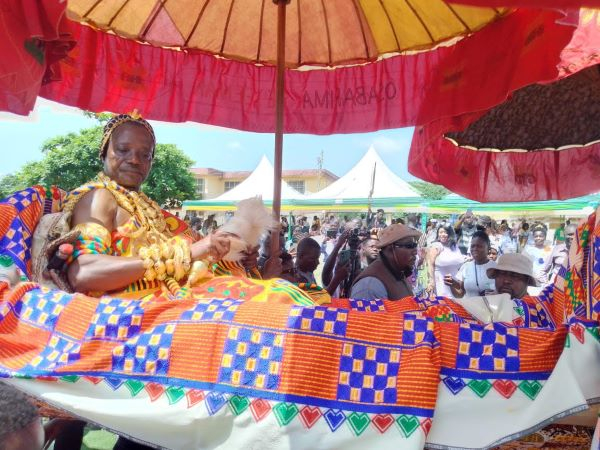
Osabarima Dr Owusu Beyeeman, the Chief of Akyem Muoso, has delivered a searing indictment of Ghana’s political establishment, stating unequivocally that the approach used by successive regimes to combat corruption has been a complete failure and cannot resolve the national canker.
Speaking at the inaugural Yensom festival of the chiefs and people of Akyem Muoso, Osabarima Beyeeman stressed that from Ghana’s independence under Dr Kwame Nkrumah, through military juntas, and into the current Fourth Republic, politicians have continuously “been playing with the conscience of Ghanaians” regarding the fight against graft.
The Chief lamented the pervasive nature of corruption, noting that many traditional leaders avoid commenting on the issue due to the potential backlash from the political class. However, he insisted that decisive action is paramount for the nation's progress.
“Corruption has become a difficult subject matter in Ghana... It is however imperative to deal with it decisively if we want to progress as a country,” Osabarima noted.
He highlighted the persistent and predictable cycle of corruption exposes linked to regime change, describing the phenomenon as a long-standing national drama.
“The era when a certain group of people are powerful and angels when they are in government and in a matter of days becomes thieves when they leave power must stop. This change of regime and its associated drama of plethora of corruption related expose has become the norm, predating the inception of the fourth Republic,” he stated.
Call for Ruthless Anti-Corruption Action
Osabarima Dr Owusu Beyeeman argued that the solution lies not in political rhetoric, but in empowering independent state institutions. He called for the state’s anti-corruption agencies and investigative bodies to work effectively and fearlessly, regardless of the status or political affiliation of the individuals involved.
He emphasised that if a government official commits an offence while in office, the state institutions responsible for investigating and prosecuting corruption-related matters must be seen to be taking immediate action.
Radical Action Needed to End Galamsey
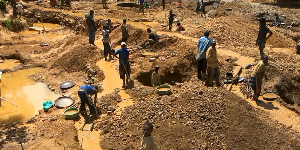
The Chief also turned his attention to the escalating crisis of illegal mining, locally known as ‘galamsey,’ warning that if the menace is not tackled fearlessly and immediately, Ghana risks an existential environmental catastrophe.
“If the menace of illegal mining is not tackled fearlessly, Ghana may import water and food before we can survive as a country,” he cautioned.
Osabarima Beyeeman referenced recent alarming reports detailing the power wielded by illegal miners, citing an incident where the CEO of the Environmental Protection Authority (EPA), accompanied by heavy military and national security operatives, had to flee for their lives during an official tour of galamsey towns in the Ashanti Region.
He called for immediate, forceful government intervention: “I believe the solution lies with the Government with all the powers of the state. A more radical and ruthless action is required to end this menace.”
The Chief warned that the “gangsterism by illegal [miners],” if not stopped, could eventually turn into vigilantism that severely hurts the nation. He also challenged the common justification for illegal mining, vehemently disagreeing with the assertion that it provides necessary jobs for the youth.
Instead, the Muosohene demanded that financiers of galamsey must redirect their capital saying, "Financiers of galamsey must invest in equipment that would support and improve farming rather than illegal mining that harms the environment.”
Yensom Festival Launches Development Road Map
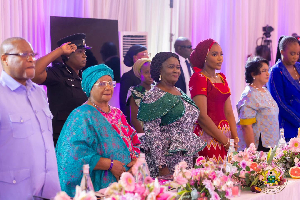
The Osabarima’s address served as the highlight of the maiden Yensom festival, an initiative designed as a homecoming event aimed at promoting peaceful coexistence and strategic development within Akyem Muoso. The annual gathering is intended to bring citizens home, both local and abroad, to strategize development, conduct introspection, and plan for the ensuing year.
During the festival, a ten-year development plan was formally launched. This roadmap seeks to identify the immediate needs of Muoso and provide a structural approach for development through local initiatives and self-help projects.
Furthermore, the Muoso History Book was launched. Osabarima Dr Owusu Beyeeman explained that the book was written by the State Book after extensive research to close a historical vacuum that had allowed for the distortion, misinformation, and deliberate adulteration of history for individual interests.
The book aims to provide accurate information, widen knowledge, and accurately position Akyem Muoso within the Akyem Abuakwa State. It is intended to serve as a primary resource for investors, academicians, researchers, and, crucially, the judicial committees of the traditional council and the House of Chiefs.
Regional News of Monday, 17 November 2025
Source: www.ghanaweb.com
Political approach to corruption has failed Ghana – Akyem Muoso Chief
 Osabarima Dr Owusu Beyeeman is the Chief of Akyem Muoso