Regional News of Monday, 18 August 2025
Source: www.ghanaweb.com
PWDs in Lower Manya Krobo appeal for disability skills development and training centre

Correspondence from Eastern Region
Persons Living With Disabilities (PWDs) group in the Lower Manya Krobo Municipality of the Eastern Region is calling on the government, philanthropists and other stakeholders to support them in establishing a dedicated and well-resourced disability skills development and training centre in the municipality to serve as a training hub, with accommodation and health facility for the group.
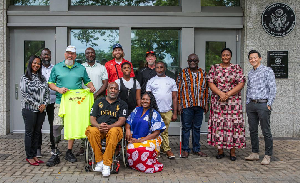
The appeal was made during a sensitisation session organised by the Youth and Women Empowerment (YOWE) organisation on the effective use of the 3% Disability Common Fund allocated to PWDs, through market-driven research and business ideation. The session was attended by 60 representatives of the registered membership of the PWD community in the Municipality.
Speaking at the event, the Chairman of the PWDs in the Municipality, Solomon Sackitey, emphasised the urgent need for a centralised and well-resourced facility that would address several pressing needs of their members.
“We need land and associated resources to establish a modern Disability Skills Development and Training Centre, among many other purposes, to enable us to work under government supervision”.
This centre, he said, would equip them with practical skills and knowledge in trades like footwear making and repairs, bead making and other handicrafts. "This centre would train our members and others like unemployed youth to produce footwear (shoes, sandals), leather bags and uniforms for school children, and retailers among other items, to earn a living,” he said.
According to Solomon Sackitey, "beyond economic empowerment, the centre would also serve as a safe space for reporting abuses, discrimination. Our members who lack proper and dignified accommodation could be accommodated with available basic health services tailored to their needs. He lamented the continued exclusion of PWDs from community-level decision-making and criticised the lack of accessible routes in many parts of the municipality, making daily movement a significant challenge for persons with physical disabilities.
The disbursement of the Disability Common Fund also came under scrutiny during the forum. Sackitey expressed concern that many beneficiaries often receive items they do not apply for, limiting the fund's impact and, in some cases, recipients are compelled to sell those items to survive.
"The fund has helped many of us, but there is a need for it to be more tailored to our actual needs,” he added.
The engagement formed part of the second phase of YOWE’s Action for Voice, Influence and Inclusive Development (AVID-2) project, with funding support from STAR-Ghana Foundation. The AVID-2 initiative, spanning 18 months, aims to build the capacity of PWDs through advocacy, strategic planning, and improved access to resources.
The Executive Director of the Youth and Women Empowerment (YOWE), Emmanuel Nuetey Siakwa, highlighted the need for more strategic use of government aid provided through the assemblies. He noted that although many PWDs benefit from these support schemes, the impact is often limited due to a lack of due diligence and poor alignment between the aid received and the beneficiaries’ actual needs.
Siakwa explained that the purpose of the engagement was to guide PWDs in identifying and prioritising needed support that matches their capacities and business proposals, which would lead to more sustainable outcomes for improved livelihoods.
He also complained about the Fund Management Committee for not properly assessing business proposals from PWDs, resulting in mismatched support and priorities.
The Technical Advisor on the project, Daniel Alimo, advised the PWD community to foster unity, protect their registration documents, and develop a clear five-year strategic plan to guide their activities. He also urged them to approach institutions for support through corporate social responsibility (CSR) initiatives and well-crafted concept notes to the donors for support.
On the proposed disability centre, Alimo suggested a collaborative model between the government/assembly and PWDs, where a portion of funds released under the disability fund could be earmarked for the construction of the centre within a reasonable period.
“A disability centre will go a long way to make the community (PWDs) self-reliant and reduce long-term challenges. If we plan well and allocate a portion of the fund toward the project, this dream can become a reality,” Alimo said.
The initiative is part of a broader three-year development strategy aimed at promoting inclusive development and empowering groups (smallholder farmers, market women, fishmongers/processors and PWDs) to become active contributors to the local economy development, inclusive decision-making processes and improved livelihoods.