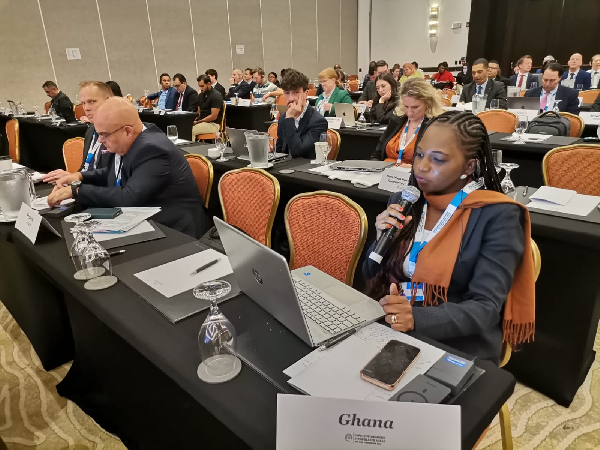
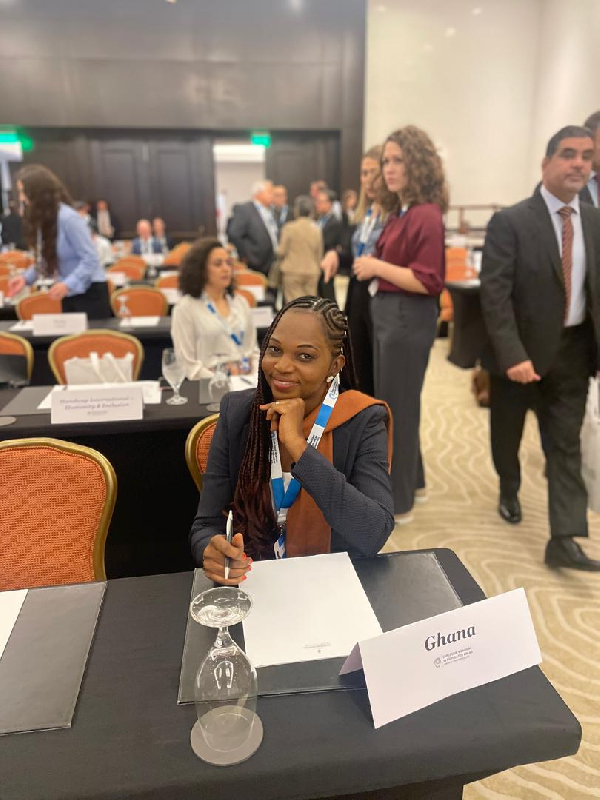
From November 18 to 20, 2025, Ghana, through the National Commission on Small Arms and Light Weapons (NACSA), actively participated in the Second International Conference on the Political Declaration on Strengthening the Protection of Civilians from Explosive Weapons in Populated Areas (EWIPA) in San José, Costa Rica.
The gathering brought together over 90 states, along with civil society organizations, the United Nations, and the International Committee of the Red Cross (ICRC) among others to review progress, share experiences, and chart a roadmap for global civilian protection in conflict zones.
The official opening on November 19 featured keynote remarks from Costa Rica’s Vice Minister for Multilateral Affairs, Ambassador Alejandro Solano Ortiz, and statements from UN representatives, including High Commissioner for Human Rights Volker Turk and UN High Representative for Disarmament Affairs Izumi Nakamitsu.
The President of the ICRC, Mirjana Spoljaric, also addressed the assembly. During the endorsing ceremony, Honduras and Thailand formally joined the Declaration, while Mozambique announced its intention to sign.
Explosive weapons such as bombs, artillery, rockets, and improvised devices pose a significant threat in populated areas.
Beyond immediate casualties, their use destroys critical infrastructure like hospitals, schools, and water systems, leaving lasting social and environmental damage.
Ghana has long recognized these dangers and continues to engage actively in international efforts to reduce civilian harm, even as it prepares to formalize its endorsement of the EWIPA Declaration.
At the Conference, Ghana delivered a statement reaffirming its commitment to protecting civilians.
The statement highlighted key priorities: developing national implementation plans tailored to local contexts, providing victim assistance and recovery, promoting global solidarity and capacity building and supporting transparent data collection and reporting to track civilian harm and recovery efforts.
The three-day event included a Protection Forum organized by the International Network on Explosive Weapons, where NACSA engaged in substantive discussions on national implementation, victim assistance, data collection, humanitarian access and military operational practices.
Ghana’s delegation explored ways to strengthen national policies, empower focal points, facilitate knowledge exchange, and build capacity within security services to respond effectively to explosive weapon related incidents.
The Conference concluded with a collective roadmap toward the Third International Conference, focusing on strengthening national policies, improving monitoring and reporting of civilian harm, supporting victims and promoting universalization of the Declaration.
Costa Rica, Ireland, and Norway called on all endorsing states to sustain and advance these commitments, keeping civilian protection at the center of global efforts.
Ghana’s participation reaffirmed the country’s dedication to multilateral cooperation and civilian protection. NACSA’s engagement strengthened Ghana’s voice in international humanitarian discussions, provided opportunities to share best practices and prepared the country for future active involvement, including formal endorsement of the EWIPA Declaration.
Looking ahead, Ghana is well-positioned to champion peace and civilian protection in Africa, promote capacity building, and foster international collaboration to mitigate the devastating effects of explosive weapons.
Regional News of Friday, 12 December 2025
Source: smallarmscommission.gov.gh
Ghana reaffirms commitment to civilian protection at the Second International EWIPA Conference
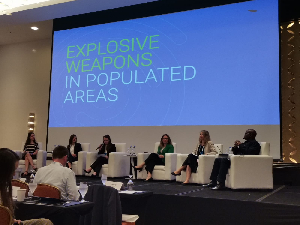 The gathering brought together over 90 states, along with civil society organizations