The Ghana Productive Safety Net Project (GPSNP) Phase II, under the Ministry of Local Government, Chieftaincy and Religious Affairs, continues to improve the livelihoods of women and vulnerable households across the country.
This was highlighted during the celebration of International Women’s Day 2026 at Charingu in the Wa Metropolitan Assembly.
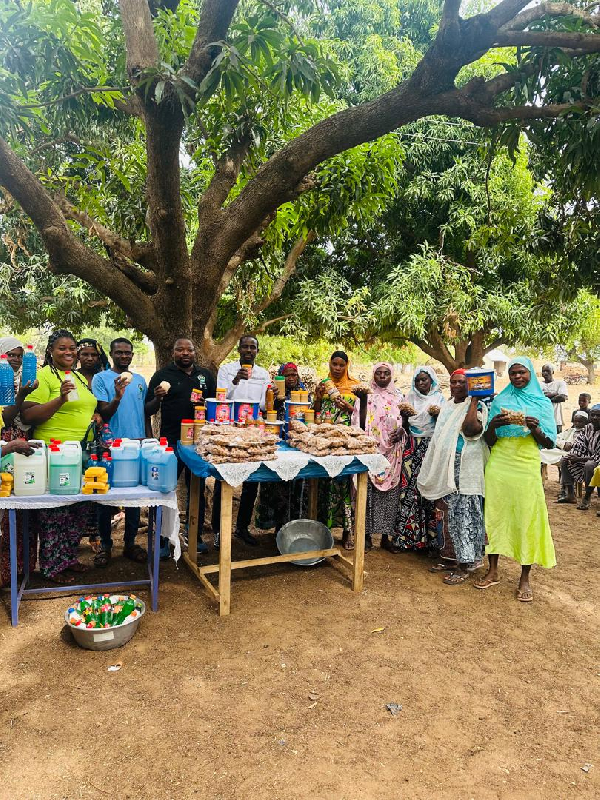
The event, held under the global theme “Rights, Justice and Action for All Women and Girls,” with the campaign focus “Give to Gain: Investing in Women through Support and Opportunity,” brought together chiefs, opinion leaders, women beneficiaries and other stakeholders to highlight progress in women’s empowerment through social protection programmes.
The celebration was attended by the National Coordinator of GPSNP, Prosper Laari, together with officials from the Wa Zonal Office of the project and the Wa Metropolitan Assembly.
Addressing participants, Prof Laari noted that since the implementation of the programme in 2019, GPSNP has deliberately placed women at the centre of its interventions.
According to him, over 136,737 women have benefited from the Productive Inclusion (PI) and Labour-Intensive Public Works (LIPW) interventions under GPSNP and GPSNP2, representing about 69 percent of total beneficiaries—exceeding the programme’s initial target of 60 percent female participation.
He explained that the Productive Inclusion (PI) component provides beneficiaries with entrepreneurial skills training, start-up grants and mentoring support, enabling them to establish sustainable income-generating activities and related investments.
Currently, the programme has enrolled more than 62,000 beneficiaries across over 1,240 communities in 108 Metropolitan, Municipal and District Assemblies nationwide, with women accounting for about 69 percent of participants.
In addition, more than 45,000 beneficiaries have been linked to agricultural support services to improve household nutrition and agricultural productivity.
Prof Laari also highlighted the impact of the Labour-Intensive Public Works (LIPW) programme, which provides short-term employment opportunities for poor and extremely poor households while supporting the development of critical community infrastructure.
Since its introduction in 2011, LIPW has created direct employment opportunities for nearly 300,000 poor and extremely poor individuals across Ghana and supported the construction of over 2,000 community assets, including feeder roads, small earth dams, and plantations established to rehabilitate degraded lands.
Currently, under GPSNP2, more than 83,000 beneficiaries are participating in the programme nationwide, with women making up about 69.5 percent of participants. Additionally, more than GHS181 million has been paid as wages to beneficiaries.
Women beneficiaries who spoke at the event shared how the LIPW programme has helped them smooth household consumption, support family expenses, and keep their children in school.
Others said they had invested their earnings into small businesses, livestock rearing, and farming activities.
Prof Laari further cited findings from an impact evaluation conducted by the Institute of Statistical, Social and Economic Research (ISSER), which indicate that some beneficiaries recorded over a 200 percent increase in earnings and productive investments after completing the Productive Inclusion programme.
Chiefs and opinion leaders in the Wa Metropolitan Assembly commended the programme for its positive impact on communities, noting that it has enhanced women’s confidence and participation in local-level development.
Prof Laari also acknowledged the efforts of the Minister for Local Government, Chieftaincy and Religious Affairs, Ahmed Ibrahim, whom he said is working to ensure that beneficiaries receive their PI grants and that outstanding wages owed to LIPW beneficiaries are paid.
While acknowledging strong financial support from the World Bank, he called on the Government of Ghana to increase domestic funding to complement donor support and institutionalise the PI and LIPW programmes with dedicated government budgetary allocations.
He added that both programmes can serve as pathways for beneficiaries of the Livelihood Empowerment Against Poverty (LEAP) programme to graduate and establish sustainable livelihoods.
He also highlighted the Livelihood Empowerment and Productive Inclusion Programme (LEPIP), introduced with support from UNICEF.
The initiative aims to support over 6,000 out-of-school adolescent girls across 26 districts with livelihood opportunities to address challenges such as teenage pregnancy and early marriage.
The event ended with renewed calls for sustained investment in social protection programmes that empower women and promote inclusive national development.
Meanwhile, watch GhanaWeb’s exposé on the 'dark side of Kayamata' and its devastating impact
Regional News of Monday, 9 March 2026
Source: Ministry of Local Government
GPSNP empowers over 136,000 women as Ghana marks International Women’s Day
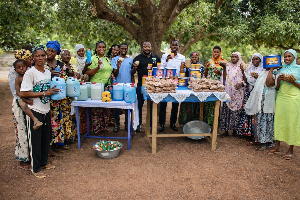 Some of the stakeholders at the event