Construction of the Wenchi Water Supply Project in the Bono Region is about 97 percent complete, Adam Mutawakilu, Managing Director of Ghana Water Limited (GWL), has said.
He said that although work on the project had been impressive, delays in completion were due to outstanding payments on some Interim Payment Certificates (IPCs), assuring that the project would be completed by June this year.
On completion, Mutawakilu said the facility would enhance national water coverage and advance the Government’s agenda of providing potable water to the people.
He said GWL, through the Ministry of Works and Housing, remained committed to ensuring that the country met its growing water demand, particularly in urban and peri-urban communities.
Mutawakilu said this in an interview with a cross-section of the media after inspecting the progress of work on the project at Wenchi as part of his working visit to the region.
During the inspection, he toured the intake point, treatment plant, and overhead tanks, where two tanks with capacities of 2,300 cubic metres and 900 cubic metres, respectively, had been constructed.
He explained that the visit was to monitor progress and ensure that the project was completed within the extended June deadline.
Mutawakilu said challenges confronting the execution of the project would be resolved, adding that turbidity levels at the intake point were favourable and expected to be maintained.
“When completed, the facility will meet the projected water demand of Wenchi and surrounding communities for at least the next 15 years,” he stated.
The Managing Director further noted that work on the expansion and rehabilitation of the Sunyani Water System had stalled due to certain conditionalities of the International Monetary Fund (IMF), but assured that work would resume once the constraints were eased.
Touching on illegal mining and its impact on water quality, Mutawakilu clarified that GWL was not responsible for protecting river bodies, explaining that the mandate rested with the Water Resources Commission and the Environmental Protection Agency.
Regional News of Thursday, 9 April 2026
Source: GNA
Construction work on Wenchi Water Project 97% complete – GWL
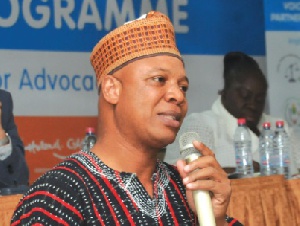 Adam Mutawakilu is the Managing Director of Ghana Water Limited