The National STEM Resource Centre on February 11, 2026, marked this year’s International Day of Women and Girls in Science with an exhibition and interactive science activities aimed at encouraging more girls to pursue careers in science and technology.
Held at the forecourt of the National STEM Resource Unit, the programme brought together students, educators, parents, development partners, and officials from the Ghana Education Service, alongside representatives from the Ministry of Education.
Students participated in practical demonstrations and project exhibitions designed to expose them to real-world applications of science, technology, engineering, and mathematics (STEM), while strengthening innovation, critical thinking, and problem-solving skills.
Delivering the keynote address, the Deputy Director-General of GES (Management Services), Professor Smile Dzisi, described the celebration as a national call to action to close the gender gap in STEM.
She highlighted the achievements of Ghanaian women in areas including space science, biotechnology, software engineering, and engineering, and called for targeted scholarships, mentorship programmes, and inclusive learning environments to support girls’ participation.
Director for STEM Education at GES, Olivia Serwaa Opare, said the occasion underscored the need to deliberately create opportunities for girls in science.
She outlined ongoing initiatives such as the expansion of STEM centres, the introduction of robotics and coding in schools, and outreach programmes targeting underserved communities.
An address delivered by Emelia Benedicta Mensah on behalf of Practical Education Network CEO and engineer Heather Beem encouraged girls to view STEM as a field where they belong.
She noted that science and technology influence everyday life and stressed that curiosity, experimentation, and persistence, including learning from mistakes, are essential to innovation.
Hands-on learning, she said, builds confidence and equips young people to design practical solutions to challenges in energy, health, and community development.
She further emphasised that girls are not underrepresented in STEM because of a lack of ability, but often due to limited encouragement and exposure.
Creating supportive environments, she added, allows young women to develop the skills and confidence needed to become problem-solvers capable of addressing both local and global challenges.
The event concluded with stakeholders reaffirming their commitment to strengthening inclusive STEM education and empowering more girls to learn, lead, and innovate for national development.
Regional News of Friday, 13 February 2026
Source: www.ghanaweb.com
Closing gender gap in STEM is a national priority - Professor Smile Dzisi
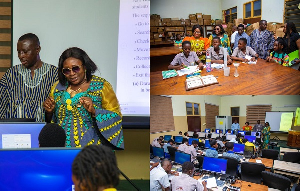 Students participated in practical demonstrations and project exhibitions


Business