Civil Society Organisations (CSOs) have called for increased equity investment in Electrochem Ghana Limited (EGL), expressing satisfaction with the scale of investment and progress made under the Ada Songor Salt Project.
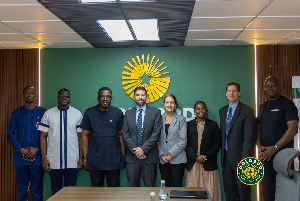
The call followed a visit by a delegation of CSO leaders to the company's operations in Ada, where they interacted with management, traditional authorities and community stakeholders to assess developments at one of West Africa's largest salt mining projects.
The CSOs commended Electrochem for the significant investments made over the past five years and described the project as a major catalyst for industrial growth, employment creation and economic transformation in Ada and its surrounding communities.
Speaking during the engagement, the Chief Executive Officer of the Consumer Protection Agency (CPA), Kofi Owusu Hene, popularly known as Kofi Kapito, said the level of investment made by Electrochem had positioned Ada to become a leading salt production hub on the African continent.
He noted that the company had demonstrated a strong commitment to developing Ghana's salt industry and creating opportunities for economic growth.
While praising the progress made, Mr Kapito urged management to continue engaging local communities through dialogue and education to deepen understanding of the project's benefits and address concerns that may exist among some residents.
He stressed that stronger collaboration between the company and host communities would help build trust and ensure broad-based support for the initiative.
The visit also highlighted growing international confidence in the project, with investors from the United Arab Emirates, France, the United Kingdom and Austria expressing interest in acquiring stakes in Electrochem as part of its planned US$500 million expansion programme.
According to the company's Chief Executive Officer, Francis Buamah, discussions with prospective investors have intensified over the past six months as Electrochem seeks funding to expand production and modernise infrastructure.
He explained that the expansion programme would finance engineering works, the automation of pumping facilities, the construction of pipelines and a jetty, the procurement of vessels and barges, the completion of a salt refinery and the establishment of a caustic soda plant, the acquisition of mining equipment, and the creation of a research-oriented university.
Mr Buamah said investors view Ghana's salt industry as a strategic gateway to the African market, making Electrochem an attractive investment destination.
"We've had investors from the United Arab Emirates, France, the United Kingdom and Austria who are interested in the salt business and see Ghana as a gateway to the African market," he said.
He added that participation in the Electrochem project offers access to a continental market of more than 1.2 billion people, making the investment proposition highly competitive.
The Board Chairman of Electrochem Ghana, Kofi Abotsi, also underscored the importance of aligning private investment with national development objectives.
He said investments in the Songor project must create value not only for shareholders but also for the Ghanaian people through job creation, industrialisation and community development.
Mr Abotsi described stakeholder engagement as critical to ensuring that investment-driven growth delivers sustainable benefits to local communities and contributes meaningfully to Ghana's economic aspirations.
Traditional authorities also welcomed the growing investor interest in the project.
Addressing participants, the Vice President of the Ada Traditional Council described the Songor Lagoon as one of Ghana's most strategic natural resources, with the capacity to produce millions of metric tonnes of industrial salt annually.
He referenced the 1991 Master Plan developed by local and international experts, which proposed a sustainable and coordinated framework for salt production through structured lagoon management, investor collaboration and community participation.
The Council explained that the government's decision to lease the Songor concession to Electrochem Ghana Ltd in 2019 followed years of advocacy and recommendations aimed at revitalising the salt industry and accelerating economic development.
Nene Agudey Obichere III also addressed misconceptions surrounding Electrochem's operations, emphasising that the company's activities remain aligned with the broader goals of sustainable development, community participation and lagoon restoration.
The Ada Traditional Council commended Electrochem Ghana for its investments in employment creation, potable water supply, women's empowerment programmes and broader community development initiatives.
The Council further called for government support, peaceful dialogue, unity among stakeholders and effective law enforcement to ensure the sustainable development of the Songor Lagoon for future generations.
The CSO visit formed part of broader efforts to strengthen stakeholder engagement and deepen public understanding of Electrochem's operations as the company pursues an ambitious expansion programme expected to increase annual salt production to one million tonnes.
The project is also expected to play a key role in Ghana's industrialisation drive while creating jobs and economic opportunities for residents of Ada and surrounding communities.
Press Releases of Tuesday, 23 June 2026
Source: Electrochem Ghana
Songor Salt Project: CSOs back MIIF's equity investment in Electrochem
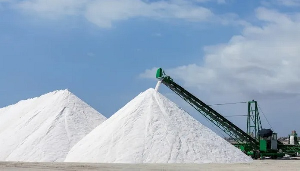 The call followed a visit by a delegation of CSO leaders to the company's operations in Ada