Anasin Clinic has observed a growing demand for hair transplant procedures in Ghana, reflecting broader global trends in cosmetic and restorative treatments.
According to information from the clinic, more individuals—particularly professionals and young adults—are seeking medical solutions to hair loss, a condition often linked to genetics, stress, hormonal changes, and lifestyle factors.
Industry observers like Accra Street Journal say the shift is part of a wider normalisation of aesthetic medical procedures across urban centres in Africa, where access to specialised care is gradually expanding.
Hair transplant procedures, which involve the relocation of hair follicles from one part of the body to areas experiencing thinning or baldness, have become increasingly refined over the years, with techniques such as Follicular Unit Extraction (FUE) offering minimally invasive options and shorter recovery periods.
Health professionals from other hair transplant clinics note that while the procedure is largely considered safe when performed under proper medical supervision, it requires careful evaluation, including diagnosis of underlying causes of hair loss and assessment of patient suitability.
“Hair restoration is not purely cosmetic in many cases; it also has psychological and emotional dimensions,” a medical practitioner familiar with the procedure said.
“However, it is important for patients to seek qualified providers and avoid unregulated services.”
The development comes amid a rise in awareness around personal grooming and appearance, driven in part by social media influence and increased exposure to global beauty standards.
Despite the growing interest, experts caution that cost, access, and regulation remain key considerations within Ghana’s evolving aesthetic medicine space. They also emphasise the need for clearer public education on available options, potential risks, and expected outcomes.
While facilities like Anasin Clinic continue to respond to the increasing interest, analysts suggest that the broader sector will likely see further growth as awareness improves and more medical professionals specialise in cosmetic and restorative procedures.
Press Releases of Thursday, 9 April 2026
Source: Accra Street Journal
Anasin Clinic highlights rising demand for hair transplant procedures in Ghana
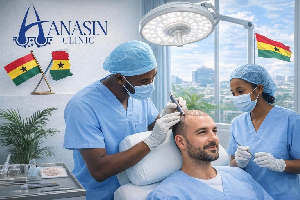 Anasin Clinic sees rising demand for hair transplant procedures in Ghana