Former First Lady Nana Konadu Agyeman-Rawlings died on October 23, 2025, aged 76, leaving behind a political legacy defined by women’s empowerment, activism and a historic bid to become Ghana’s first female president.
Ghana marks one year since the death of Nana Konadu Agyeman-Rawlings, the influential former First Lady who spent decades at the centre of the country’s political landscape before stepping out from the shadow of her late husband, former President Jerry John Rawlings, to pursue her own presidential ambitions.
Nana Konadu died on Thursday, October 23, 2025, at the Greater Accra Regional Hospital, popularly known as Ridge Hospital, in Accra. She was 76 and would have turned 77 on November 17, 2025. Her death brought an end to the life of one of Ghana’s most prominent female political figures. Graphic Online
Born on November 17, 1948, Nana Konadu occupied a unique position in Ghana’s political history. She served as First Lady during two periods of her husband’s leadership: briefly in 1979, under the Armed Forces Revolutionary Council (AFRC), and from 1981 to 2001, during the Provisional National Defence Council (PNDC) era and the subsequent Fourth Republic.
Her years as First Lady made her one of the most recognisable women in Ghanaian public life. However, her influence extended beyond ceremonial duties, particularly through her advocacy for women’s rights, child welfare and grassroots development.
One of her most enduring contributions was the establishment of the 31st December Women’s Movement, an organisation that mobilised women across the country and promoted their participation in social and economic development. The movement became a significant part of her public identity and helped establish her as a prominent advocate for women’s empowerment.
But Nana Konadu’s political story took a particularly striking turn in 2012 when she broke away from the National Democratic Congress (NDC), the party founded by her husband, and established the National Democratic Party (NDP).
The move marked a major departure from the political tradition with which she had long been associated. Rather than remain on the sidelines of electoral politics, she sought to build an independent political platform and compete for the country’s highest office.
In 2016, she made history as the first woman to contest Ghana’s presidency in a general election. Running on the ticket of the NDP, she challenged a political landscape long dominated by men and became a landmark figure in the country’s electoral history. Ghana News Agency
Although her presidential bid did not bring her victory, it represented a defining moment for women’s political participation in Ghana. Her candidacy demonstrated that a woman who had spent years in the highest circles of political power could also seek an independent mandate from voters.
Nana Konadu also documented aspects of her experiences and convictions in her 2018 book, It Takes a Woman, further cementing her place in conversations about women’s leadership and empowerment.
Her political journey was not without controversy or challenges. Her departure from the NDC and decision to establish a separate party placed her in a different political camp from the organisation with which her family had been closely associated for decades.
Yet, beyond party politics, her life remains an important chapter in Ghana’s modern political history. She was a First Lady, an organiser, a women’s rights advocate and a presidential candidate who broke a significant electoral barrier.
As Ghana remembers Nana Konadu Agyeman-Rawlings on the first anniversary of her death, her story raises enduring questions about women’s representation, political independence and the influence of women beyond traditional leadership roles.
Her legacy is therefore not confined to her years beside a former president. It also rests on the institutions she built, the women she mobilised and her decision to pursue the presidency in her own right.
EA
Politics of Friday, 23 October 2026
Source: www.ghanaweb.com
Today in History: Remembering Nana Konadu, Ghana’s political trailblazer
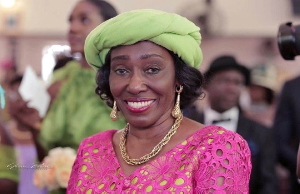 Nana Konadu Agyemang Rawlings



Entertainment