Ghana has witnessed extensive media coverage, arrests, and reports of sexual misconduct by teachers toward students over the years. However, many educators involved in these relationships are not sufficiently penalized, which may allow the behavior to persist because deterrent consequences are limited.
The psychological, emotional, and physical repercussions of sexual abuse on children and adolescents are significant. Consequently, teachers' sexual misconduct constitutes a serious public health issue. The Ghana Education Service and the Judicial System must collaborate to impose stronger penalties on those who engage in such inappropriate behavior.
The Headmaster of the Obuasi Senior High Technical School has been suspended for allegedly raping a student, as reported by the media. This incident may not be isolated, and he is likely not the only educator to have engaged in such conduct.
In some institutions, certain attractive female students are referred to as "teachers' copies." These students, labeled as "teachers' copies," may face sexual harassment from educators who fail to control their behavior.
A male student who interacts with these female students may face grievances from an instructor who is interested in her. Such a student may be punished or receive low grades in that teacher's subject.
A female student labeled as a "teacher’s copy" who declines a teacher's sexual advances may experience undue hardship in that teacher's class, facing significant academic and emotional burdens.
The Obuasi Senior Technical School case exemplifies how an amorous or romantic relationship between a teacher and a student can disrupt a school's disciplinary foundation.
Blurring these boundaries can destabilize the structure required to maintain order, as teachers inherently hold positions of authority and a legal duty of care. A teacher who engages in such a relationship may face pressure to treat the student differently from others, either more harshly or more favorably.
Furthermore, a teacher who engages in an inappropriate relationship with a student may forfeit the moral authority necessary to enforce rules.
Students often lose respect for the faculty as a whole, not just the individual educator involved. Resentment may increase when students observe or suspect favoritism, potentially leading to heightened defiance and behavioral issues, as students may perceive the system as unjust.
An educator's intimate relationship with students can undermine school or classroom management, as a compromised teacher may be unable to discipline the involved student or her peers objectively without risking exposure. To protect confidentiality, educators may disregard established regulations.
Such behavior can turn the school from a learning environment into a space marked by emotional distraction. Students involved may feel empowered to bypass classroom rules, using the power shift to undermine the teacher's authority in front of others.
Educators who engage in amorous relationships with students must be severely punished because such involvement can profoundly impact a student's mental health, education, and future.
Victims may experience social isolation, low self-esteem, or trust issues. Stress, anxiety, or fear of peer criticism often result in diminished academic performance. In severe cases, suicidal thoughts may occur, particularly if the relationship or pregnancy becomes public knowledge.
Schools must actively prevent inappropriate teacher-student relationships by clearly defining acceptable behavior and consequences.
Parents entrust schools with the responsibility of training their children to become responsible adults, not to expose them to sexual exploitation. Institutions must establish clear policies that outline supervision expectations, guide staff in managing challenging situations, and specify consequences for violations.
To facilitate safe reporting of misconduct, schools must implement anonymous reporting systems.
Victims should have access to counseling services to support recovery and academic focus. Teachers should also have access to counseling resources to prevent rationalization of misconduct or attributing blame to students.
Hiring boards within the Ghana Education Service and schools must implement comprehensive pre-employment screening techniques. For instance, most educational institutions include criminal background checks in their hiring processes to reduce the likelihood that candidates will engage in student maltreatment.
These measures can significantly mitigate the incidence of instructors sexually assaulting female students in colleges.
Evidence indicates a growing number of reports of romantic relationships between teachers and students; however, most of these relationships result in negative outcomes.
Schools should encourage parental involvement, enforce boundaries, and promote ethical behavior to prevent tragic consequences, hazardous pregnancies, and abuse.
Education must remain a safe environment for learning, and all stakeholders must collaborate to safeguard students, uphold professional integrity, and provide a nurturing environment.
Opinions of Thursday, 29 October 2026
Columnist: Kwame Aduhene-Kwarteng PhD
Advocating zero tolerance for teacher-student sexual relationships within the GES
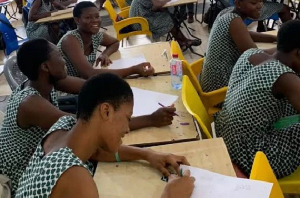 A file photo stuents in a classroom