As Ghana continues its democratic journey, a critical question is emerging at the heart of national discourse: Are political leaders building institutions strong enough to serve the country regardless of who wins elections, or are they creating parallel political structures designed primarily to support their own ambitions for power?
This question extends beyond the fortunes of the New Patriotic Party (NPP) and the National Democratic Congress (NDC). It speaks directly to the broader political culture that has shaped Ghana's democracy and the relationship between political competition, institutional development and national progress.
After more than three decades of constitutional rule, many analysts argue that Ghana's democratic success should no longer be measured solely by peaceful elections and orderly transfers of power. Increasingly, the focus must shift to the strength, independence and durability of national institutions that remain effective irrespective of the party occupying the presidency.
Democracy Beyond Elections
Democracy, political observers note, should be more than a contest for public office. It should provide a framework for nation-building and long-term development.
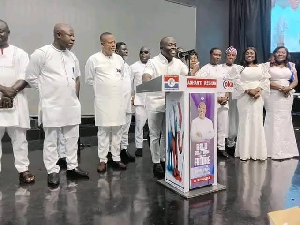
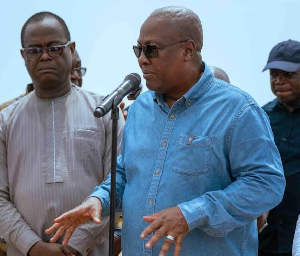
Recent stakeholder consultations led by former Vice President Dr. Mahamudu Bawumia, including engagements with the Trades Union Congress (TUC), have reignited discussions about the role political actors should play in addressing national challenges, even when they are outside government.
There is broad agreement that opposition leaders have every right, and indeed a responsibility, to engage labour unions, businesses, professional bodies and civil society organizations. Such consultations can help shape alternative policy proposals and prepare parties for future governance.
However, some governance experts argue that the value of such engagements should not be delayed until electoral victory. When consultations generate practical solutions to pressing national problems, opposition parties should be willing to share their findings with the government of the day. Equally, governments should assess recommendations based on merit rather than their political origin.
For many observers, national development should not become a casualty of partisan rivalry. If a policy can improve livelihoods today, they argue, its implementation should not have to wait for a change of government.
The Cost of Political Polarization
At the center of the debate is a deeper concern about whether Ghana's political competition is strengthening or weakening institutional continuity.
Political parties naturally compete for power, but questions arise when extensive stakeholder networks and policy structures are built primarily around partisan ambitions rather than a shared national development agenda. Some analysts warn that this can create parallel systems that operate independently of established national institutions.
The challenge, they contend, is not political rivalry itself, but the extent to which rivalry influences governance and administration.
A recurring concern has been Ghana's "winner-takes-all" political culture. Electoral victories are often viewed as opportunities to reorganize state institutions, replace personnel, redirect policy priorities and rebrand programmes according to the identity of the ruling party.
While policy reviews are an accepted feature of democratic transitions, critics argue that reforms driven largely by political ownership rather than objective assessment can be costly. Such practices may result in the loss of institutional memory, wasted public resources and interruptions to long-term development initiatives.
Constitutional Principles and Institutional Continuity
Ghana's Constitution provides guidance on this issue.
Article 35(7) of the 1992 Constitution states that, where practicable, governments should continue and complete projects and programmes initiated by previous administrations. The same article promotes national integration, political tolerance, accountability and loyalty to the state above sectional interests.
Constitutional scholars note that these provisions reflect a fundamental principle: the interests of the nation must outlive individual governments and political parties.
Yet constitutional provisions alone are insufficient. Their effectiveness depends largely on political behavior, public expectations and administrative practice.
Many governance experts emphasize that strong democracies require leaders who understand that public institutions must sometimes function independently of partisan preferences. Likewise, they argue, opposition parties must recognize the distinction between holding governments accountable and attempting to exercise authority outside their constitutional mandate.
In this framework, government and opposition play different but complementary roles. One governs, the other scrutinizes, challenges and proposes alternatives. Both, however, share a responsibility to protect the institutions of the republic.
The Role of Civil Society
The debate also highlights the importance of independent civil society institutions.
Organizations such as trade unions, professional associations, universities, traditional authorities, religious bodies and advocacy groups are expected to engage both government and opposition without becoming extensions of either.
The Trades Union Congress, for instance, has a legitimate role in discussions on employment, pensions, labour rights and economic policy. Such engagements can enrich public debate and generate policy proposals that deserve consideration irrespective of political affiliation.
The key concern, observers say, is not which political leaders civil society groups meet, but whether those organizations maintain their independence, accountability and broader public responsibilities.
A healthy democracy depends not only on strong governments but also on strong institutions outside government capable of contributing to national development.
Building a Republic That Endures
Ultimately, the future of Ghana should not hinge on which political party occupies the presidency at any given moment. Rather, it should depend on the strength of institutions capable of serving citizens through changing administrations, economic challenges and shifting national priorities.
The debate sparked by opposition stakeholder consultations therefore presents an opportunity for reflection rather than partisan confrontation. Beyond the immediate politics lies a more significant question: Are Ghana's political actors strengthening a common institutional foundation for national development, or are they reinforcing a system in which each party seeks its own separate pathway to power?
Many political analysts believe Ghana's democratic progress will be measured not by how frequently power changes hands, but by whether successive governments leave behind stronger institutions than those they inherited.
In the end, the true legacy of political leadership is not merely electoral success, high office or partisan loyalty. It is the enduring strength of the institutions that continue to serve citizens long after individual leaders have left the political stage.
The presidency may belong to an administration for a limited time, but the republic belongs to its people across generations. For many observers, that distinction must remain at the heart of Ghana's democratic and developmental future.
Opinions of Thursday, 29 October 2026
Columnist: Dr Isaac Yaw Asiedu
Ghana's democracy at a crossroads: Institutions or political empires?
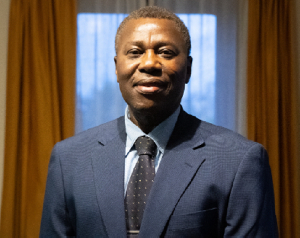 Dr Isaac Yaw Asiedu