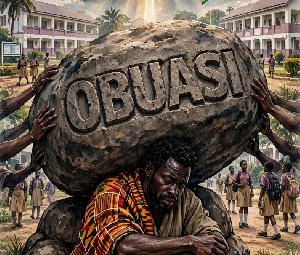
Stephen Atubiga’s account of political neglect has reopened a difficult debate about loyalty, access to power and the treatment of party foot soldiers after electoral victories.
The death of actor, broadcaster and National Democratic Congress (NDC) member Seth Kwame Dzokoto has brought an uncomfortable question back into Ghana’s political conversation: what happens to party loyalists who sacrifice for their political organisations but later feel abandoned when those organisations attain power?
For Stephen Atubiga, founder and leader of the National Liberation Congress, the question is personal. In a Facebook post following Dzokoto’s death, Atubiga described what he considers the painful consequences of political neglect, drawing on his own experience and a conversation he says he had with the late Kwame Dzokoto.
“The late Kwame Jokoto died from NDC neglect after victory,” Atubiga wrote, expressing his conviction that the party’s treatment of some members after electoral success can have devastating consequences.
He further claimed that political disappointment and the feeling of being abandoned can take a toll on a person’s health.
“As a victim speaking from a lot of experience, political neglect after victory can kill you quickly if you are not strong,” he stated.
Atubiga’s comments are allegations and personal reflections, not established findings about the cause of Dzokoto’s death. Nevertheless, they raise questions about the relationship between political loyalty, access to leadership and the expectations party members develop after helping their organisations win power.
The pain behind political loyalty
Atubiga says his own health has never been the same since what he describes as neglect following the NDC’s 2012 electoral victory.
“My health has never been the same after 2012 victory neglect to date,” he wrote.
His account presents a picture of a political activist who believes that the excitement of winning elections can give way to disappointment for members who expect recognition, assistance or opportunities but feel overlooked after the victory.
He also claimed that he had struggled to reach President John Dramani Mahama to communicate the state of his health.
According to Atubiga, he eventually sent an emergency message through one of the President’s special aides because he had been unable to contact Mahama directly.
“I am not doing well health-wise,” he recalled communicating in his appeal, adding that he wanted to inform the President about his condition.
Atubiga said he did not know whether the message had reached Mahama. He added that he intended to continue with his life until he could meet the President personally.
His account raises a broader question about the channels through which party members can seek assistance from political leaders, particularly when they believe their health or personal circumstances require urgent attention.
When victory comes, who gets remembered?
Political parties rely on more than candidates and senior executives to win elections. Campaigns depend on communicators, organisers, volunteers, constituency activists, financiers and supporters who mobilise voters, defend party positions and maintain grassroots networks.
Yet electoral victory also creates competition for appointments, influence, resources and access to political leadership.
For some supporters, the transition from opposition to government brings opportunities and recognition. Others may feel that their contributions have been forgotten, especially when the individuals they helped elect become difficult to reach.
This is the tension at the centre of Atubiga’s account: the difference between the collective sacrifices made to win political power and the individual experiences of those who believe they have been left behind.
His comments invite party leaders to consider whether their relationships with grassroots members remain meaningful after elections, or whether communication and engagement become less accessible once the immediate demands of campaigning have passed.
The issue is not necessarily that every party supporter is entitled to a government appointment or personal financial assistance. Rather, it is whether political organisations have credible ways to acknowledge contributions, listen to grievances and respond to genuine welfare concerns without making access dependent on personal connections.
Kwame Dzokoto’s death and the limits of Atubiga’s claims
Dzokoto, popularly known for his role as Judge Koboo in the television series Efiewura and his work on the food programme Edziban, died on Thursday, October 22, 2026, after collapsing during a live radio discussion on Owass FM in Tarkwa. He was rushed to a hospital, where he was pronounced dead on arrival, according to media reports.
The circumstances of his death have prompted public mourning and renewed attention to his life as an entertainer, broadcaster and political activist.
Dzokoto contested the Tarkwa-Nsuaem parliamentary seat on the NDC ticket in the 2016 general elections. His involvement in politics placed him among the public figures whose careers extended beyond entertainment into party organisation and political communication.
However, there is an important distinction between Atubiga’s political interpretation and the facts publicly established about Dzokoto’s death. The available reports of the incident do not establish that political neglect caused his death.
Indeed, the NDC’s Western Regional Communications Bureau, in a statement reported by ChannelOne News on October 23, said former President Mahama facilitated support for Dzokoto’s medical treatment abroad when he experienced serious health challenges in 2023. The party said his surgery was successful and that he later returned to public and political engagement.
That account complicates any blanket assertion that Dzokoto received no assistance from the party or its leadership. It does not, by itself, settle every question about his later circumstances or personal experiences.
Atubiga’s claims therefore require careful scrutiny, and any specific allegation concerning Dzokoto’s treatment should be assessed against verifiable evidence and responses from the individuals concerned.
The cost of keeping political disappointment silent
One of the most striking elements of Atubiga’s post is his assertion that loyal party members are expected to keep their disappointment to themselves.
“Political betrayal, neglect pain, is kept in you. You don't share with public. You must die with it as a good politician to show loyalty to the party for others to do same,” he wrote.
The statement captures what he sees as a culture in which publicly criticising party leadership can be interpreted as disloyalty, even when the criticism concerns personal hardship or unmet expectations.
Such a culture can discourage members from raising legitimate concerns. Activists may fear losing influence, damaging relationships or being branded as people who supported the party only for personal gain.
But silence is not necessarily proof of loyalty, just as criticism is not automatically evidence of betrayal. Political organisations need room for honest internal conversations, particularly when members raise concerns about welfare, fairness, communication or the distribution of opportunities.
Atubiga’s assertion that political disappointment can lead to serious health complications should also be treated cautiously. Prolonged stress can affect wellbeing, but his account does not establish a medical link between political neglect and Dzokoto’s death. That question cannot responsibly be settled through social media claims.
Beyond appointments: What do parties owe their loyalists?
The debate should not be reduced to whether every party activist deserves a political appointment after an election. Public appointments should be based on competence, suitability and the public interest, rather than serving as automatic rewards for political loyalty.
The more fundamental question is whether parties have systems that remain responsive to their members after elections.
These could include accessible channels for raising grievances, transparent criteria for appointments, regular engagement with constituency organisers, and practical welfare-support mechanisms where resources permit.
Such arrangements would not eliminate disappointment or guarantee that every request is granted. They could, however, reduce the sense that a member’s value ends when the votes have been counted.
Political leaders also have a responsibility to communicate honestly about what they can and cannot provide. Expectations that are encouraged during campaigns but left unaddressed afterwards can create resentment and weaken trust.
For their part, party members must be able to distinguish between a legitimate expectation of respectful engagement and an assumption that loyalty guarantees personal rewards.
A difficult conversation the NDC cannot ignore
Atubiga’s post is ultimately a personal account of disappointment, but it touches on a wider challenge for political parties: sustaining relationships with the people who work for them when they are no longer campaigning for power.
His words may resonate with activists who believe their sacrifices have not been adequately recognised. They may also be disputed by party members who have had different experiences or who believe that the distribution of opportunities is more complex than his account suggests.
The appropriate response is not to accept every allegation as fact or dismiss every complaint as bitterness. It is to examine the evidence, listen to the people involved and ask whether existing structures adequately address members’ concerns.
Dzokoto’s death should not be used to declare, without proof, that political neglect caused a life to be lost. His passing, however, provides a moment to reflect on the human relationships behind political organisations and the importance of taking people’s welfare seriously.
When parties are in opposition, their supporters are often urged to remain committed, defend the organisation and sacrifice for a common goal. When power is secured, the test of leadership is whether those relationships continue to matter.
The question raised by Atubiga’s account is therefore bigger than appointments or access to a President. It is whether political loyalty is valued as an enduring relationship or mainly as a resource to be mobilised when elections approach.
For the NDC, and indeed Ghana’s political parties generally, that is a question worth answering—not through speculation about the cause of a man’s death, but through honest engagement with the people whose commitment sustains political movements.
Opinions of Friday, 23 October 2026
Columnist: Stephen Atubiga
Are party loyalists forgotten after victory? Atubiga’s painful questions after Dzokoto’s death
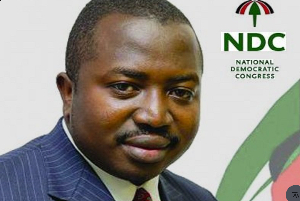 Stephen Atubiga










Opinions