Can the NPP communicators, for a moment, stop campaigning against the NDC and start campaigning for the NPP?
Because there is a difference.
Every day, we hear what the NDC has allegedly got wrong. We hear the attacks, the rebuttals, the press conferences, the social media graphics and the endless political commentary.
Fine. That is opposition politics.
But it cannot be the entire political programme of a party that wants to return to power.
Ghanaians have eyes.
We can see what is happening in the country. We are paying the bills. We are buying the food. We are looking for jobs. We are sending children to school. We are visiting hospitals. We are dealing with transport costs, utility bills, taxes and the general pressures of everyday life.
We do not need political communicators to tell us every morning that something is wrong.
The NDC has its examination script on the table.
Ghanaians are marking it.
The marks will come when the time comes.
The NPP should therefore spend more time explaining its own script.
What exactly is the vision for Ghana?
What would a future NPP government do differently?
How would Dr. Mahamudu Bawumia approach economic transformation?
What is the practical plan for job creation?
How will the party address the cost of living without simply recycling political slogans?
What happens to education?
What happens to healthcare?
What happens to agriculture and food security?
What is the infrastructure agenda?
How will government create an environment where the private sector can expand, invest and employ more Ghanaians?
And perhaps the most important question: what kind of country does the NPP want Ghana to become over the next 10, 20 or 30 years?
These are not questions that can be answered with another press statement saying the NDC has failed.
They require policy.
They require numbers.
They require priorities.
They require implementation plans.
And they require the political courage to tell Ghanaians not only what the party intends to give them, but what difficult decisions may have to be taken to get there.
That is where serious opposition politics begins.
Criticising the government is easy. Offering a credible alternative is harder.
It is easy to say, “They are doing badly.”
The harder question is: “If you were sitting there tomorrow, what exactly would you do?”
That is the question the NPP should welcome.
Because if the party believes it has the better ideas, then it should put those ideas on the table and allow Ghanaians to interrogate them.
Do not merely tell us that the NDC has failed.
Tell us what you have learned from those failures.
Do not only promise a better economy.
Tell us what you will change.
Do not simply promise jobs.
Tell us where the jobs will come from.
Do not tell us healthcare will improve.
Tell us how.
Do not tell us Ghana deserves better.
Show us, in policy terms, what “better” actually means.
And please, spare Ghanaians the assumption that every criticism of the NDC automatically translates into support for the NPP.
It does not.
Ghanaians are capable of making their own assessment.
That is why the NPP should not underestimate the value of presenting a coherent alternative.
The party’s strongest argument for power should ultimately be its own vision for Ghana—not merely the weaknesses it identifies in the government of the day.
The NDC will defend its record.
The NPP should present its alternative.
Let the two meet in the public square.
Let the policies be debated.
Let the numbers be examined.
Let the promises be tested.
And then let Ghanaians decide.
This is not the time for political noise for the sake of political noise.
Ghana needs a serious conversation about where the country is going and how we intend to get there.
So, NPP communicators, the question is simple:
We have heard what you think the NDC is doing wrong.
Now tell Ghana what you intend to do right.
Opinions of Wednesday, 7 October 2026
Columnist: Michael Agbesi Kelly
NPP, Ghana Is Asking: What is your plan?
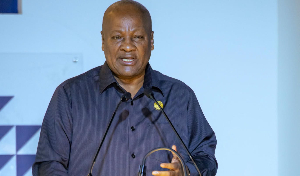 John Dramani Mahama is the President of Ghana