A stone cracks your windscreen. On an older car, replacing the glass runs around one thousand five hundred cedis. On a modern one, the same crack can cost six to twelve thousand or more, because the glass now holds a camera the car's safety systems depend on. The new screen has to be the correct specialised glass, and the camera behind it has to be recalibrated at a dealership or a specialist before the safety systems work correctly again.
Leave it uncalibrated and the car throws dashboard errors, or worse, the systems misjudge the road. Same damage. Several times the cost. That gap, between how little was damaged and how much it costs to put right, is the quiet problem now facing motor insurance in Ghana. It starts with how premiums are built.
A comprehensive premium is calculated mainly from the vehicle's market value. Market value was never a precise measure of what a repair would cost, but it was a workable proxy: premium was struck as a percentage of value, and repair costs stayed close enough to value for that rough approximation to hold. Technology has ended that. Two cars of identical market value can now differ many times over in what they cost to put right. None of this is unique to Ghana. In markets where it is measured closely, the scale is documented.
UK insurers paid a record 11.7 billion pounds in motor claims in 2024, up 17 percent in a single year, and the Association of British Insurers points to repair cost inflation, driven by vehicle technology, as the single biggest force behind it. The vehicles now filling the roads carry Advanced Driver Assistance Systems, or ADAS: the cameras, radar and sensors behind features like automatic emergency braking, lane keeping and blind spot alerts.
These components have moved the cost of repair far away from the cost of the car. The insurer prices the policy on what the vehicle is worth. It pays the claim on what the vehicle's technology costs to restore. Those are no longer the same number, and the distance between them is widening. It is worth being fair to the technology. These same systems may reduce how often crashes happen in the first place, and a car that avoids a collision files no claim at all.
But that does not close the gap this article is about. Even if the safer car crashes less, when it does crash the bill is far higher, and the pricing model never saw that bill coming. Lower frequency does not repair a mispriced book. It only hides the mispricing until the claim arrives. And there is a fairness cost that falls on ordinary motorists. When an insurer cannot tell the base model from the sensor equipped version, it charges them as if they were the same risk. In practice, that means the owner of the simpler, cheaper to repair car helps to cover the expensive repairs of the loaded one.
The careful buyer who chose the modest trim is quietly subsidising the premium of the vehicle that costs several times as much to fix. Most drivers have no idea this is happening, because it is invisible until someone else's claim is paid. For Ghana, there is an added reason to act sooner rather than later.
Whatever crashreducing benefit systems like lane-keep assist and collision avoidance offer has been measured in markets with better roads, stricter enforcement and denser repair networks than ours. Whether Ghanaian conditions deliver that same benefit is genuinely unknown. What is not in doubt is the repair cost, which arrives with the vehicle regardless of the road it drives on. Our market may well inherit the higher bills without the full safety offset, and that makes smarter, technology aware pricing more urgent here, not less. The fix is not to raise premiums across the board. That punishes the base model owner all over again and treats a structural problem as a cash flow one.
The fix is to price what is actually being carried, moving from the vehicle's market value alone toward its specific technical specification, so that the premium reflects the real cost of putting that particular car back on the road. As J D Power put it in a 2026 industry report, insurers that modernize their vehicle data infrastructure will be better positioned to price risk accurately, control claims severity and maintain profitability. The data to do this exists and the methods are established abroad.
What is required is the will to modernise before the gap, still manageable today, becomes the kind of loss no annual rate increase can absorb. Insurance has always been the business of measuring risk accurately and pricing it honestly. Modern vehicles have simply raised the bar for what accurate means. The car is still on the schedule. The technology is not. And a gap like this rarely announces itself. It shows up one expensive claim at a time, until the model no longer holds.
Opinions of Tuesday, 22 September 2026
Columnist: Yaw S Banahene
Underwriting the car, paying for the technology
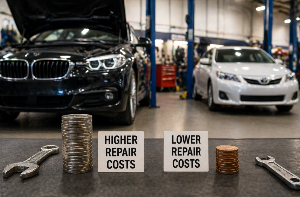 Rising cost of repairing modern cars