The growing number of major narcotics cases linked to Ghana should concern every Ghanaian, regardless of political affiliation.
Recent developments, particularly the seizure of nearly four tonnes of suspected cocaine at the French port of Dunkirk from a container that arrived from Ghana, have once again placed our country under international scrutiny. French authorities reportedly valued the shipment at about €225 million, while Ghana’s Narcotics Control Commission (NACOC) has arrested suspects in connection with the case. The accused persons have been charged and remanded, and investigations are continuing.
This latest incident comes against the background of other major drug-trafficking cases involving consignments linked to Ghana and seizures in foreign jurisdictions. Reports of drug-related interceptions involving routes between Ghana and South Africa, alongside the recent French case, should not be treated as isolated incidents.
The issue is no longer simply about the quantity of drugs being seized. It is about what repeated international seizures linked to Ghana could mean for the country’s reputation, border security, ports, international trade and national security.
Ghana’s reputation is at stake
Ghana has spent decades building a reputation as a stable democracy and a credible partner in international affairs. Our ports, airports and trading systems are important gateways for legitimate commerce across West Africa.
We cannot allow Ghana to acquire a reputation as a convenient transit point for international drug-trafficking networks.
NACOC itself has said Ghana must not become a safe haven, transit point or operational base for international drug-trafficking organisations.
That position must translate into stronger action.
When large consignments of narcotics connected to Ghana are repeatedly intercepted abroad, questions will inevitably be asked by foreign governments, international law-enforcement agencies, shipping companies and investors about the effectiveness of our systems.
The consequences could extend beyond law enforcement. Ghana’s international image and the credibility of its ports and logistics infrastructure could also be affected.
This is a national-security threat
Drug trafficking should not be viewed merely as a criminal matter. At the scale now being reported, it presents a serious national-security concern.
International drug-trafficking organisations have enormous financial resources. Their operations can create networks involving money laundering, corruption, illegal weapons, organised crime and the infiltration of legitimate businesses.
The recent French case has already raised questions about how a container allegedly carrying cocaine could leave Ghana and reach Europe without the drugs being detected. Ghanaian authorities are investigating the circumstances surrounding the shipment.
That question deserves a comprehensive answer.
We must establish what happened at every stage—from the exporter and freight-forwarding arrangements to port controls, scanning, documentation, security checks and the eventual departure of the container.
Where wrongdoing is established, those responsible must face the full force of the law, regardless of their political connections, social status or economic influence.
We must protect our ports and borders
Ghana cannot afford weaknesses in its ports and borders to be exploited by international criminal organisations.
The government must therefore strengthen intelligence-led inspections, modern scanning technology, information sharing and cooperation between NACOC, Customs, the Ghana Ports and Harbours Authority, the police, national-security agencies and international partners.
Technology must also be used more effectively to identify suspicious cargo and unusual trading patterns.
At the same time, security agencies must be properly resourced and held accountable. We should not wait for foreign authorities to discover narcotics that allegedly passed through Ghana before we begin asking questions.
This should rise above partisan politics
As the Ashanti Regional Secretary of the New Patriotic Party, I believe this matter should not become another political football.
The security of Ghana must come first.
The government must provide clear answers to the public about the circumstances surrounding major drug shipments linked to Ghana and explain what measures are being taken to prevent a recurrence.
The opposition, civil society, the media and the public also have a responsibility to demand accountability without compromising ongoing investigations or the rights of accused persons.
Those accused of crimes must be presumed innocent until proven guilty. At the same time, the state has a duty to investigate thoroughly and ensure that anyone found to have facilitated international drug trafficking is brought before the law.
Ghana must draw a line
We cannot sit back and allow international drug networks to use Ghana as a gateway to other parts of the world.
Every major seizure linked to Ghana should serve as a warning.
The issue is bigger than one government or one political party. It concerns the country’s reputation, the integrity of our institutions, the safety of our communities and the security of future generations.
Ghana must act decisively, transparently and collectively to ensure that our ports, borders and territory are not turned into infrastructure for international narcotics trafficking.
Our international reputation is valuable. Our national security is even more important.
We must protect both.
Opinions of Tuesday, 22 September 2026
Columnist: kumasimail.com
Government must act before drug trafficking destroys Ghana’s international reputation
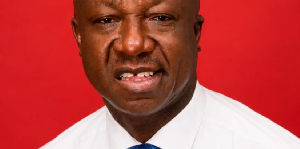 Dr Francis Adomako, Ashanti Regional Secretary of the New Patriotic Party (NPP)