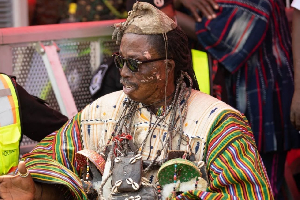
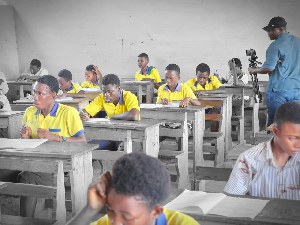
Two people can stand at exactly the same place, at exactly the same time, with cameras of similar quality, and still produce two completely different photographs. One may capture the rising sun; the other, the long shadow it creates. One may focus on a magnificent building; the other may notice the old woman quietly sitting beside it. The difference is not necessarily the camera. It is the point of view.
Photography teaches us that what transforms an ordinary image into something meaningful is often not what is before the lens, but how the person behind the lens chooses to see it.
In photography, perspective is powerful. A photographer may move closer, step backwards, kneel, climb higher, change the angle, wait for the light, or focus on a detail that everyone else has ignored. The subject itself may not change, but the resulting image changes dramatically. A seemingly ordinary street can become a beautiful story when viewed from the right angle. This is why photography is more than recording what exists; it is also an interpretation of reality. The photographer does not merely show us what is there—the photographer invites us to see it differently.
Life works in much the same way. We often assume that because we are looking at the same situation, we must be seeing the same thing. But human beings view life through different lenses shaped by upbringing, education, culture, experience, age, profession, opportunities, disappointments and aspirations. What appears to one person as failure may appear to another as an important lesson. What one considers an obstacle, another may see as an opportunity. The situation may be the same, but the interpretation can be completely different.
This has an important implication for how we relate to others. Disagreement does not always mean that one person is intelligent and the other ignorant, or that one is right and the other wrong. Sometimes, we are simply standing at different points. Imagine two photographers standing on opposite sides of a mountain.
Their photographs will be different, yet both photographs may accurately represent the mountain. In everyday life, appreciating another person’s perspective does not necessarily require abandoning our own. It requires recognising that our view may not be the only view from which reality can be understood.
There is also an important lesson here for leadership. Good leaders must learn to change lenses. A decision that looks excellent from the boardroom may look very different to the person expected to implement it on the ground. A policy that appears successful in statistics may tell another story when viewed through the experiences of ordinary people.
Leadership, therefore, requires the ability to move around the subject—to listen, observe and deliberately seek perspectives that may be different from our own. Sometimes the missing solution is not more information; it is simply another angle.
The same principle applies to our personal struggles. There are moments when life presents us with an image we do not like: rejection, disappointment, delay, criticism or failure. We may not always have the power to immediately change the situation, but we can sometimes change the position from which we examine it.
A setback can become feedback. A closed door can redirect our attention to another possibility. A painful experience can deepen empathy. This does not mean pretending that difficulties are pleasant. Rather, it means refusing to believe that the first interpretation of an experience must be the final one.
For scholars and lifelong learners, there is an additional lesson: intellectual humility. Education should not merely strengthen our ability to defend our point of view; it should increase our willingness to examine other points of view.
The more we learn, the more we should appreciate the complexity of human experience. Some of the greatest discoveries begin when someone looks at something familiar and asks a different question. Progress often comes from changing the angle, challenging assumptions and noticing what others have overlooked.
So perhaps photography leaves us with a lesson far greater than how to take a beautiful picture. Before concluding that the image is bad, change your position. Before concluding that another person is wrong, try to understand where they are standing. Before concluding that a situation is hopeless, look again.
The world does not always change when we change our point of view—but what we are able to see often does. And sometimes, just as in photography, the difference between an ordinary image and a work of art is simply the angle from which we choose to see it.
Thanks and have a great day
Opinions of Friday, 18 September 2026
Columnist: peacefmonline.com
Sena series: The thing that transforms an image into art is the point of view
 Sena is the author of Sena series