For 117 years, the Ghana Secondary Technical School (GSTS) has been preparing young people with something Ghana’s economy still needs badly: practical skills that can be turned into careers, businesses and productive work.
Founded in 1909, GSTS has produced generations of engineers, architects, doctors, technologists, business leaders, academics, military officers and other professionals who have served Ghana and made their mark abroad.
As the school celebrates its 117th Founders’ Day under the theme “Developing Resilient Leaders Through Science, Technology and Character,” its long history offers a useful reminder of the economic value of technical education.
A school that has fed Ghana’s professional workforce
GSTS has built a reputation around science and technical education, but its influence has stretched far beyond the classroom.
Its former students have entered engineering, architecture, medicine, technology, academia, business, governance and the security services.
In simple terms, the school has spent more than a century producing people who design, build, manage, teach, protect and solve problems.
That matters to Ghana because the country’s economic ambitions require exactly these skills.
Factories need engineers and technicians. Construction companies need people who understand drawings, machinery and modern building methods. Energy companies need technical specialists. Technology businesses need people who can build and maintain digital systems.
Without those skills, investment alone cannot deliver the jobs and productivity Ghana wants.
Technical education is not the “second choice”
For too long, technical and vocational education has sometimes been viewed as the route for students who do not make it into conventional academic programmes.
GSTS tells a different story.
Its alumni include professionals who have gone on to some of the most demanding careers in the country.
The lesson for parents is straightforward: a child who enjoys working with machines, technology, numbers, design or practical problems does not necessarily need to follow the traditional academic route to succeed.
There are good careers on the other side of technical education.
And as Ghana's economy changes, there are likely to be more of them.
Skills Ghana’s businesses can use
The country's push for industrialisation makes the issue even more important.
Ghana wants to manufacture more, process its natural resources, expand its energy sector, build infrastructure and grow its digital economy.
All of this requires people who can do more than pass examinations.
They must be able to operate equipment, repair machines, read designs, use technology, solve problems and adapt to new production methods.
GSTS’s long record in science and technical education shows what a school can contribute when those skills are treated seriously.
Science and technology need character
There is another part of the GSTS story that is easy to overlook.
The school has placed discipline, integrity, resilience, service and excellence alongside academic achievement.
That explains the choice of theme for this year's celebration: “Developing Resilient Leaders Through Science, Technology and Character.”
A technically competent worker who cannot be trusted, work with others or take responsibility is of limited value to an employer.
Businesses need people who can show up, do the job properly, solve problems and work as part of a team.
So the skills Ghana needs are not only technical. They are also about attitude and character.
The Giants still have a role to play
The school’s alumni have remained an important part of its development.
At the 117th Founders’ Day celebration, former students were recognised for leadership, philanthropy, volunteering, sports and other contributions to the school.
That support can become even more valuable as students prepare for a changing job market.
A GSTS graduate who works in engineering, technology, construction, manufacturing or another technical field can offer students something that a textbook cannot: a direct connection to the workplace.
Mentorship, internships, scholarships, equipment and partnerships with companies can help students understand where their education can take them.
They can also help schools keep pace with changes in industry.
117 years, and still relevant
GSTS’s 117-year history does not mean Ghana has solved its skills challenge.
It does, however, show what is possible when a school maintains a strong focus on science, technical education and character over generations.
For Ghana, the bigger question is how to replicate that success.
As the country searches for jobs for its young people and tries to build a more productive economy, technical education cannot remain an afterthought.
GSTS has spent 117 years showing that a school can produce more than certificates.
Its former students have gone on to work in Ghana’s hospitals, factories, construction sites, businesses, laboratories, public institutions, technology companies and security services.
That is perhaps the most important part of the GSTS legacy.
The real value of education is ultimately measured by what students are able to do with what they have learned.
Opinions of Monday, 17 August 2026
Columnist: Kojo Aidoo
Why Ghana needs more schools like GSTS to turn skills into jobs
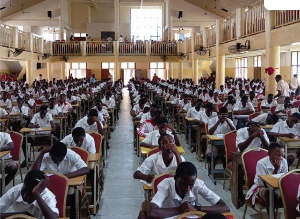 Some students of GSTS seated in the classroom during an exam