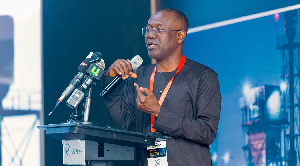
The question that must now be asked is simple but disturbing: Why has the Jubilee House-led effort to permanently resolve the flooding crisis and illegal landfill activities at Mallam Junction suddenly gone quiet? Has the Chief of Staff, Julius Debrah, and the Flooding Taskforce run out of urgency because the rains have temporarily stopped?
This is the latest development in a long-running matter that has already exposed serious weaknesses in Ghana’s approach to disaster prevention, environmental enforcement and urban planning.
Following a series of meetings and engagements initiated from Jubilee House under the leadership of Chief of Staff Julius Debrah, there appeared to be renewed determination to confront the illegal landfill activities that have repeatedly contributed to the flooding menace around Mallam Junction.
Those engagements were not merely ceremonial meetings. They were intended to bring the various stakeholders together and establish a practical path towards addressing the landfill operations, drainage challenges and other activities that have continued to threaten lives, property and businesses in the area.
Information gathered from the latest checks indicates that some of the major companies operating within the affected area, including Chinese companies Caitec and VIP Service Station, have taken steps towards fulfilling requirements arising from the engagements. They have reportedly demonstrated readiness to cooperate with the authorities.
The question, therefore, is: Why the dragging of feet on the government’s side of the equation? If stakeholders who were brought to the table have responded to the directives and expectations placed before them, why has the momentum apparently slowed down?
The most worrying development is the apparent reduction in enforcement activities around the illegal landfill site at Mallam Junction. For residents and motorists who have witnessed the consequences of the flooding crisis, this should not be treated as a matter that can simply disappear because the skies have temporarily cleared.
The rains may have stopped for now, but the underlying danger has not disappeared. The landfill remains a potential environmental and drainage threat, while the factors that contributed to the devastating flooding episodes remain matters requiring urgent attention.
This raises a broader question about Ghana's approach to disaster management: Must we always wait for another tragedy before government institutions return to the scene? Why should preventive action become less important simply because the immediate public pressure has reduced?
The Mallam Junction situation is particularly concerning because the area has already become synonymous with flooding whenever heavy rainfall hits parts of Accra. The destruction, traffic disruption, economic losses and danger to human life associated with such incidents should have been sufficient warning for authorities to maintain a permanent intervention rather than a seasonal response.
What is happening now risks creating the impression that the government’s commitment to solving the problem was strongest when public attention was at its peak. Once the immediate crisis subsided, the urgency appears to have followed the floodwaters away from Mallam Junction.
That cannot be the standard for responsible governance. A serious flooding intervention must continue during the dry periods precisely because that is when authorities have the greatest opportunity to inspect, enforce, clear, redesign and prevent the next disaster without the pressure of rising floodwaters and trapped residents.
Chief of Staff Julius Debrah and the Flooding Taskforce therefore have a responsibility to tell the public what has happened to the process that began with the series of meetings at Jubilee House. What decisions were reached? Which agencies were assigned specific responsibilities? What timelines were established? And, most importantly, what has been done since those meetings?
The apparent willingness of major businesses in the area to play their part makes the current silence even more difficult to understand. If private-sector stakeholders are prepared to cooperate, government agencies should be providing the leadership, enforcement and coordination required to ensure that commitments translate into concrete action on the ground.
The illegal landfill issue cannot be allowed to become another item that receives attention only when photographs of flooded roads, submerged vehicles and distressed residents dominate the news cycle. Ghana has seen this pattern too many times: disaster strikes, officials visit, committees are formed, meetings are held, promises are made—and then attention gradually shifts elsewhere.
Mallam Junction deserves better than that cycle. The people living, working and travelling through the area deserve an intervention that continues whether it is raining or not. The test of leadership is not how quickly authorities respond when disaster has already occurred, but how determined they are to prevent the next one.
The latest situation should therefore serve as a wake-up call to Jubilee House, Julius Debrah, the Flooding Taskforce and all relevant state institutions: do not wait for another Mallam Junction disaster before returning to the problem. The meetings have been held, stakeholders have been engaged and commitments have reportedly been made. What is needed now is action, enforcement and a publicly accountable roadmap towards a permanent solution.
Ghana cannot afford another cycle of mourning, emergency response and political explanations when the warning signs are already staring us in the face. The rains will return. The only question is whether Mallam Junction will meet them with a properly addressed landfill and drainage problem—or with the same unresolved danger that has repeatedly placed lives and property at risk.
Opinions of Tuesday, 11 August 2026
Columnist: Daniel Benin Ohim
Flooding taskforce now sleeping waiting for another disaster to strike at Mallam Junction?
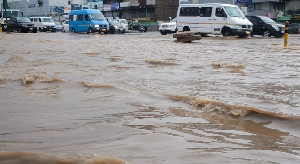 File photo of flooding