Benedicta Lasi, Esq., Chair of the Africa Governance Centre, has urged African political leaders and institutions to reconsider the history of women’s public authority and the systems that continue to determine access to leadership across the continent.
She made the call while facilitating a foundation session on “Historical Traditions of African Women’s Authority” at the African Academy for Women in Political Leadership in Kigali.
The Academy is a joint initiative of the United Nations Development Programme (UNDP), the African Union Commission (AUC), the African Women Leaders Network (AWLN) and the African School of Governance (ASG), which serves as the implementing partner.
The session formed part of the opening module, “Reclaiming Power: African Women’s Authority and Political Sovereignty.”
Lasi opened with the question that shaped the session: “Where did women’s political authority go?”
She invited participants to look beyond the familiar record of queens and resistance heroines and examine the institutions that enabled women to select rulers, represent constituencies, regulate economic life, negotiate peace, command political communities and sanction the abuse of power.
Recovering the institutions behind the women
The presentation approached political authority through five tests: office, jurisdiction, legitimacy, sanction and transmission.
The method placed each historical figure within the political structure that gave her actions public consequence.
A title carried weight where it conferred recognised powers, access to resources and responsibility to a community.
In Akan and Asante political systems, queen mothers held responsibilities connected to lineage, succession, counsel, adjudication and the legitimacy of the stool.
Lasi situated Yaa Asantewaa’s leadership during the War of the Golden Stool within that constitutional setting.
Her mobilisation of resistance drew strength from an office that already placed senior women within the making and defence of political order.
The session also examined the political memory of Amina of Zazzau; the Kandakes of Nubia; Ethiopian traditions associated with Makeda and later empresses and regents; Queen Njinga of Ndongo and Matamba; Igbo women’s councils and market networks; and the Rain Queen, regency and female chieftaincy traditions of Southern Africa.
The Kandakes of Kush provided some of the clearest evidence of women exercising sovereign, military and diplomatic authority in ancient Africa.
Amanirenas led Kush during conflict with Rome and helped secure a settlement that preserved Meroitic autonomy.
In Central Africa, Njinga’s rule brought together diplomacy, military judgement, coalition-building and political adaptation as she defended Ndongo and Matamba against Portuguese expansion.
Igbo women’s institutions showed another location of power. Assemblies, lineage organisations, titled associations and market networks enabled women to regulate community affairs and organise collective sanctions.
The 1929 Women’s War exposed the political consequences of colonial taxation and warrant-chief government in communities whose systems of authority had been poorly understood by the colonial administration.
Ritual and ecological offices carried public responsibilities in societies where land, rainfall, fertility, oath and communal survival were bound to political legitimacy.
The Lovedu Rain Queen and the Makewana priestess of the Chewa-Maravi political order illustrated forms of authority rooted in stewardship, consent and the continuity of the community.
Lasi cautioned against idealising the precolonial past. African societies contained hierarchy, patriarchy and exclusion, and women’s power differed across social classes and political systems.
The historical record nevertheless preserves a wide range of recognised offices through which women exercised binding responsibilities.
How the political field was narrowed
A central part of the session traced the effect of colonial state-building on these arrangements.
European administrations sought identifiable officials through whom they could collect taxes, mobilise labour, enforce orders and manage local populations.
Political systems that had distributed authority among rulers, queen mothers, lineage leaders, women’s councils, market institutions and ritual custodians were often compressed into administrative hierarchies centred on recognised chiefs and colonial courts.
Official recognition, salaries, courts and administrative resources frequently flowed towards male officeholders.
Property regimes, cash-crop production, labour migration, mission education and the codification of customary law further altered women’s economic and political position.
Practices that had been negotiated within communities were sometimes fixed into rules interpreted and enforced through male-dominated institutions.
Women continued to organise through markets, churches, labour networks, tax protests, nationalist movements, prison marches and liberation struggles.
Independence governments inherited much of the centralised architecture of the colonial state.
Women who had sustained nationalist and liberation movements were often channelled into auxiliary party structures with limited influence over the principal decisions of government and succession.
Political parties now hold the gate
Connecting the history to contemporary politics, Lasi referred to the Africa Governance Centre’s continuing research and engagements on women’s participation and representation.
The Centre’s work points to political parties as the institutions with the greatest influence over the leadership pipeline.
Parties decide who reaches the ballot, who receives financial and organisational backing, who gains visibility, who enters internal decision-making and who is prepared for future leadership.
These decisions shape the composition of parliaments and governments long before election day.
Lasi called for reforms that reach candidate-selection rules, campaign finance, internal leadership structures, political protection and succession planning.
She stressed that the durability of women’s leadership depends on the institutions through which authority is allocated and sustained.
The session concluded with exchanges among members of the Academy’s inaugural cohort.
Participants shared traditions from their countries, considered the historical changes that weakened particular institutions and discussed how older sources of legitimacy could inform democratic leadership.
Their reflections were organised under three headings: historical strengths, structural barriers and leadership opportunities.
The discussion identified political parties, constitutional reform, local government, community leadership, economic organisation and electoral systems as important sites for strengthening women’s public authority.
“If African societies once created institutions through which women could select rulers, regulate economic life, command political constituencies and sanction power, why do modern political systems still struggle to convert women’s participation into durable authority?”
The African Academy for Women in Political Leadership is a continental programme jointly advanced by UNDP, the African Union Commission, the African Women Leaders Network and the African School of Governance. ASG serves as the implementing partner.
The Academy combines residential and virtual learning, mentorship and peer exchange to strengthen women’s capacity to lead, govern and shape reform agendas across Africa.
Opinions of Monday, 10 August 2026
Columnist: Benedicta Lasi, Esq
Where did women's political authority go?
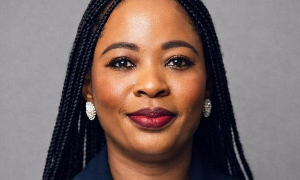 Benedicta Lasi, Esq is the head of the Africa Governance Centre






Opinions