Ghana’s natural resources are a national asset, yet the country continues to grapple with the question of how best to turn its mineral wealth into lasting prosperity for its people.
It is against this background that Founder of Citizen Eye Ghana, Alex Tetteh, is calling on civil society organisations, religious bodies and well-meaning Ghanaians to rally behind businessman and philanthropist Ibrahim Mahama and encourage him to take a greater interest in Ghana’s natural resources, particularly the country’s mineral wealth.
The argument is simple: if Ghanaian-owned wealth can be channelled into sectors that directly improve the lives of citizens, then there is a strong case for encouraging capable Ghanaian businessmen to play a greater role in the development and management of the country’s natural resources.
According to Tetteh, Ghana’s natural resources must be managed in a manner that creates lasting prosperity for ordinary Ghanaians, rather than allowing the country’s mineral wealth to benefit only a few individuals and foreign interests.
He believes stakeholders should look closely at individuals who have demonstrated a commitment to supporting Ghanaians through tangible investments in education, healthcare, sports and social development.
A Call to Invest Ghana’s Mineral Wealth in Ghanaians
Tetteh believes Ibrahim Mahama’s record of philanthropy and national interventions provides a basis for Ghanaians to encourage him to take a more active role in the development and management of Ghana’s natural resources.
The country needs people with the financial capacity, entrepreneurial experience and demonstrated commitment to national development to participate in transforming Ghana’s mineral wealth into sustainable economic opportunities.
“The resources of Ghana belong to Ghanaians, and we must begin to think about how these resources can be used to create prosperity for present and future generations,” Tetteh said in his call to civil society and opinion leaders.
This, however, should not be reduced to simply extracting more minerals. The bigger conversation must be about how the value generated from Ghana’s natural resources can be invested back into the country through education, healthcare, infrastructure, industry and opportunities for young people.
Investment in Education
One area that demonstrates the potential of private capital to address national challenges is education.
Among the interventions attributed to Ibrahim Mahama is the construction of a modern 550-bed student dormitory at Tamale Senior High School following a devastating fire that destroyed accommodation facilities at the school.
The project, according to the account presented by Alex Tetteh, was personally funded by Ibrahim Mahama and was intended to help restore accommodation for students affected by the disaster.
Ibrahim Mahama has also supported scholarship initiatives, providing financial assistance and full scholarships to brilliant but economically disadvantaged students.
Such interventions demonstrate what private wealth can achieve when directed towards areas of national need.
Support for Healthcare
Healthcare is another area where Alex Tetteh believes Ibrahim Mahama’s interventions deserve attention.
He pointed to the Joyce Tamakloe Cancer Foundation, which was co-founded by Ibrahim Mahama in memory of his late mother, as an initiative aimed at raising awareness about cancer and supporting cancer treatment in Ghana.
Beyond institutional initiatives, Tetteh said Alex Mahama has on several occasions provided financial assistance for emergency medical procedures and ongoing treatment for individuals who could not afford the cost of healthcare.
He further cited the reported sponsorship of the kidney transplant of Jeffrey Adjei Boakye, describing him as one of the many individuals who have benefited from Ibrahim Mahama’s personal philanthropy.
Founder of Citizen Eye Ghana also referenced the donation of Ibrahim Mahama’s private aircraft for use as an air ambulance in Ghana, describing the gesture as another example of private resources being deployed to address urgent national needs.
Support for Sports and Individual Empowerment
The Citizen Eye Ghana founder also cited Ibrahim Mahama’s support for Ghanaian sports, including a major corporate contribution towards the national football campaign involving the Black Stars.
He further highlighted what he described as Ibrahim Mahama’s interventions to empower individuals facing serious financial difficulties, including the provision of business start-up capital and financial assistance to citizens confronted with sudden hardships.
These interventions demonstrate that wealth and business success can be channelled into initiatives that directly improve people’s lives.
It is this record, he argues, that should make Ghanaians willing to encourage more successful citizens to invest in areas that can have a broader national impact.
A Wider National Conversation
The call by Mr. Tetteh comes amid continuing public debate about Ghana’s natural resources and how the country can derive greater economic value from its mineral wealth.
For too long, the conversation around Ghana’s minerals has largely focused on extraction and export. But the country must begin asking more difficult questions about local ownership, value addition, industrialisation and how ordinary Ghanaians can benefit more directly from the resources beneath their land.
Alex Tetteh is therefore urging CSOs, churches, mosques, traditional leaders and other influential figures to encourage more Ghanaian businessmen to engage and invest in the country’s natural resources.
He believes Ghana must move beyond the traditional model of extracting and exporting raw minerals and instead pursue policies that encourage value addition, local participation, industrialisation and long-term investment.
Encouraging capable Ghanaians such as Ibrahim Mahama to invest in and help shape the future of Ghana’s natural resources, therefore, should be viewed as part of a broader national conversation about economic ownership and development.
The objective should not simply be to make more money from Ghana’s minerals. It should be to ensure that the wealth generated from those resources translates into sustainable prosperity, jobs, stronger institutions and improved living standards for generations of Ghanaians.
If Ghanaian entrepreneurs have the capacity to invest, the question should be how the country can create the environment and encouragement for them to participate meaningfully in the sectors that determine Ghana’s economic future.
That is why, in Alex Tetteh’s view, well-meaning Ghanaians should support greater Ghanaian participation in the ownership, development and value creation associated with the country’s natural resources.
Opinions of Monday, 10 August 2026
Columnist: Alex Tetteh
Why Ghanaians must encourage Ibrahim Mahama to invest in Ghana's natural resources
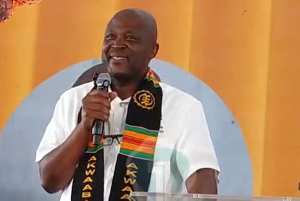 Ibrahim Mahama is a Ghanaian businessman and entrepreneur



Entertainment