We are a nation that prides itself on high religious esteem. Our churches, mosques, and shrines are filled every week, and we all believe in one common slogan: “Cleanliness is next to godliness.” Yet, our streets, gutters, beaches, and open spaces expose our reality.
This is the story in our communities anytime we are visited by the rains, homes are destroyed, businesses suffer, and lives are lost.
Though heavy rainfall is the immediate culprit, human behaviour can be held responsible as a catalyst. Who choked the drains with garbage, predominantly plastic waste? Who dumps waste indiscriminately into running water when it rains? Who gives building permits for construction work on natural drainage channels?
The hard fact is that these habits did not just happen in adulthood; they were built up over the years from infancy through home training. Charity, they say, begins at home.
Growing up as a child in an environment where adults throw refuse into gutters and open spaces makes it appear like normal behaviour to emulate. As a parent, if you allow a child to urinate and defecate in open spaces, you are teaching that child poor environmental hygiene and instilling in them a disregard for their surroundings.
Overlooking these habits results in what can be described as a generational curse. This explains why we continue to have the same conversations over the years.
Disappointingly, it is very common to see people emptying household waste into rainwater, with the hope that the rainwater will serve as a vehicle to “transport” it to its “destination.” Unfortunately, these wastes eventually pile up, block waterways, restrict water flow, and contribute directly to flooding.
The most alarming part is that when these individuals are confronted, their reactions are often hostile and defensive.
Even more worrying is their refusal to accept responsibility. The culture of rejecting responsibility and resisting correction further deepens the problem.
Children need to be educated early enough that litter belongs in the bin and not just anywhere they deem convenient to dispose of it.
The existence of toilets is for human waste disposal, not open spaces.
We must treat public places with the same respect we give our homes. We must understand that every piece of waste carelessly disposed of puts both ourselves and innocent people at risk of facing the consequences.
Environmental sanitation is a collective responsibility. Keeping the environment clean is not the responsibility of government alone; we all have a role to play.
Parents must lead by setting good examples because children learn from what they see adults do. When children see responsible and law-abiding adults, they are more likely to emulate those behaviours. Respecting sanitation laws, participating in community clean-ups, and protecting public spaces should become normal practices as they grow.
Of course, the government also has a responsibility to provide professional waste collection and disposal services. Governments must ensure the provision of appropriate waste management systems and introduce stringent measures to punish sanitation offenders.
Metropolitan, municipal, and district assemblies must also enforce their by-laws on waste disposal and building permit acquisition to prevent unauthorised construction and indiscriminate waste dumping.
Citizens cannot continue polluting the environment and expect government alone to clean it up. A clean country requires the collective efforts of responsible citizens and effective authorities.
As a country that holds religion in high esteem, our faith should not only be measured by attendance at religious gatherings but also by how we translate those values into our everyday lives, guided by the saying we all uphold: “Cleanliness is next to godliness.”
If we truly believe that cleanliness is next to godliness, then the change we desire for a healthier environment must begin from our homes and the values we instil in our children.
A clean nation is built by responsible citizens who understand that protecting the environment is both a civic duty and a moral obligation.
Opinions of Monday, 20 July 2026
Columnist: Cynthia Ami Affram
Cleanliness is next to Godliness: Why is a deeply religious nation drowning in filth?
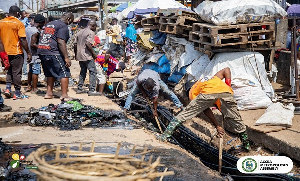 Environmental sanitation is a collective responsibility