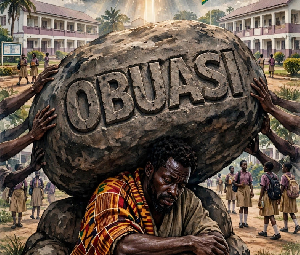
Call for a National Asset Audit
After decades of controversy, Ghana needs a comprehensive national audit of major state asset transactions.
Not a political witch-hunt.
Not revenge.
Not selective prosecution.
A professional, independent review.
The Ghanaian people deserve a historical record showing:
1. Assets that were transferred; 2. Dates of transactions; 3. Valuations at the time; 4. Buyers and ownership structures; 5. Whether payments were completed; 6. Whether conflicts of interest existed.
Only facts can heal national wounds.
History Will Judge Us
The greatest danger to Ghana is not that governments make economic decisions.
The danger is when governments make decisions involving national wealth without sufficient transparency, and citizens are discouraged from asking questions.
No political party owns Ghana.
No politician owns Ghana.
No businessman owns Ghana.
Ghana belongs to the Ghanaian people.
The resources entrusted to governments today are the inheritance of generations yet unborn.
The patriotic duty of every citizen; lawyer, politician, journalist and ordinary Ghanaian; is to demand accountability, defend the public interest and ensure that never again will national assets become the private advantage of a privileged few.
*GHANA’S NATIONAL ASSETS: THE UNTOLD STORY OF DIVESTITURE, PRIVATISATION AND THE QUESTION OF WHO BENEFITED*
_By; Charles Owusu Juanah Esq. : Senior Legal Practitioner_
A Nation Must Ask Difficult Questions
A country that refuses to interrogate its past risks repeating the mistakes of history.
For decades, Ghanaians have watched governments come and go while valuable national assets; built through the sweat, taxes and sacrifices of ordinary citizens; have changed ownership through various forms of divestiture and privatisation.
The central question every patriotic Ghanaian must ask is simple:
When public assets were transferred into private hands, did Ghana receive true value for money, or did a privileged few gain access to national wealth at the expense of the ordinary citizen?
This is not a question of political hatred. It is a question of accountability.
The State Is Not a Private Estate
Governments are temporary custodians of national resources. Political parties come and go, but the assets of Ghana belong to the Ghanaian people.
Factories established after independence, state farms, hotels, financial institutions, industrial enterprises and strategic companies were not created by political parties. They were created through public resources.
Therefore, any government that transfers such assets carries a sacred responsibility:
to ensure transparency, fairness and maximum benefit for the citizenry.
The troubling reality is that Ghana’s history of divestiture has generated serious public concerns about whether every transaction met this standard.
The PNDC Era: The Birth of Ghana’s Most Controversial Economic Transfer
The PNDC government, under its Economic Recovery Programme, embarked on one of the largest restructuring exercises in Ghana’s economic history.
The argument was clear: many state-owned enterprises had become inefficient, heavily indebted and unable to compete.
However, the questions that remain decades later are equally important:
* Were all state assets properly valued before disposal? * Did Ghana receive the full economic benefit from the sale of these enterprises? * Were ordinary Ghanaians given a fair opportunity to participate? * Did politically connected individuals gain advantages over others?
These questions cannot simply be dismissed as political propaganda. They are legitimate questions in any democracy where public property changes hands.
The concern raised by critics is that some individuals who had access to political power during that era became beneficiaries of opportunities created through state divestiture.
Where evidence exists, such matters deserve investigation. Where evidence does not exist, accusations should not replace facts.
But silence cannot be the answer.
NDC Governments and the Continuation of the Divestiture Debate
The National Democratic Congress (NDC) governments also participated in various forms of state asset restructuring and privatisation.
Again, the fundamental issue is not whether private participation in the economy is wrong. Private investment can create jobs, increase productivity and attract capital.
The issue is this:
Was the process transparent, competitive and conducted purely in Ghana’s national interest?
Ghanaians deserve answers.
They deserve to know:
* who acquired state assets; * what prices were paid; * how those prices were determined; * whether payments were completed; * whether political relationships influenced transactions.
A democracy cannot operate on the principle that public resources are transferred behind closed doors and citizens are expected to accept explanations afterwards.
The Dangerous Culture of Selective Accountability
One of Ghana’s biggest governance problems is selective outrage.
When one political party is accused, its opponents become loud defenders of accountability.
When the same questions are raised about another party, the conversation suddenly becomes “political victimisation.”
This hypocrisy has damaged public trust.
Accountability must not have a political colour.
If an NPP government mismanages public assets, it must answer.
If an NDC government mismanages public assets, it must answer.
If any individual; regardless of political affiliation; benefits improperly from public property, the law must apply.
The Ghanaian People Are the Ultimate Shareholders
The ordinary Ghanaian worker who pays taxes, the farmer who contributes to the economy, and the young person searching for employment are the real shareholders of Ghana.
They did not sit in boardrooms when national assets were transferred.
They did not negotiate purchase agreements.
They did not determine valuations.
Yet they live with the consequences.
When a factory closes after privatisation, communities suffer.
When strategic industries disappear, jobs disappear.
When national assets are undervalued, future generations lose opportunities.
A Call for a National Asset Audit
After decades of controversy, Ghana needs a comprehensive national audit of major state asset transactions.
Not a political witch-hunt.
Not revenge.
Not selective prosecution.
A professional, independent review.
The Ghanaian people deserve a historical record showing:
1. Assets that were transferred; 2. Dates of transactions; 3. Valuations at the time; 4. Buyers and ownership structures; 5. Whether payments were completed; 6. Whether conflicts of interest existed.
Only facts can heal national wounds.
History Will Judge Us
The greatest danger to Ghana is not that governments make economic decisions.
The danger is when governments make decisions involving national wealth without sufficient transparency, and citizens are discouraged from asking questions.
No political party owns Ghana.
No politician owns Ghana.
No businessman owns Ghana.
Ghana belongs to the Ghanaian people.
The resources entrusted to governments today are the inheritance of generations yet unborn.
The patriotic duty of every citizen; lawyer, politician, journalist and ordinary Ghanaian; is to demand accountability, defend the public interest and ensure that never again will national assets become the private advantage of a privileged few.
*Attached is supportive piece:*
Illustrative Cases of Major State Asset Transfers and Their Known Beneficiaries
To move this debate from rhetoric to evidence-based national reflection, it is necessary to examine concrete examples of major state asset transfers that have taken place over the decades under successive administrations.
These cases are not speculative. They are widely documented in public records, divestiture reports, parliamentary debates, and economic reform literature. However, what continues to generate national debate is not merely the transactions themselves, but the structure of ownership transfer, valuation processes, and the ultimate beneficiaries, often corporate or institutional entities acting on behalf of private capital.
Throughout the Fourth Republic, numerous state institutions and enterprises have been divested, privatised, leased or otherwise transferred from public ownership, including:
* State Hotels and Hospitality Assets to SSNIT-Linked Investments, Private Hotel Chains & Lease Operators * Ghana Airways Assets to Liquidation Creditors, Leasing Companies & Asset Recovery Firms * Ashanti Goldfields to AngloGold Merger (Global Mining Consolidation) * African Timber & Plywood * GIHOC Cannery * GIHOC Manufacturing Company Limited * GIHOC Marble * GIHOC Paper Conversion * GIHOC (Sekondi) Boatyards * GNTC Bakeries * NIC Chemicals & Paints * Tema Food Complex Corporation * NIC Estates (Part) * NIC Trading * NIC Vehicle Assembly Plant * Meat Marketing Board * Bast Fibre Development Board * Ghana Seed Company Limited * GIHOC Mosquito Coil * GIHOC Paper & Printing * Ghana Football Pools Authority * Food Production Corporation – Bungalow Farms * Ghana Commercial Bank (Partial Divestiture) to State, SSNIT & Public Shareholders * Bank for Credit and Commerce * Development Leasing Co. Limited * Ashanti Oil Mills Limited * Eveready (Gh) Limited (formerly Union Carbide) * GIHOC Vegetable Oil Mills – Esiama * GIHOC Vegetable Oil Mills – Tamale * Country Wide Properties * Akuaba Tourist Agency * GIHOC Central Advertising Company * Willowbrook (Gh) Limited * Black Star Line Vessels * Ghana Telecom to Vodafone Group (United Kingdom) * Social Security Bank (SSB) to Société Générale (France) * State Agricultural and Produce-Related Enterprises to Private Agribusiness Operators & Concessionaires * and a lot others
The purpose of listing these institutions is not to suggest that every transaction was unlawful or improperly conducted. Rather, it is to demonstrate the scale of state asset transfers that have occurred over the years and to reinforce the need for a comprehensive, independent national audit of these transactions.
Critical Legal Reflection on Beneficiary Structures
What emerges clearly from these transactions is a consistent structural pattern:
* direct state ownership to corporate or institutional ownership * public industrial control to private concession or joint venture systems * national strategic assets to multinational or mixed-ownership frameworks
However, it is important to state clearly that in most cases, beneficiaries were corporate entities rather than publicly declared individual political actors, making direct attribution of ownership to specific persons legally and factually complex without access to beneficial ownership disclosures.
This is precisely where Ghana’s transparency challenge lies.
Because while companies are named on paper, the ultimate beneficial owners behind corporate structures are not always publicly visible, raising legitimate governance concerns about transparency in public asset transfer systems.
Reviving National Assets, Not Selling Them: The Duty of Responsible Governments
An underperforming public institution should never be viewed as an excuse for disposal. Rather, it should be seen as a test of the competence, vision and commitment of the government entrusted with managing the affairs of the nation.
Every administration inherits both the successes and the challenges of its predecessors. That is the essence of democratic governance. Governments are elected not merely to administer thriving institutions, but to reform, modernise and revive those that have fallen into decline.
Revenue-generating state enterprises are strategic national assets. If they are inefficient, the first obligation of government is to identify the causes of their decline, institute sound corporate governance, eliminate corruption, recapitalise where necessary, and place competent management at the helm. Selling such institutions to private investors; whether Ghanaian or foreign; should be the last resort, not the default response.
The wholesale disposal of public enterprises often reflects managerial failure rather than economic necessity. It is easier to sell a struggling enterprise than to undertake the difficult work of restructuring and restoring it to profitability. Such an approach amounts to lazy governance and should not be encouraged.
The Ghanaian people deserve to know whether these divestitures achieved their intended objectives. a. Did they create sustainable employment? b. Did they improve productivity? c. Did they strengthen the national economy? d. Did the State obtain fair value for these assets? e. Or did Ghana permanently lose strategic national assets that could have been rehabilitated for the benefit of present and future generations?
A nation cannot build lasting prosperity by continually disposing of productive assets whenever they become distressed. Strong economies are built by reforming institutions, improving governance, investing in productivity and preserving strategic national assets for the collective benefit of the people.
The true measure of effective leadership is not how many state enterprises are sold, but how many struggling institutions are transformed into thriving national assets that continue to generate jobs, revenue and opportunities for generations to come.
Conclusion: Ghana’s Wealth Must Never Become a Private Inheritance
The debate over divestiture and privatisation is not, and should never be, about demonising private enterprise or resisting economic reform. Every economy requires innovation, investment and, where appropriate, strategic partnerships with the private sector.
What must never be compromised, however, is the principle that the assets of the Republic exist first and foremost for the benefit of the Ghanaian people.
Governments are elected to create wealth, preserve national assets where economically viable, and revive struggling public institutions through visionary leadership; not to regard their disposal as the easiest solution to managerial or financial challenges. The true test of leadership lies not in how many state enterprises are sold, but in how many are transformed into productive, profitable and nationally beneficial institutions.
Throughout the Fourth Republic, Ghana has witnessed the transfer of numerous strategic public assets into private hands. Some transactions may have yielded economic benefits; others continue to generate legitimate public concern. The passage of time does not diminish the Ghanaian people’s right to know whether these transactions represented fair value, served the national interest and were conducted with complete transparency and integrity.
This is why the call for a comprehensive National Asset Audit is both timely and necessary. Such an exercise should rise above partisan politics and be undertaken by an independent, professionally constituted body with full access to historical records and beneficial ownership information. Its objective should not be retribution, but truth; not political point-scoring, but institutional accountability; not division, but national reconciliation built on facts.
No political tradition should be exempt from scrutiny. If mistakes were made under the PNDC, they must be examined. If questionable transactions occurred under the NDC, they must be examined. If similar concerns arise under the NPP or any future administration, they too must be subjected to the same rigorous standard. Accountability that is selective is not accountability at all; it is merely politics.
Ghana’s natural resources, industries, financial institutions, farms, factories, hotels and strategic enterprises are not the inheritance of governments or political elites. They belong to the people of Ghana; those living today and the generations yet unborn. Every administration is merely a temporary trustee of this national inheritance and must discharge that responsibility with fidelity, transparency and an unwavering commitment to the public good.
History will ultimately judge every government not by the number of assets it transferred, but by the strength of the institutions it built, the industries it revived, the jobs it created and the prosperity it secured for its citizens.
The time has come for Ghana to replace secrecy with transparency, selective accountability with equal justice, and short-term expediency with long-term national stewardship. Only then can we confidently assure future generations that the wealth of this nation was protected; not for the privileged few, but for every Ghanaian.
The assets of Ghana are not for sale to history. They are a sacred national trust, to be preserved, strengthened and handed over; better than we inherited them; to the generations that will come after us.
_The end_
Opinions of Monday, 20 July 2026
Columnist: Charles Owusu Juanah Esq
Ghana's National Assets: The untold story of divestiture privatization
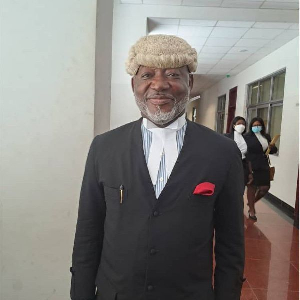 Charles Owusu Juanah Esq










Opinions