Whereas I commend the President and his team for initiating this two-day national cleaning exercise, I think the military's involvement is one that deserves both commendation and caution.
For some reason, our people have become accustomed to the rule of force. Though I fully subscribe to democracy and civilian rule, I strongly believe that, as a people, we must balance our democratic credentials with strategic approaches to achieving progress.
Sanitation today remains an existential threat and must be dealt with using the "most powerful weapon" we have as a country, just as we did during the COVID era. The involvement of the military and other state agencies during the COVID era is known to have had a significant effect on managing the precarious situation.
After several decades of "toying" with sanitation issues through largely civilian measures, with Zoomlion playing a key role, I think it is about time we took it a step further. As much as Zoomlion has done its best, attitudinal issues in the way discipline is enforced remain when it comes to sanitation.
Irrespective of the excesses sometimes associated with it, the involvement of the military in civilian roles has, over the years, proven to be our last resort in advancing issues of strategic and national interest.
This, I believe, must, however, be encouraged with caution and within the necessary framework to ensure sustainability. The 48 Engineers Regiment has, in the past, been very instrumental, particularly in infrastructure and emergency response.
Already, the military's role in environmental issues such as illegal mining has been observed. Considering the nature of sanitation issues, particularly waste management, it is about time we balanced civilian efforts with strategic military roles.
Waste management contracts in the country must be assigned to the military. This must, however, be preceded by the establishment of a highly skilled and specialised military wing for this purpose.
To reduce the excesses sometimes associated with military involvement in civilian matters, professional and highly trained personnel must be assigned to this unit, with the ability to balance the use of force with dialogue and stakeholder engagement.
The recent development of the Kumasi-Accra corridor by the military is testament to the achievements that can be made when we balance civilian missions with strategic military capability. Such attempts must, however, not be seen as a way to bulldoze our way through civilian issues with military force, as such attempts have the potential to increase military-civilian conflict.
It must, however, be implemented with the necessary oversight and tactical discipline. All we have to do is award cleaning contracts to the military and get it to engage civilian employees and contractors to perform the task under its supervision. Areas cleaned under such arrangements should have signage warning people not to litter those areas, as they are maintained under military supervision.
To enforce discipline, military deployments together with CCTV can be positioned at strategic locations in cities and major towns to encourage compliance while using minimal force. I wonder how many people in their right mind would flout such measures.
Opinions of Wednesday, 15 July 2026
Columnist: Daniel Adu-Gyamfi
Military involvelment in national sanitation highly commendable
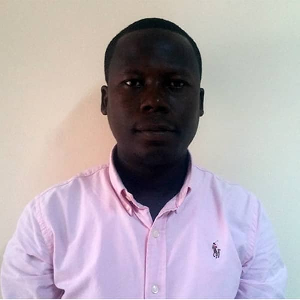 The writer, Daniel Adu Gyamfi, a is Project Manager, DEM HUB, UMaT-Tarkwa



Entertainment