The name Kwame Nkrumah does not belong to Ghana alone. It belongs to Africa. It belongs to history. And it lives on in ways that no statue can contain and no border can confine.
I was privileged to witness this truth here in Somalia through a Ugandan friend and colleague who serves as a peacekeeper. He told me, with quiet conviction, that Ghana is a country he deeply cherishes.
The reason was simple yet profound: Ghana’s first President fought for the liberation of the entire continent. He did not limit his vision to Ghana’s independence alone; he paved the way for Africa to see itself as one people—beyond maps, beyond colonial borders, and beyond the divisions imposed upon us.
What makes his admiration even more remarkable is this: he is named after Dr. Kwame Nkrumah. Think about that. In Uganda, a country with its own heroes and great leaders, a father still chose to name his son after Nkrumah. That filled me with pride as a Ghanaian.
It is a powerful testament to the fact that Nkrumah was not a self-serving leader focused only on Ghana. He was a selfless statesman who dreamed of a greater Ghana while championing the unity and progress of the entire African continent. His ambition was continental because he understood that a free Ghana in a colonised Africa was not true freedom.
My friend, Fredrick Muhanguzi, further reminded me that this reverence is also preserved in institutions. At Makerere University in Uganda, one of Africa’s oldest and most respected universities, there is a hall of residence named after the renowned Pan-Africanist and first President of Ghana.
Nkrumah Hall stands on the university’s main campus in Kampala. Established in 1954, it was originally called “New Hall” before being renamed in honour of Nkrumah’s ideals of Pan-Africanism.
At its entrance stands a statue of Dr. Nkrumah, and the hall carries the motto “Osagyefo,” the Akan word for “Redeemer.” A Ugandan university using an Akan title to honour a Ghanaian leader is a powerful symbol of his influence.
Across Africa, his name appears repeatedly. In Zimbabwe, a major road in the capital city, Harare, is named Kwame Nkrumah Avenue.
In Mozambique, Maputo features Avenida Kwame Nkrumah. In Burkina Faso, Ouagadougou’s principal thoroughfare also bears his name.
In Mali, a large statue of Kwame Nkrumah stands at a major roundabout in Bamako, watching over the city.
At the African Union Headquarters in Addis Ababa, Ethiopia, another statue of Nkrumah stands in recognition of his role as a founding father of the Organisation of African Unity, now the African Union.
These are not accidental honours. Streets are not renamed without meaning, and universities do not dedicate halls without purpose. Nkrumah’s legacy is not merely remembered; it is lived.
It is spoken in Luganda in Kampala, in Shona in Harare, in Portuguese in Maputo, in French in Ouagadougou, and in Amharic in Addis Ababa.
He dreamed of a United States of Africa. He did not live to see it fulfilled. But every time a Ugandan peacekeeper in Somalia tells a Ghanaian that his name is Nkrumah, every time a student walks past that statue in Makerere, and every time a taxi turns onto Kwame Nkrumah Avenue in a foreign capital, his dream moves one step closer.
The legacy of Dr Kwame Nkrumah lives on—not because we say it, but because Africa refuses to forget it.
Opinions of Saturday, 27 June 2026
Columnist: Isaac Aditim
The living legacy of Dr Kwame Nkrumah across Africa
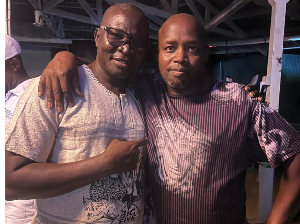 Isaac Aditim is the author of this article