Preliminary operational reports indicate a disruption risk of up to 1000MW of transmission capacity, representing approximately 25% of Ghana’s peak demand of 3,500- 4,000MW.
According to system load patterns reported by the Ghana Grid Company (GRIDCo) and national demand data. This is not merely an operational setback. It is a systemic stress test.
In practical terms, this level of disruption forces immediate load management across regions, affecting households, hospitals zones and SMEs simultaneously.
Recent outage patterns following the incident already confirm widespread disruptions across the Ashanti, Central and Greater Accra corridors; demonstrating how quickly transmission instability translates into national impact.
Even short -duration disruptions in power systems can generate millions of cedis in cumulative productivity losses per day, based on energy intensity to GDP; commonly applied by the World Bank in developing economy
assessments.
Ghana’s installed generation capacity now exceeds 5000MW according to the Energy Commission of Ghana.
However, installed capacity alone does not guarantee reliability. The real constraint lies in the transmission concentration and system rigidity. The Akosombo incident demonstrates a structural truth:
Ghana’s grid is still heavily dependent on a small number of high-capacity nodes. When one node fails, the ripple effect is national.
Across Sub-Saharan Africa, energy systems are gradually shifting toward decentralization. Countries such as Kenya and Rwanda have accelerated off-grid solar adoption and mini-grid systems to reduce pressure on national grids.
The International Energy Agency (IEA) estimates that distributed renewable energy systems are now one of the fastest -growing segments of energy access expansion in emerging economies particularly in Sub-Saharan Africa.
The Akosombo incident therefore highlights a missed opportunity rather than just a failure.
Every centralized disruption reinforces the same conclusion; Ghana’s energy future can’t depend solely on long transmission corridors carrying bulk power from a few generation hubs.
Instead, resilience must be built at the point of consumption. Decentralized solar energy systems, particularly rooftop solar integrated with battery storage, offer a structurally different form of resilience.
Hospitals, telecom-infrastructure and SME’s equipped with hybrid solar systems are insulated from national grid fluctuations.
However, technology alone is insufficient. The transition requires deliberate policy acceleration in three key areas.
First, Ghana must scale net metering and embedded generation frameworks to allow households and businesses to actively participate in electricity supply.
Secondly, critical infrastructure such as hospitals and water treatment facilities should adopt mandatory solar-plus -storage resilience standards, ensuring uninterrupted operations during grid failures.
Third, industrial parks and peri-urban zones should be supported through mini-grid and solar industrial clusters reducing dependency on long-distance transmission lines.
The economic rationale is equally strong. Energy unreliability increases operating costs through diesel generator dependence, reduces industrial productivity and weakens investor confidence in manufacturing stability.
Over time, these effects compound into reduced competitiveness in regional
trade. Importantly, this is not a call to abandon centralized infrastructure.
Rather, a call to redesign the systems into a hybrid model where centralized generation provides bulk supply stability and decentralized systems provide resilience and flexibility. This dual-layer structure is increasingly
considered best practice in modern energy.
The Akosombo incident is a policy signal and not an isolated technical fault. It reveals the limits of an outmoded system designed for a previous era of demand patterns and risk profiles.
In conclusion, Ghana stands at a critical energy inflection point. Ghana possesses abundant renewable potential, growing institutional capacity and a stable policy environment.
The next step? Strategic acceleration toward decentralization.
Opinions of Tuesday, 28 April 2026
Columnist: Christabel Mills
Ghana's Grid Vulnerability: Akosombo, solar energy and urgent case for decentralized power
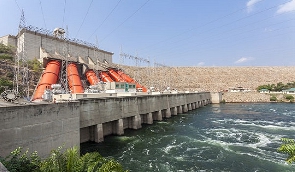 Akosombo exposes Ghana grid fragility as 1000MW risk threatens supply stability