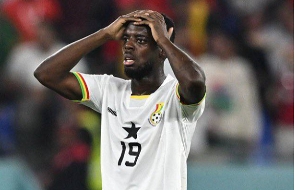
The numbers are stark and demand a national reckoning. Between 2023 and 2025, at least 272 Ghanaian nationals were recruited into the Russian military, according to a new investigative report by INPACT, a group focused on exposing Russian disinformation activities in Africa. Of those, at least 55 have been reported killed on the battlefields of Ukraine; young men who left Ghana chasing opportunity and came home in silence, or not at all.
Across the continent, the report documents 1,417 Africans drawn into the conflict, with no fewer than 316 dead. These are not statistics. They are the sons, brothers, and friends of families who were promised education and employment, and instead were handed weapons.
At the heart of this tragedy lies a network that few Ghanaians have been adequately warned about. Across Africa, Russia has steadily expanded a chain of institutions known as Russian Houses: cultural and educational centres presented as benign platforms for language learning, scholarship placements, and people-to-people exchange.
In Ghana, these channels have included academic partnerships with institutions such as Novosibirsk State Technical University, through which students are offered pathways to study in Russia. On the surface, such offerings appear legitimate.
For a young Ghanaian facing limited economic options, a funded scholarship abroad can seem like a life-changing opportunity. The tragedy is that for some, it has been, in the most devastating sense.
International educational exchange is not inherently problematic. The British Council, Alliance Française, and China’s Confucius Institutes all operate on similar premises: promoting national culture, building relationships, and advancing strategic interests. The problem with Russian Houses is not the concept but the documented contamination of their execution.
Yevgeny Primakov, head of Rossotrudnichestvo, the federal agency that oversees Russian Houses globally, has acknowledged that a paramilitary organisation helped establish these centres in Mali and the Central African Republic. That is not a footnote. It means the very infrastructure of “cultural diplomacy” was partly constructed by the same forces conducting mercenary warfare on this continent. That contamination is structural, not incidental.
The silence of those responsible only deepens the concern. Natalia Krasovskaya, who heads Russia’s Centre for Public Diplomacy and has been decorated for supporting an active military campaign, stood before journalists in Accra in December 2025 and assured the public that African students in Russia were “safe.” She has never publicly addressed the military recruitment allegations.
The INPACT findings make that silence untenable. When the head of a cultural institution will not respond to documented evidence that its pipeline is channelling students into a war zone, the burden of proof has shifted entirely.
It is also essential to confront the conditions that enable this exploitation. Across Africa, large youth populations face unemployment, constrained domestic opportunities, and barriers to quality education. Desperation should never be used as a recruitment tool, yet that is precisely what these networks exploit.
Whether through deliberate deception or systemic design, the outcome is the same: young Africans find themselves entangled in a European war that has nothing to do with their national interests. Russia bears no equivalent risk in this arrangement. African families are burying their sons. That is not mutual benefit. That is extraction dressed as opportunity.
There are encouraging signs that Ghana’s government is beginning to act. In February 2026, Foreign Minister Samuel Okudzeto Ablakwa met with Ukraine’s president and called for the release of two Ghanaian prisoners of war. Kyiv confirmed the detainees are being treated in accordance with international humanitarian law and has offered Ghanaian diplomats consular access. These are meaningful steps. But they must not be the ceiling of Ghana’s response.
What is required now is a comprehensive and enforceable framework operating on three fronts. Diplomatically, Russian missions and affiliated institutions in Ghana must be required to disclose the full nature of their programmes publicly and to publish verifiable data on scholarship recipients, exchange participants, and their outcomes.
The Ministry of Foreign Affairs and Regional Integration should commission an independent audit of Rossotrudnichestvo-affiliated organisations and strengthen consular systems to track citizens in high-risk destinations. Voluntary embassy registration for Ghanaians abroad should become standard practice, not an afterthought.
Domestically, stricter regulation of overseas recruitment channels is long overdue. The National Commission for Civic Education, in concert with the Ministry of Foreign Affairs, should lead targeted awareness campaigns that clearly explain how these recruitment pipelines operate; what red flags to watch for, what questions to ask, and which official channels exist for verification.
Ghana’s radio and television networks, among the most trusted sources of information for ordinary citizens, should host regular discussions with labour and law-enforcement experts, including dramatised scenarios that show how recruiters manipulate victims. The media, civil society, and educational institutions all have a role to play.
Finally, regional coordination through the African Union is essential. This is not a Ghana-only challenge. The scale of recruitment suggests a transnational network that demands a collective continental response through shared intelligence, harmonised regulations, and coordinated pressure for accountability at the international level. Collaboration with Interpol can help disrupt the networks at their source.
The principle at stake is straightforward: African youth should not become expendable assets in geopolitical contests that do not serve their interests. Ghanaian students, universities signing memoranda of understanding, and government officials engaging with Russian institutions have not been informed that paramilitary forces partly established the network they are dealing with, which is overseen by an EU-sanctioned agency and led by a figure publicly decorated for supporting an active war. A relationship built on concealing foundational facts is not diplomacy. It is manipulation.
Fifty-five Ghanaians are dead in a war that was never theirs to fight. Hundreds more may have served, or may still be serving. The investigative record now makes denial impossible.
What remains is a question of political will: whether Ghana’s institutions will convert diplomatic concern into enforceable protection and ensure that no more of our sons pay the ultimate price for a promise that was never honestly made.
Opinions of Tuesday, 28 April 2026
Columnist: Joseph McCarthy
Our Sons Dying in a War Not Ours: Russia's cultural diplomacy and Ghanaian lives
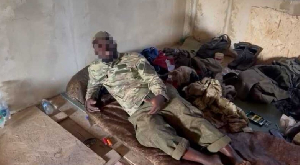 Between 2023 and 2025, at least 272 Ghanaian nationals were recruited into the Russian military