The recent remarks by Minority Leader Alexander Afenyo-Markin on reparatory justice offer precisely such a moment. Measured in tone yet unflinching in substance, his intervention deserves careful consideration as Ghana weighs its relationship with history, memory, and international diplomacy.
In Parliament, Afenyo-Markin posed a pointed question: “Somebody parks a vessel at Cape Coast, and you go to the North, to Brong, Ashanti, Assin… [and apprehend the strongest among your own people]. Then, after 100 years, you say you should be compensated - who should compensate whom?” He added that “we maltreated our own and told the white man that he must also maltreat our own.”
The latter claim somewhat overstates the case - Ghanaians did not “tell” Europeans to maltreat their kin - but his broader point highlights an uncomfortable complexity: African agency and complicity in the capture and sale of fellow Africans. Acknowledging this reality does not negate the case for reparations, nor does it justify Western reluctance to confront their role.
However, overemphasizing internal complicity risks obscuring the scale and character of the transatlantic slave trade.
To his credit, Afenyo-Markin explicitly condemned “the inhumane treatment - the humiliation, injustice, marginalisation, and abuse of our ancestors who became victims of the slave trade.”
This tension, moral recognition without a corresponding commitment to meaningful redress, lies at the heart of the current debate, particularly in the wake of Ghana’s leadership at the United Nations.
Recognizing the transatlantic slave trade as a crime against humanity is, at its core, about establishing historical and moral truth. Yes, some African actors participated in the trade.
But the enterprise was externally driven, massively scaled, and ruthlessly industrialized by European powers. What began as localized capture and sale evolved into a vast system of chattel slavery, sustained by the horrors of the Middle Passage and generations of hereditary bondage.
The vivid brutality portrayed in Roots, through the story of Kunta Kinte, stripped of name, culture, and dignity, captures not merely forced labor, but a deliberate and enduring project of dehumanization.
Ghana, as custodian of these painful memories, carries a unique symbolic weight. Its coastal slave forts- Cape Coast Castle, Elmina, and others- stand as solemn reminders of both unimaginable suffering and the uneasy partnerships that enabled it.
Reparatory justice therefore demands moral consistency: does acknowledgment alone suffice, or must it extend to material and structural redress for the enduring legacies of slavery and colonialism?
The Minority Leader’s emphasis on practical national interests is understandable. Ghana must sustain strong diplomatic and economic partnerships with Western nations. Yet an overemphasis on African complicity can inadvertently weaken the moral claim, allowing historical accountability to give way to diplomatic convenience.
Serious advocates of reparatory justice do not deny African agency; rather, they situate it within its proper historical context.
While some local actors profited from the sale of captives, it was Europe that industrialized the trade, accumulated immense wealth from it, and later entrenched colonial systems whose effects persist.
Ghana’s challenge, then, is to strike a careful balance: pragmatic diplomacy on one hand, and Pan-African ethical conviction on the other. This balance is most credible when grounded in historical clarity and moral courage, the kind embodied by thinkers such as Kwame Nkrumah and Ali Mazrui.
Ghana must now choose with clarity and conviction. Pragmatic partnerships need not come at the expense of historical justice. True leadership demands confronting the full truth of the slave trade, both the painful African role and the overwhelming European responsibility, without allowing discomfort to dilute moral purpose.
At this quiet crossroads, Ghana should lead not by equivocation, but by insisting that reparatory justice is not an act of charity, but a rightful claim grounded in truth, dignity, and the unfinished business of history. Only by upholding principle alongside partnership can we honour our ancestors and secure a future rooted in genuine equity.
Opinions of Monday, 30 March 2026
Columnist: Seth Kwame Awuku
Between Memory and Partnership: Ghana's moral test on reparatory justice
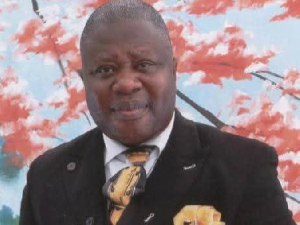 Seth Kwame Awuku is the author of this article




Entertainment