The level of desperation among the youth has reached a point where the country may no longer contain and control it if pragmatic steps are not taken. What factor(s) accounts for this desperation amongst the youth? I have decided to discuss the youth and their desperate need for employment and a better standard of living.
The issue of unemployment, I dare say, has become a national security threat, and if measures are not put in place, it will escalate into something we may not have the power to deal with.
The level of unemployment in Ghana, particularly among the youth, is becoming a troubling trend, and it must be confronted with some pragmatic measures. The paradox of the situation is that the youth are desperate and ready to work, but the jobs are not available to them.
A country that has more than one-third of its population being youth, and there are no readily available jobs for these people. According to the United Nations in Ghana and Afrobarometer, 38% of the population is between 15 and 35 years old. This age bracket is the most productive and exuberant part of every economy, and to see this age group yearning for a job makes me cringe!
There are no jobs in the formal and informal sectors of the economy, which makes it difficult for the youth to have a decent living. Many years ago, it was said that one of the surest ways to lead to prosperity was being educated (formal education) because this ensured you got a better job. I cannot say the same for this era. The seeming increase in graduate unemployment is becoming an albatross around Ghana. This situation has made the youth more frustrated.
The Ghana Statistical Service (GSS) reports in the third quarter of 2025 that about 1.3 million youth are idle, which represents almost 21% of the age cohort. This means that these people are neither working nor schooling, nor are they in any skill development venture. This must be a cause for worry for authorities. The future of Ghana is bleak with these troubling numbers. What probable future awaits the country when no one seems to think about this canker?
Each year, about one hundred thousand young people graduate from the various tertiary institutions in Ghana, and most of them are unable to get any decent job. The Institute of Statistical, Social, and Economic Research (ISSER) at the University of Ghana reports that among this high number of people graduating from the various tertiary institutions, only 10% are able to secure some decent jobs in the first year, while 60% remain jobless or underemployed.
It does not come as a surprise because many of the able-bodied men and women are leaving the shores of Ghana and do not even want to return again. There seems to be no way or remedy for this situation. The frustration these young ones have to go through before they are able to feed themselves is troubling.
Just imagine after your parents have sacrificed for you to complete your education, hoping you will be gainfully employed so you can take care of yourself and also support them, but at the end of the day, you become a liability to them.
I do not want to put this issue at the doorstep of politicians, but at least there must be some form of leadership to address this menace. Each election cycle, we hear politicians promising a lot, but when they come to power, they have nothing to show for it. The only avenue these people are able to provide jobs is when they are recruiting into the various security institutions and other agencies.
Look at the number who graduate from tertiary institutions each year and the number who are recruited into these institutions and agencies. The fact of the matter is that we do not have creative and innovative leaders who will think outside the box and bring in some innovation on how to create sustainable jobs. How can these people survive without work? How are they able to take care of their families?
The country is sitting on a time-bomb and the earlier they act, the better. The leaders know the ramifications of this canker, but they have turn deaf ear. The youth are desperate; they are desperate for jobs; they are desperate for decent lives and also desperate for a promising future in Ghana. Throughout history, it has been told that unemployment and extreme hardship have caused the overthrow of many regimes. If someone is not working, how can the person have a decent living and so forth?
In recent times, there has been an increase in some social vices, largely because those who are involved in these vices do not have anything productive and profitable to do. It is said that ‘the devil finds work for the idle hand.’ I am very sure that in the coming years, not too distant from now, the massing youth will start to descend on authorities whom they think are responsible for their predicament.
In order to resolve this issue, there should be a deliberate effort from the government, partners and stakeholders to make sure that this issue is given a considerable amount of time and attention. There should be a link between industry and academia so that the skills being taught in school align with industry standards.
Political authorities should not make job creation their sole responsibility, but should create the enabling environment for private sector players who are willing to invest and employ these unemployed, desperate youth.
Opinions of Tuesday, 10 February 2026
Columnist: Sampson Boamah
Desperate youth
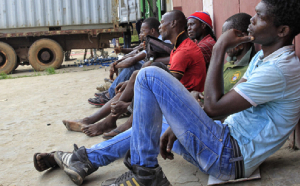 Youth unemployment continues to rise