A recent G24 TV report announced that the National Council for Curriculum and Assessment (NaCCA) has launched a Chinese language curriculum for basic, junior high, and senior high schools in Ghana. Unveiled during the 10th anniversary of the Confucius Institute at the University of Cape Coast, the initiative has been praised as a landmark step toward preparing Ghanaian students to compete in the global economy.
NaCCA argues that teaching Mandarin will ease communication barriers in trade, diplomacy, and technology exchange between Ghana and China. The idea sounds attractive. But it misses the real problem.
China is not learning African languages to compete internationally>/b>
China does not teach Twi, Ga, Ewe, or Hausa in its schools to trade with Africa. Neither do Germany, Japan, or South Korea adjust their national curricula around the languages of their trading partners. These countries dominate global markets because they produce, innovate, and export value, not because they adapt linguistically.
Ghana’s problem is not communication. It is production.
For decades, Ghana has operated an English-based education system, yet remains a raw-material exporter. If language were the key to competitiveness, Ghana would already be an industrial power. English did not bring factories. Mandarin will not either.
Teaching Chinese may produce translators and protocol officers, but it will not automatically produce engineers, manufacturers, or industrial entrepreneurs. Language without industrial capacity only makes it easier for others to do business in Ghana, not with Ghana as an equal.
What Ghana’s Curriculum Should Focus On Instead
If Ghana truly wants its students to compete globally, the curriculum must shift from symbolism to substance.
First, science, engineering, and applied technology must be prioritised.
Students should be learning how machines work, how materials are processed, how energy systems function, and how digital tools support production. That is how countries build competitive advantage.
Second, technical and vocational education (TVET) must stop being treated as a second-class option. Countries that compete globally produce skilled technicians at scale. Ghana currently produces certificates, not competencies.
Third, schools must train students to solve Ghana’s own problems—in sanitation, housing, agriculture, logistics, and climate adaptation—using global standards. A nation that can fix its internal challenges can compete externally.
Fourth, entrepreneurship education must move beyond “buy and sell.” Ghana needs producers, not middlemen. Students should be taught product development, manufacturing economics, and value-chain integration.
Fifth, Ghana should strengthen its own languages and cultural confidence, especially in early education. Nations that compete globally do so from a position of self-respect, not cultural displacement.
Finally, no curriculum can succeed without addressing mindset. China’s rise is rooted in discipline, long-term thinking, collective responsibility, and respect for public systems. No foreign language can replace these values.
The Question Ghana Must Answer
Before celebrating the spread of Chinese language education, Ghana must ask:
Are we training producers or facilitators?
Are we building factories or smoothing imports?
Are we transferring technology or merely improving communication with those who already control it?
Learning Chinese may help individual careers. But national development is not built on individual advantage. It is built on productive capacity.
China is not learning African languages to compete. Ghana should learn from that — strategically, not linguistically.
Until Ghana aligns its education system with industrialisation, value addition, and sovereignty of thought, we will keep celebrating reforms that change how we speak, but not how we build.
Opinions of Tuesday, 30 December 2025
Columnist: Isaac Yaw Asiedu
China is not learning African languages to compete — Ghana must get its priorities right
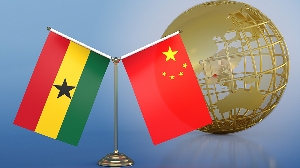 The writer says Ghana’s problem is not communication, but production