When I publicly warned Ghana’s Foreign Affairs Minister to refrain from openly criticising former US President Donald Trump following the arrest of Venezuelan President Nicolás Maduro, it was not out of fear, but out of realism.
International diplomacy is not conducted on social media emotions or ideological impulses.
It is driven by interest, strategy, and survival — especially for small and developing states like Ghana.
Unfortunately, that advice was ignored.
Instead, the Foreign Affairs Minister rushed into the global spotlight with strongly worded condemnations of the United States, framing America’s actions in Venezuela as imperialistic and unlawful, and by implication placing Ghana on the opposite side of Washington in a highly sensitive geopolitical conflict.
In doing so, he transformed Ghana from a neutral diplomatic actor into a vocal critic of one of its most important partners.
This haste and lack of strategic restraint must now be seen as a major factor behind Ghana’s current diplomatic discomfort and any related suspension or restrictions affecting our international engagements.
Whether in sports diplomacy, migration cooperation, or bilateral programs, perception matters, and Ghana’s perception in Washington has clearly shifted.
Let us be honest:
Ghana benefits far more from the United States than from Venezuela — economically, educationally, militarily, and through diaspora remittances.
Our students depend on American visas.
Our traders rely on US markets. Our security agencies benefit from U.S. cooperation.
Our football fans hope for smooth access to the United States during the
2026 World Cup.
Venezuela offers none of these strategic lifelines.
So the critical question is simple: What did Ghana gain by publicly antagonising Donald Trump?
Nothing — except applause from ideological corners that will not process visas for our citizens will finance our development, and will not negotiate for our football fans.
The Foreign Affairs Minister’s comments may have satisfied moral posturing, but they ignored diplomatic arithmetic.
The United States has demonstrated repeatedly that it is willing to detain, deport, and deny entry even to high-profile Africans over immigration infractions — including former Ghanaian government officials.
If America can detain a former Finance Minister over visa or immigration flaws, does anyone truly believe it will be swayed by the absence of Ghanaian football
supporters at the World Cup?
Freedom of speech is easy.
But freedom from consequences is not guaranteed in international relations.
Diplomacy requires emotional discipline, not populist grandstanding.
Nations do not survive on moral outrage; they survive on carefully managed alliances.
When a Foreign Affairs Minister speaks, he does not speak for himself — he speaks for thirty million Ghanaians whose futures are tied to the relationships he manages.
Therefore, if Ghana now finds itself diplomatically strained, sidelined, or facing indirect penalties in international cooperation and sporting participation, responsibility must be placed where it belongs: on reckless diplomacy driven by haste rather than strategy.
Ghana must learn this painful lesson quickly.
Foreign policy is not a platform for political performance.
It is a shield for national interest — and once that shield is weakened,
the people, not the politicians, pay the price.
Ablakwa!
Foreign policy is often judged not by intent but by impact.
By speaking out forcefully, Ghana’s diplomacy may have offended a White House with a track record of unilateral action and sensitivity to public criticism.
In the realm of realpolitik, small states rarely benefit from confrontations with global powers — even when morally justified.
The outcome now hangs in the balance: Ghana stands on principle, yet should soberly recognise that freedom of speech in diplomacy comes with consequences — consequences that could affect visa access, trade talks, or even the smooth support of Ghanaian football fans who dream of flocking to the World Cup.
Balancing moral leadership with pragmatic alliance management will be the true test of Accra’s diplomatic acumen.
Opinions of Monday, 19 January 2026
Columnist: Kofi Marfo
US Visa Ban: I warned Okudzeto Ablakwa
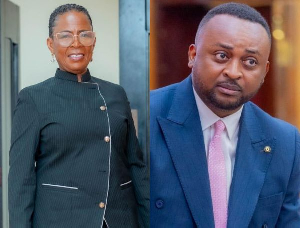
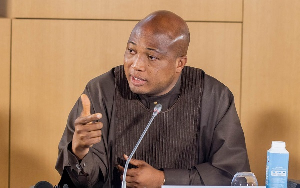 Samuel Okudzeto Ablakwa is the Minister of Foreign Affairs