In Ghana's complex socio-political landscape, traditional authorities play a pivotal role in fostering social cohesion, but they also possess the potential to incite conflict. Recent public pronouncements by Dormaahene, Osagyefo Oseadeeyo Agyeman Badu II, have escalated beyond a typical chieftaincy dispute.
His persistent questioning of the authenticity of the Golden Stool, ‘Sika Dwa Kofi’—a revered emblem that embodies the soul, identity, and heritage of the Asante people—challenges its significance and poses a serious risk of inciting conflict.
Such pronouncements are not merely discourteous; they are perceived as deliberate provocations that could undermine the authority of the Asantehene, Otumfuo Osei Tutu II, thus presenting a significant semiotic and political threat.
These pronouncements go beyond traditional decorum, representing a direct and immediate threat to national peace. This situation necessitates urgent and decisive action from state authorities. We find ourselves at a critical juncture in our nation’s history, where the integrity of our National Security, the Ghana Police Service and the stability of the National House of Chiefs are at stake.
The recent claims made by the Dormaahene have raised considerable concerns that require immediate attention. If neglected, these issues could exacerbate tensions and potentially lead to serious conflict. It is essential for these state institutions to respond swiftly and firmly to prevent such statements from escalating further.
The current tensions are not an isolated incident but rather a recent manifestation of a long-standing historical rivalry. The Asante and Dormaa peoples share a complex and often adversarial history, notably marked by the 18th-century Asante-Dormaa war. This conflict, a struggle for dominance and influence within the emerging Asante Empire, concluded with a decisive victory for the Asante.
Although the armed confrontation ended centuries ago, the legacy of this geopolitical struggle continues to shape the relationship between the two groups. The Dormaahene's recent rhetoric, which references historical grievances and challenges key symbols of Asante authority, effectively reignites these old flames of animosity. The Golden Stool, representing the spiritual and ontological foundation of the Asante Nation, has become the focal point of this symbolic attack, transforming a personal dispute into a potential ethnic confrontation.
The Dormaahene's provocative pronouncements align with a troubling trend. By criticising the Golden Stool, he is questioning an institution that holds deep significance for millions of its people. This rhetoric has already elicited strong, defensive reactions from Asante traditional leaders and youth groups, indicating a rapid transition from verbal disputes to the potential for public unrest. A failure by state security agencies to intervene at this pivotal moment would represent a serious misstep, suggesting that such incendiary statements are permissible and potentially inciting further escalation.
This article urges Ghanaians to reflect on our shared history, which is unfortunately marred by violent conflicts fuelled by thoughtless comments made by leaders. These unguarded statements, set against a backdrop of longstanding inter-ethnic rivalries, pose significant threats to our national peace and security. Considering the ongoing violence in Bawku, it is essential for the government of Ghana, through its Ministry of National Security and other relevant agencies, to reevaluate its seemingly neutral stance and take decisive action to mitigate tensions. Failing to address these rhetorical provocations could potentially escalate a local dispute into a broader national security crisis.
Should the government remain silent out of fear of offending a powerful chief, it is essential to clarify that such inaction will likely be interpreted as tacit endorsement of the Dormaahene's divisive behaviour. Security agencies must engage with him, issue a firm warning, and publicly remind all chiefs that freedom of speech does not extend to inciting division and chaos.
This urgent situation necessitates immediate and decisive action from state stakeholders, as the current statements pose a clear and imminent threat to national peace and security. Ghana stands at a critical crossroads where the integrity of our national security and the legitimacy of the National House of Chiefs are at risk. If left unaddressed, these issues could escalate significantly.
It is therefore essential that we unite in a concerted effort to safeguard peace and stability across our diverse communities in Ghana. The Ministry of National Security must act swiftly to respond to the Dormaahene’s provocations before they lead to unwarranted hostilities that could create a rift between the Ashanti and Dormaa communities. His position as a High Court judge should not exempt him from accountability for actions that jeopardise public peace and national stability.
In conclusion, the ongoing dispute between the Dormaa and Asante traditional leadership marks a crucial moment in Ghana's history. The lessons learned from the Bawku conflict are clear: unresolved traditional disputes, especially when fuelled by provocative rhetoric, can pose serious risks to national security.
The Dormaahene's comments regarding the Golden Stool and the Asantehene serve as a significant admonition to the government of Ghana, the National House of Chiefs, the Ghana Police Service, and the Ministry of National Security.
It is essential that they issue a strong directive to the respected chief to stop his inflammatory remarks and emphasise that our cultural heritage should be seen as a unifying force, rather than a source of division. The moment for national stakeholders to act is now—before a rising feud erupts into an uncontrollable blaze.
Meanwhile, watch the trailer to GhanaWeb’s upcoming documentary on teenage girls and how fish is stealing their futures below:
Opinions of Friday, 22 August 2025
Columnist: Peter Twumhene
National Security must respond to Dormaahene's public pronouncements
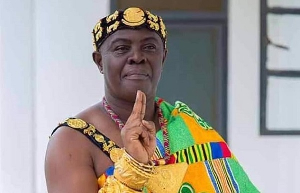 Dormaahene, Osagyefo Oseadeeyo Agyeman Badu II

![Wontumi allegedly appeared emotional and requested for water [This image is AI generated]](https://cdn.ghanaweb.com/imagelib/pics/975/97547141.295.jpg "Wontumi allegedly appeared emotional and requested for water [This image is AI generated]")