Chieftaincy in Ghana goes beyond tradition; it is the heartbeat of community identity, cultural heritage, and grassroots governance. At the core of this enduring institution’s administrative and judicial functions are the Judicial Committees of the National and Regional Houses of Chiefs and Traditional Councils, bodies whose work quietly secures peace, resolves disputes, and strengthens the rule of law within traditional areas.
These committees serve as statutory adjudicatory arms within the chieftaincy institution, mandated to hear and determine disputes relating to succession to stools and skins, interpretation of customary law, deposition of chiefs, and other matters grounded in custom and usage, in accordance with Article 273(2) and 274(4) of the 1992 Constitution of Ghana.
In a country as diverse as Ghana, where countless ethnic groups observe distinct traditions, judicial committees help ensure that disputes are resolved fairly, impartially, and with cultural legitimacy.
Strengthening the Adjudication Process: Government Support
Recognising the vital role of these committees in national peace and community stability, the Government of Ghana, through the Ministry of Local Government, Chieftaincy and Religious Affairs, has taken decisive steps to empower them. The Ministry announced an increase in quarterly funding for chieftaincy dispute adjudication from GH¢30,000 to GH¢50,000, effective April 1, 2025.
This 67% rise is aimed at strengthening the capacity of Judicial Committees across the country to deliver timely and effective justice and to meet the logistical and administrative demands of adjudication more efficiently.
This enhanced allocation underscores the government’s commitment to ensuring that judicial processes within the chieftaincy framework are well resourced and capable of addressing disputes that, if left unresolved, could escalate into communal tensions.
By supporting these committees financially, the Ministry reinforces their ability to uphold peace, promote social cohesion, and protect the dignity of traditional institutions.
Capacity Building and Collaboration
Beyond funding, the Ministry has prioritised capacity building for committee members. In regions such as the Volta and Oti Regions, the Ministry, in collaboration with the Regional Houses of Chiefs, organised workshops to equip Judicial Committee members with the skills needed to handle complex disputes with fairness and cultural insight.
The Ministry has also undertaken capacity training for all the counsels of the Houses of Chiefs to enable them to support the judicial committees in adjudicating chieftaincy cases effectively.
These training programmes highlight the Ministry’s holistic approach to strengthening traditional justice mechanisms, enhancing both procedural efficiency and cultural sensitivity.
Furthermore, the Ministry continues to foster stronger collaboration between traditional authorities and local government institutions, a synergy essential for sustainable peace and development.
Minister Hon. Ahmed Ibrahim has publicly urged deepened cooperation between chiefs and local government actors to align customary governance with modern administrative frameworks, reinforcing the link between justice, community stability, and development.
Judicial Committees as Engines of Peace and Development
The Judicial Committees serve not only as dispute-resolving bodies but also as stabilisers of communities. By delivering fair and culturally grounded decisions, they reduce the need for protracted litigation in secular courts, lower the risk of conflict, and help restore relationships fractured by contentious chieftaincy contests.
Their decisions, grounded in custom yet informed by law, provide clarity, consistency, and finality, thereby enhancing public confidence in the chieftaincy system.
At the national level, the Judicial Committee of the National House of Chiefs hears appeals from regional bodies and helps harmonise customary jurisprudence across diverse ethnic landscapes.
This linkage fosters legal coherence nationwide, providing both chiefs and citizens with precedents that guide future practice and strengthen customary law’s alignment with constitutional principles.
Regional Houses of Chiefs and Traditional Councils Judicial Committees, meanwhile, act on the frontlines, bringing justice closer to communities. Their local proximity ensures that disputes are resolved more quickly and with a rich understanding of the customs of the people they serve. This immediacy helps defuse tensions before they escalate into broader conflict.
Looking Ahead: Institutional Strengthening and National Peacebuilding
Ghana’s development agenda recognises the indispensable role of traditional authorities and their judicial structures in promoting peace and good governance. The Ministry’s actions, from increased funding to capacity building and institutional collaboration, reflect a strategic investment in the foundations of community stability and national cohesion.
As Ghana continues to advance democratic governance and sustainable development, the work of Judicial Committees remains a cornerstone of peace and cultural integrity.
By empowering these committees, the Government is not just resolving disputes; it is affirming the relevance of traditional governance, strengthening the rule of law at the grassroots, and advancing national unity for generations to come.
The Writer is a Deputy Public Relations Officer with the Ministry of Local Government, Chieftaincy and Religious Affairs.
Opinions of Thursday, 19 February 2026
Columnist: Chantal Aidoo
Judicial Committees: Anchoring justice, peace and development in Ghana’s chieftaincy administration
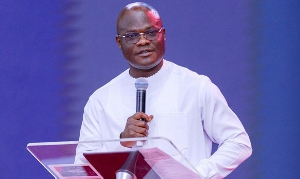 Ahmed Ibrahim is the Minister of Local Government, Chieftaincy and Religious Affairs




Entertainment