During a mid-year evaluation of educational policies, the Honourable Haruna Iddrisu, Minister of Education for Ghana, called for “firm action” against student indiscipline by school authorities, stating, “Don’t hesitate to dismiss students who disregard the disciplinary code.”
While his intent to restore moral values and discipline is essential and commendable, blanket expulsions and zero tolerance can be counterproductive. Also, this statement may incite some school authorities to dismiss students who disregard any disciplinary code without due diligence.
With my engagements in the Ghana Education Service, I have first-hand experiences with several and different students' insubordination and indiscipline. However, I think dismissal is an extreme punishment and should not be the best option. Research shows that exclusionary discipline often fails to improve behavior. Also, expelled students are far more likely to become wayward, hurting our society in multiple ways.
The Ghana Education Service’s code of conduct for students emphasises that discipline must reform students, not destroy their future. Child rights advocates also argue that "punishment as a means of correction is not the solution", noting that "many students misbehave due to internal and psychological conflicts."
Therefore, treating all misbehaviour punitively and retributively can flop, especially for students dealing with trauma, stress, or other mental health struggles. As an educator and educational administrator, I think Ghana should focus on restorative practices over dismissal. Thus, our schools need more trained counsellors and mental health professionals to address underlying issues and teacher training in restorative practices and policies involving parents and communities.
Sadly, these resources are lacking in our Basic Schools and limited in our Senior High Schools. So, expulsions should be a last resort, with proper review and reintegration pathways.
A recent example is the dismissal of 20 Ada Senior High School students involved in a tragic drowning incident. Many criticised this extreme punishment as potentially creating “a bigger problem for society” by cutting students off from support at a critical stage in preparation for their West African Senior School Certificate Examination (WASSCE). I don’t subscribe to their (students') behaviour, but I think the school authorities should reconsider their decision on their dismissal.
To conclude, discipline is essential, but let’s practice it in the interest of the student's future.
Opinions of Monday, 15 September 2025
Columnist: Dwamena Akenten
Is dismissal the best solution to discipline students in Ghana schools?
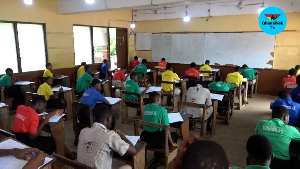 The author says discipline is essential but has to be practiced in the interest of students' future