Since it emerged that Chief Justice Paul Baffoe-Bonnie lavished praise on the current NDC government and its appointees while appearing to criticise the former NPP government, many critics have rightly called him out for making what appears to be a political judgment.
Indeed, a judge does not cease to be a citizen when he or she ascends the Bench. But the Chief Justice occupies a unique constitutional position. His words carry institutional weight far beyond those of an ordinary commentator, politician, academic or private citizen.
If a businessman or political activist had made similar comments, they could easily be dismissed as political fodder. But when it is no less a person than the Chief Justice, we are forced to confront an uncomfortable question: Is the Judiciary inclined to look more favorably on members of the current government and less favorably on members of the former government?
Can former government appointees with cases before the courts genuinely expect institutional neutrality from a Judiciary whose head appears to have already formed a political view of the government under which they served?
The irony is difficult to ignore. When Justice Baffoe-Bonnie was sworn in as Chief Justice, following the controversial removal of his predecessor, he pledged to perform the functions of his office “without fear or favour, affection or ill-will.” Does his recent commentary sit comfortably with that solemn oath?
This is not necessarily an allegation that the Chief Justice will personally interfere in any particular case, nor does it prove that any judge will be biased. But justice must not only be done; it must also be seen to be done.
It is therefore my sincere hope and I believe that of many fair-minded Ghanaians that the Chief Justice and future leaders of the Judiciary will treat this episode as a point for reflection. The Judiciary belongs neither to the NDC nor the NPP. It belongs to Ghana.
And the public conduct of the man or woman who leads it must give every litigant; friend or foe, former or current government official, ruling-party supporter or opposition activist, reason to believe that when they enter a courtroom, they will encounter justice, not politics.
Opinions of Monday, 14 September 2026
Columnist: Jones de Graft-Darkwa
Is Ghana's Judiciary still neutral?
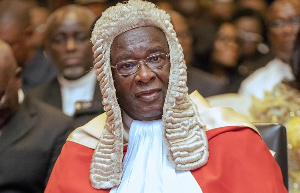 The neutrality of Ghana’s Judiciary faces growing scrutiny