Do you think institutions play a role in providing citizens with better livelihoods? On paper, our institutions are designed to serve the people, ensure fairness, and drive development. Yet, if we look around, the roads are crumbling, health services struggle, schools face shortages, and key development projects often stall. What’s going wrong? Many would point to inefficiency—but there’s a deeper, more systemic problem: political instability within our institutions.
Have you noticed how, with each change of government, the heads of important agencies seem to change too? Institutions like the Tema Development Corporation (TDC), the Tertiary Education Commission (TEC), the National Health Insurance Authority (NHIA), and several regulatory bodies are particularly vulnerable. Often, the change isn’t about poor performance. Instead, it’s driven by fear: the new government worries that a leader appointed by the previous administration might discredit them. So, even competent heads are replaced, and with them, the continuity that institutions need to function effectively.
Think about the TDC. Its role in urban planning, housing development, and local economic management is critical. Yet, with leadership changes every political cycle, long-term urban projects stall. Roads, housing developments, and city expansion plans are repeatedly revised or abandoned. The TEC faces a similar fate—strategic reforms in higher education are disrupted, policies are left incomplete, and students bear the cost.
What happens when institutional leadership keeps flipping? Policies get disrupted, projects stall, and staff morale drops. Knowledge and expertise are lost, oversight weakens, and the public starts seeing institutions not as impartial service providers, but as political tools. Citizens blame the government for poor service, while governments blame citizens for non-compliance. Everyone loses, and accountability becomes a distant ideal.
Now, consider countries like Japan, Germany, or Singapore. There, institutions maintain stability even when governments change. Leaders of key agencies have protected tenures, appointments are merit-based, and policy continuity is prioritized. Citizens can rely on consistent services, projects progress as planned, and institutional knowledge is preserved.
So, what can Ghana do differently? Could we adopt fixed-term leadership for institutional heads? Should appointments prioritize expertise over political loyalty? Can we create succession plans that prevent knowledge loss? Could we empower citizens to monitor and give feedback on services?
I want to hear from you. Have you experienced the effects of frequent leadership changes in public institutions? How do you think Ghana can break this cycle of instability and make our institutions work for the people? Which institutions, in your view, suffer the most from political turnover, and why?
Ghana’s democracy is not just about voting—it’s about effective institutions that serve every citizen. Without reforms that protect these institutions from partisan politics, we risk democracy becoming an illusion, and citizens will continue to pay the price.
Your thoughts matter. How do we strengthen Ghana’s institutions for the long term? Share your views below.
Opinions of Friday, 29 August 2025
Columnist: Isaac Yaw Asiedu
Ghana's Institutional Paradox: Who really holds the reins?
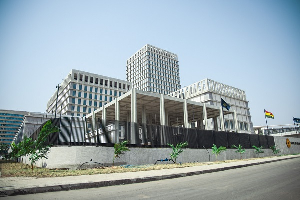 Bank of Ghana Headquarters